
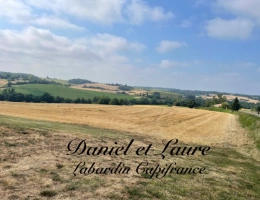
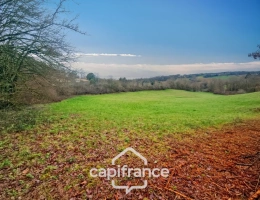
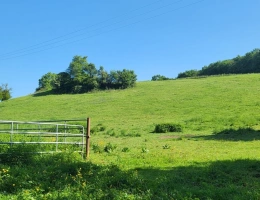
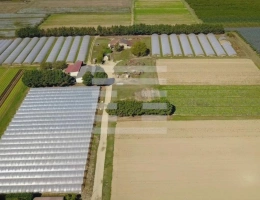
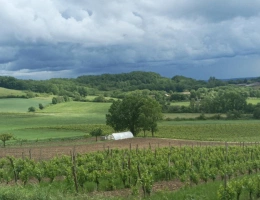
A mixed-farming department where orchards, vegetables and maize sit beside livestock, Lot-et-Garonne regularly brings a poultry farm for sale in Lot-et-Garonne onto the market: contracted broiler houses, farm-scale units raising chickens, guinea fowl and ducks for direct sale, laying buildings geared to producer shops and to the Agen and Marmande markets. The listings reach us from farmers arranging their handover, from rural property agencies and from notaries. They sit beside the other poultry farms for sale across France.
Choosing well takes more than a description sheet: the level of land values in the department, the cantons where farms come free, the faults a building can hide, the controls the sector imposes. All of that follows. To build a solid setting-up project, our white paper « Créer une exploitation agricole » (in French) takes the stages one by one, agricultural qualification first, funding plan last.
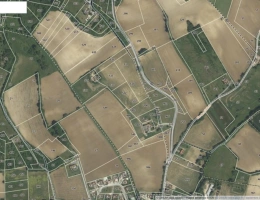
Land remains the largest item when buying a poultry farm. According to sales recorded by the French tax administration (DVF, vineyards excluded), the median price of agricultural land in Lot-et-Garonne (47) stood at €7,501/ha in 2025, with an average of €8,547/ha across 150 sales; 80% of transactions fall between €5,015 and €14,141/ha, against a national median of €5,307/ha.
The SAFER benchmark of land values (2025 figures) puts vacant land and pasture at €8,870/ha (+0.3% year on year, +20.0% over ten years), against a national average of €6,460/ha; land already let sells around 17% lower.
Away from the hectares, value shows in the equipment: usable length and insulation of the buildings, ventilation and its automation, heating, silos and augers, entry room, a slab that washes down, access for collection lorries. The area of range and its shade weigh in too, as does the nature of the outlet — a production organisation or a clientele of your own — along with an egg packing room, a cold store or a cutting room, and the entitlement to produce under a label or geographical indication. Compare with our land price observatory, then model the takeover in our financial calculators.
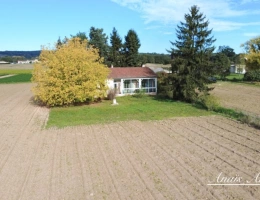
The department sets standard contracted houses alongside label rouge buildings with grass or planted range, waterfowl premises equipped for force-feeding, and laying units outdoors or on the floor, often modest in size. The survey covers the frame, the roof and insulation, the ventilation and its automation, the heating, the silos and feed line, the state of the floor, whether the entry room complies and where washing water goes. A chicken farm recently refurbished, well oriented and served by a hardened track sells on quite different terms from older premises that would need taking back to the shell.
Many holdings are mixed, with poultry topping up arable or orchard income: the value of the whole then depends as much on the agronomic potential of the plots as on the house itself. On an egg farm as on a table-bird unit, always ask for the asking price to be broken down — land, livestock buildings, machinery, stock, dwelling, any direct-sales goodwill — and find out how the contract or the producer-group membership transfers, without which a unit loses most of its economic point.
The west of the department, from the Albret to the Nérac country and towards Casteljaloux, leans most towards poultry and waterfowl, extending the Landes and Gers basins; land stays more accessible there and ranges are easier to put together. The Garonne valley, from Tonneins to Marmande and Agen, is intensive cropping country where fields command high prices and livestock units are scarcer. The Villeneuve country and the Fumel area, hillier and more given to orchards, hold mixed farms where a poultry building tops up the income.
To the south-east, towards the Lot and the Gers boundary, holdings are more scattered and prices more moderate. Keep in mind the distance to abattoirs and feed mills, often located in neighbouring departments: it governs logistics and access to contracts, and therefore how well a unit pays once taken over.
As everywhere in the south-west, avian influenza prevention dictates how units are run: a biosecurity plan written down and applied, capacity to house birds indoors, separated routes, managed range and a properly observed sanitary break between flocks. A holding falls under declaration, registration or authorisation according to the number of birds housed, and the incoming operator notifies the prefecture. In densely settled valley districts, the distance to third parties and the planning documents often cap extensions: check both before picturing an extra building.
The spreading plan and manure storage capacity deserve close attention, particularly in areas designated as vulnerable to nitrates. Rented land stays governed by the farm tenancy, which continues with the landlord's agreement, and the sale calls for an operating permit issued under the structures control, the vetting every farmland takeover undergoes, while SAFER keeps a right of first refusal. If the holding sells direct, have the health approvals covering cutting or packing reissued in your name.
This page gathers properties entrusted by private owners, rural estate agencies and notarial offices. Pick the building area, the budget or the production you are after — a broiler farm with range, free-range poultry, laying hens, an egg farm or a bare building — then create an alert so nothing slips past. You can equally explore every poultry farm for sale in Nouvelle-Aquitaine.