
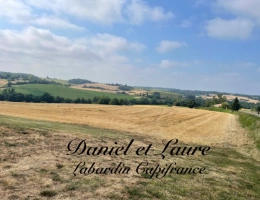
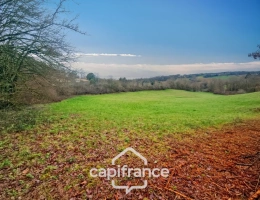
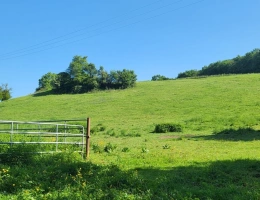
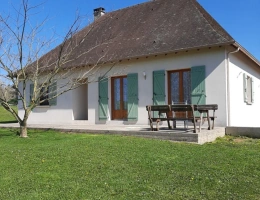
Landes ranks among France's leading poultry departments, and a poultry farm for sale in Landes often means one of these: farm birds ranging freely under the pines, with movable huts and wide runs; duck units tied to maize growing and force-feeding; label rouge broiler houses; laying units sending table eggs into short supply chains. These properties reach us from farmers preparing a handover, from rural agencies rooted locally and from notarial offices. The national picture stays open among our poultry farms for sale.
Past the photographs and the areas, you need the value of land here, the districts where holdings come free, the way to judge buildings and ranges, and the health rules that loom large locally. All of it sits on this page. For a setting-up project, our white paper « Créer une exploitation agricole » (in French) lays that route out end to end, grants included, forecast included.
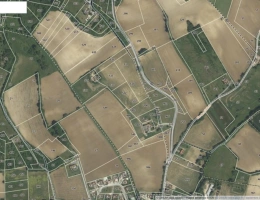
Land remains the largest item when buying a poultry farm. According to sales recorded by the French tax administration (DVF, vineyards excluded), the median price of agricultural land in Landes (40) stood at €8,278/ha in 2025, with an average of €8,618/ha across 138 sales; 80% of transactions fall between €4,998 and €13,082/ha, against a national median of €5,307/ha.
The SAFER benchmark of land values (2025 figures) puts vacant land and pasture at €8,960/ha (+1.5% year on year, -6.6% over ten years), against a national average of €6,460/ha; land already let sells around 17% lower.
The worth of a holding here rests first on its tools: the number and condition of the huts or fixed houses, insulation, ventilation, heating, silos, entry room, washing bay, force-feeding room and cutting room where they exist. The range plays a decisive part — area available per flock, tree cover, drainage of the sandy soils, the scope to rotate between batches. Add the entitlement to produce under a label or geographical indication and the strength of the production organisation behind the unit. Place the price with our land price observatory and your repayments with our financial calculators.
The local model rests largely on light shelters moved regularly across wide wooded runs, which changes how a property is surveyed: the state of the huts, how many there are, the machinery to move them, the drinking points, the fencing and the quality of the cover count as much as walls. Alongside that, the department holds fixed broiler houses, waterfowl units equipped for force-feeding and a few laying buildings. Buyers examine the ventilation, the heating, the feed line, how effluent leaves the site, whether the entry room complies and whether the access tracks carry a collection lorry.
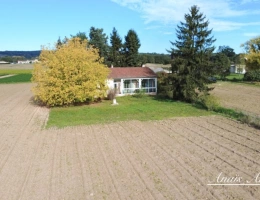
Production is overwhelmingly framed by an integration contract or by membership of a producer group, which secures chicks, feed and collections: read the remaining term and the transfer arrangements before settling on a price. Where a free-range poultry holding includes a traditional house, maize sheds and land, insist, as on any chicken farm, on a detailed breakdown; the residential element, often appealing, can carry a large share of the asking figure on its own.
The Chalosse and Tursan country, to the south-east, is dense in holdings combining maize, waterfowl and farm poultry, with abattoirs and processing firms close by around Saint-Sever and Hagetmau. Around Mont-de-Marsan, the Marsan and the Armagnac landais mix large fields, huts under pines and force-feeding units. Further north and west, the Grande Lande and the forest massif offer extensive runs on sandy soils at contained prices. The coastal strip from Dax to Capbreton, by contrast, faces land pressure that sharply limits what is available to farming.
Closeness to downstream facilities remains a decisive criterion: it shortens journeys, eases access to contracts and shapes what holdings fetch when they reach the market. For a first takeover, the inland districts and the forest fringes offer the best compromise between land cost, size of range and access to organised outlets.
No department has been marked more by avian influenza, and biosecurity requirements now shape the whole job. A buyer checks the biosecurity plan, the capacity to house birds indoors, the separation of routes, how the range is managed between flocks, the length of the sanitary break and the site's health record. Classification as a classified installation follows the number of birds housed — declaration, registration or authorisation — and an incoming operator declares the change; read the order in force, since some of its requirements can constrain an enlargement.
Sandy soils and a water table close to the surface make effluent management and the spreading plan especially sensitive; where fields are irrigated, look too at the abstraction permits attached to them. As elsewhere, a tenancy already running binds the incoming farmer once the landlord consents, while the purchase needs an operating authorisation delivered under the structures control, the prefectural procedure that decides who may take on farmland, and must be laid before SAFER. Valuing land, buildings, equipment and stock separately heads off most late disagreements.
Private owners, rural estate agencies and notaries are what fill this page. Adjust the filters to your project — range area, budget, type of production, from a free-range broiler farm to an egg farm housing laying hens — and switch on an alert to receive every new listing in the department. You can also carry on to all the poultry farms for sale in Nouvelle-Aquitaine.