
In Corrèze, poultry keeping is usually a farm-scale affair: one or two buildings, a grass or wooded range, and a share of the output sold on the markets. Looking for a poultry farm for sale in Corrèze therefore leads to farm units raising chickens, guinea fowl or ducks, and sometimes to an indoor house backed by a Limousin cattle herd. The listings reach us from farmers arranging a handover, from agencies specialising in rural property and from notaries, with details of the buildings, the husbandry and the marketing channel. They form part of the national record of poultry farms for sale.
This page adds what a listing leaves out: farmland values in Corrèze, the areas where handovers appear, the parts of the buildings to examine before buying a chicken farm and the checks imposed on every buyer. If you are setting up, our white paper « Créer une exploitation agricole » (in French) sets out the stages, from professional qualification to the funding plan.
Land remains the largest item when buying a poultry farm. According to sales recorded by the French tax administration (DVF, vineyards excluded), the median price of agricultural land in Corrèze (19) stood at €3,682/ha in 2025, with an average of €3,797/ha across 33 sales; 80% of transactions fall between €2,447 and €5,297/ha, against a national median of €5,307/ha.
The SAFER benchmark of land values (2025 figures) puts vacant land and pasture at €3,880/ha (+2.4% year on year, +12.1% over ten years), against a national average of €6,460/ha; land already let sells around 17% lower.
In a department of hills and valleys, value rests first on the buildings and where they stand: orientation and usable length, insulation, ventilation, heating, silos, biosecurity entry room, but also the quality of the access track and whether a lorry can turn on it. The range available, membership of a quality scheme and the customer base built on the markets of the Brive basin count next, as does the regularity of collections for a contracted unit. To compare, open our land price observatory and our financial calculators.
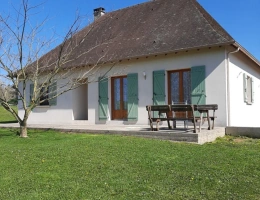
The local stock is mostly medium-sized: fixed houses with an adjoining run, mobile huts on pasture for farm-reared birds, and less often a laying-hen unit on the floor or outdoors supplying table eggs sold locally. Buyers look at the frame and roof covering, the insulation, the natural or fan ventilation, the heating, the silos, the feed line, the slab and the entry room, and also at the fencing and shade on the range, decisive under label rouge and organic specifications alike. A broiler farm already compliant trades well above a building that has to be renewed.
Two business models are found. The first rests on an integration contract or producer group membership, which secures chicks, feed and batch collection; check the remaining term and the transfer conditions. The second, common here, combines on-farm or collective slaughtering, processing and direct selling: the health approval, the cutting equipment and the customer base then form goodwill appraised separately from the buildings. Where the sale includes a house, barns and pasture, ask for the detail item by item.
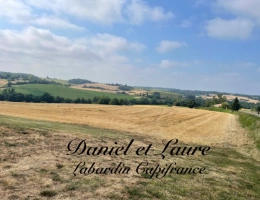
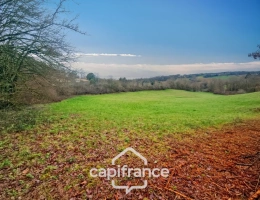
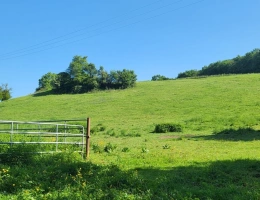
The Brive basin, open and milder, holds the department's most varied production and a substantial clientele, carried by the markets and by the nearness of the Périgord and the Lot; land there is also the most sought after. The Tulle country and the valleys of the Corrèze and the Vézère mix woodland, pasture and small holdings. Further north, the Millevaches plateau and the Ussel area offer upland ground, grass and more moderate land values, but long winters that weigh on heating costs. To the east, the Xaintrie forms a country of slopes and bocage with scattered settlement.
Choosing an area therefore shapes the whole project: nearness to the outlet and dearer land in the south, available acreage and looser neighbourhoods in the north and east. Industrial slaughtering facilities lie mostly outside the department, which reinforces the case for short supply chains where a holding is already established on its markets. Check, finally, how the access tracks behave in winter.
A poultry unit falls under the classified installations regime: declaration, registration or authorisation depending on flock size, notification of a change of operator to the prefecture, and careful reading of the order in force. The biosecurity plan and the avian influenza measures, reinforced across south-western France, govern how ranges are used and how birds are moved; the unit's health history is among the questions to ask. Where the holding slaughters and processes on site, the health approval or its derogation, the premises and the food safety plan are checked one by one.
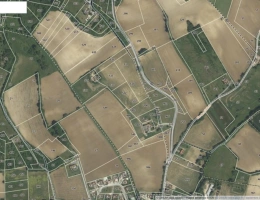
On land, the fragmented pattern of holdings here calls for close reading of the parcels: scattered fields, access tracks, easements and woodland change the working value of a property. Part of the land is rented, and the rural lease continues with the buyer subject to the landlord's agreement; the deal goes through the structures control, the French authorisation regime for taking over farmland, and SAFER's pre-emption right. Have buildings, equipment and land valued separately before settling your offer.
The Corrèze listings gathered here come from private sellers, rural estate agencies and notarial offices. Narrow them by building area, by price or by production, from free-range poultry with an outdoor run to a small egg farm, and set up an alert so no new listing escapes you. You can also open the search to every poultry farm for sale in Nouvelle-Aquitaine.