
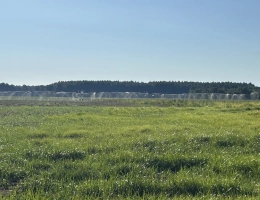
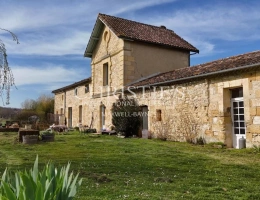
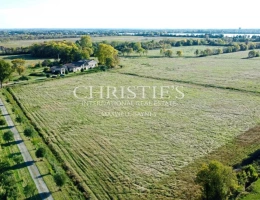
In a department largely given over to vines, a poultry farm for sale in Gironde is a scarcer opportunity, and one worth moving on quickly: broiler houses set along the edge of the pine forest, farm-scale units raising chickens, ducks and guinea fowl for the Bordeaux markets, laying-hen buildings supplying producer shops. Farmers stepping back, agencies specialising in rural estates and notaries pass these properties to us, stating the building area, the rearing system and the plots attached. The countrywide count opens from our poultry farms for sale.
What remains is knowing what land here is worth, which cantons still release holdings, how to judge a building and which health obligations await the buyer: this page gathers those benchmarks. To prepare a venture from start to finish, our white paper « Créer une exploitation agricole » (in French) covers the formalities, the application file and the money side.
Land remains the largest item when buying a poultry farm. According to sales recorded by the French tax administration (DVF, vineyards excluded), the median price of agricultural land in Gironde (33) stood at €5,000/ha in 2025, with an average of €5,536/ha across 85 sales; 80% of transactions fall between €2,244 and €8,978/ha, against a national median of €5,307/ha.
The SAFER benchmark of land values (2025 figures) puts vacant land and pasture at €8,340/ha (-2.7% year on year, +56.5% over ten years), against a national average of €6,460/ha; land already let sells around 17% lower.
Area explains only part of the price here. Look at the usable length and insulation of the house, the ventilation method, the heating, the silos, the entry room, the slab and washing bay, then the size of the range and its tree cover. Position in the chain counts too — an integration contract, membership of a producer group — or, conversely, the goodwill built by a cutting room and a loyal city clientele. Set the offer you receive against our land price observatory and cost the takeover in our financial calculators.
Local premises are mostly modest in size: standard houses designed for a handful of batches a year, label rouge buildings with grass or pine-shaded range, mobile huts used outdoors, a few floor-housed laying units. Buyers assess the frame and roof covering, the insulation, the ventilation and its controls, the heating, the feed line, the entry room and where the washing water goes. A broiler farm recently brought up to standard, with a hardened approach for collection lorries, holds its value far better than older premises whose roof, floor and controls would all need redoing.
Many holdings are mixed: laying hens or table birds on one side, arable, woodland or vines on the other. Where a chicken farm is offered as a block with house, sheds and plots, ask for a precise split of the price, because a vineyard or building-plot element can lift the total without adding anything to the poultry tool. Check as well what becomes of the flock, the feed in store and whether the contract in force can be taken over.
The south of the department, from the Bazas country to Captieux and the Gironde edge of the Landes de Gascogne, has the strongest affinity with poultry keeping: sandy soils, pine forest, shaded ranges and proximity to the Landes and Lot-et-Garonne production basins. The Haute-Gironde, around Blaye and Saint-Savin, and part of the Entre-deux-Mers still hold mixed crop and livestock farms where a poultry unit fits. The Médoc and the Libourne country, dominated by vines, offer little. The Bordeaux ring, finally, faces land and urban pressure that rules livestock projects out in practice.
That geography feeds straight into budgets: for the same area, a holding in a vineyard or suburban zone costs far more than a comparable one inland in the south. Anyone setting up is therefore well advised to look towards the fringes of the department, while working out the distance to abattoirs and feed mills.
How a unit is classified depends on how many birds it houses: a simple declaration, registration, or full authorisation, with any change of operator notified to the prefecture. In a densely settled department the distance to third parties is the most frequent obstacle: measure it before contemplating an extra building and read the commune's planning document. The avian influenza episodes of south-west France also require a working biosecurity plan, the capacity to house birds indoors and a properly observed sanitary break between batches. Fire risk along the forest edge is real and deserves a conversation with the insurer.
In law, a tenancy already running follows the property and binds the incoming farmer once the landlord agrees; the sale itself needs an operating authorisation issued under the structures control, the procedure through which the prefecture vets each farmland takeover, and SAFER may step in first, which it does readily here given the appetite for vineyard ground. If the holding includes cutting or canning, the health approval must be reissued in your name before anything is sold.
The properties shown come from private owners, rural estate agencies and notarial offices. Sort by building area, by price or by type of unit — an egg farm, free-range poultry on an outdoor run, a broiler house — then create an alert, which pays off in a department where opportunities are thin. You can equally browse every poultry farm for sale in Nouvelle-Aquitaine.