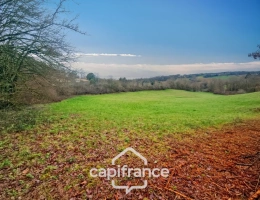
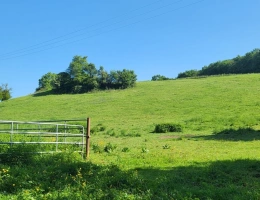
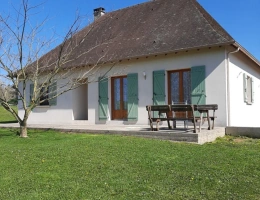
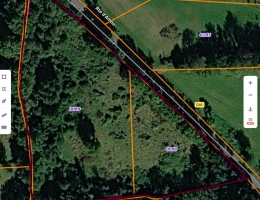
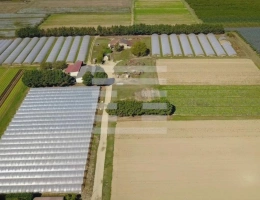
Taking over a poultry farm for sale in Deux-Sèvres means settling in a department with a dense livestock tradition: houses in the bocage sit near goat units and suckler herds, while the south opens onto arable plain. Standard and label rouge broilers, turkeys, guinea fowl and laying-hen units make up a varied offer. Properties reach us from farmers handing over, from negotiators specialising in rural property and from notaries, with the covered area, the production system and the outlet in place. They join the countrywide selection of poultry farms for sale.
A listing says nothing about what the surrounding land is worth or what awaits whoever takes over. This page gathers farmland values in the department, the areas where sales cluster, the building condition to expect for a given age of construction and the checks specific to the sector. Our white paper « Créer une exploitation agricole » (in French) supports anyone preparing such a project.
Land remains the largest item when buying a poultry farm. According to sales recorded by the French tax administration (DVF, vineyards excluded), the median price of agricultural land in Deux-Sèvres (79) stood at €3,278/ha in 2025, with an average of €3,376/ha across 409 sales; 80% of transactions fall between €2,334 and €4,502/ha, against a national median of €5,307/ha.
The SAFER benchmark of land values (2025 figures) puts vacant land and pasture at €3,470/ha (-2.0% year on year, +9.1% over ten years), against a national average of €6,460/ha; land already let sells around 17% lower.
Acreage explains only part of the value. Usable length and insulation of the houses count, as do ventilation and its controls, heating, silos and feed augers, a compliant outdoor range where the specification requires one, the slab and the entry room. Above all the outlet counts: an integration contract or membership of a producer group, and, for table-egg units, a packing room and a short-circuit customer base. Compare with our land price observatory, then cost the takeover in our financial calculators.
The department offers everything from long standard houses run in successive batches for a downstream operator, to label rouge buildings opening onto a wooded range, down to small farmhouse units attached to a goat or cattle enterprise. Buyers look at the year of construction, the frame, the insulation, fan or static ventilation, the gable ends, the heating, silo capacity and the state of the floor. A building recently brought up to standard, with a compliant biosecurity entry room and a washing area, is worth markedly more than an older shed whose return to service means rebuilding structure and services.
Management weighs just as heavily. A contracted unit gives the incoming farmer visibility on placements and feed, provided the contract can be transferred and its remaining term is known. An independent holding, or one geared to direct selling, passes on a customer base and sometimes a cutting room, both valued separately. Where the listing covers a whole property with dwelling house, grassland and buildings, separate the working tool from the home at the first visit: the two are judged on different criteria.
The north of the department holds most of the units: around Bressuire, Mauléon, Cerizay and Moncoutant, the hedged bocage carries mixed holdings where poultry complements milk, beef or crops, within easy reach of the slaughtering and feed facilities of western France. The Gâtine, towards Parthenay and Secondigny, offers grassland holdings with medium-sized buildings. The Thouarsais, more open, mixes vines, arable and indoor livestock. Southwards, the plain around Melle, Chef-Boutonne and Niort is arable country, with poultry units more scattered and often of recent build.
Pressure on land is uneven: the bocage stays more affordable than the cereal plain and the ring around Niort, where demand supports values. Being close to downstream operators, very dense in the north, eases access to contracts and cuts the cost of hauling batches. For a first purchase, the inland bocage communes often combine available buildings with more moderate land prices.
Depending on the flock it houses, a poultry unit falls under declaration, registration or authorisation as a French classified installation; a change of operator is notified to the prefecture, and the existing order deserves reading before any offer. The buyer examines the biosecurity plan, the entry rooms, the management of ranges and surroundings, and the avian influenza measures, which shape practice across a densely stocked western France. Distances to dwellings and third parties govern any future extension and should be measured on site before an additional building is even considered.
On effluents, manure storage capacity, the spreading plan and whether the area is classed as vulnerable under the nitrates rules closely frame any development project. On land, the rural lease continues with the new farmer subject to the owner's agreement, and the transaction remains subject to the structures control, the French authorisation regime for taking over farmland, and to SAFER's pre-emption right. Valuing land, buildings and machinery separately secures the negotiation and makes the bank package easier later.
The properties shown come from private sellers, rural estate agencies and local notarial offices. Sort by building area, by budget or by production type, from free-range poultry with a wooded run to a laying-hen unit, then create an alert to hear about new handovers. One step up, the regional view brings together the poultry farms for sale in Nouvelle-Aquitaine.