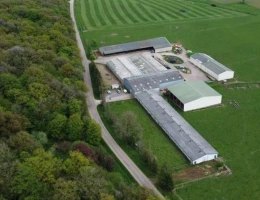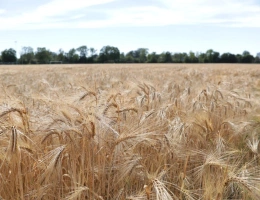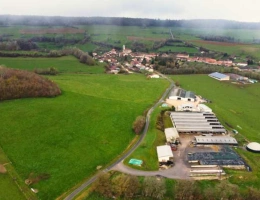
A farm for sale in Grand Est can mean an arable holding on the chalk of Champagne, a mixed farm on the Lorraine plateaux, a dairy unit in the Ardennes or the high Vosges valleys, a holding on the Alsace plain cropped with maize, hops or vegetables, or an estate on the vineyard foothills. The region is among France's leading ones for the value of its farm and wine output, and its succession market is kept busy by a steady flow of retirements. The properties gathered here come from farmers handing on their business, from specialists in rural property, from notaries and from succession consultants; each listing details the usable area, the soil type, how the land is held and the production assets passed on. They complete our national overview of farms for sale in France.
You will find more than a catalogue here: the level of land values in each department, the sectors that hold up each plateau and plain, the places where holdings come free, and the steps to take before any commitment. Where the takeover happens outside the family, our white paper « Créer une exploitation agricole » (in French) describes the administrative route and the financing plan to build.
Land forms the base of a farm's value. DVF, the property sales database published by the French tax administration (vineyards excluded), records a 2025 median of €5,611 per hectare in Grand Est, an average of €7,490 and 1,233 sales; four transactions in five fall between €3,151 and €14,830, against a national median of €5,307.
The SAFER land value benchmark sets €6,510 per hectare for vacant land and pasture offered for sale in the same year, -4.4% over one year and 0.0% over ten, against €6,460 nationally. Land sold with a tenancy in place is valued at €6,120, a discount of about 6%.
These figures place regional land values; they do not price a farm, which depends first on its buildings, its herd and its outlets. For department-level detail, see our land price observatory, then cost your purchase with our financial calculators.
| Department | DVF sales 2025 | Median price/ha | SAFER vacant land |
|---|---|---|---|
| Ardennes (08) | 209 | €5,702 | €6,850 |
| Aube (10) | 179 | €11,373 | €11,270 |
| Marne (51) | 254 | €12,317 | €12,020 |
| Haute-Marne (52) | 169 | €3,500 | €4,560 |
| Meurthe-et-Moselle (54) | 143 | €5,000 | €5,410 |
| Meuse (55) | 153 | €5,000 | €4,940 |
| Moselle (57) | 1,233 | €5,611 | €5,380 |
| Bas-Rhin (67) | 1,233 | €5,611 | €6,470 |
| Haut-Rhin (68) | 1,233 | €5,611 | €7,510 |
| Vosges (88) | 126 | €3,200 | €3,460 |
The chalk plains and limestone plateaux of Champagne, the Barrois and central Lorraine belong to arable farming — wheat, malting barley, oilseed rape, sugar beet and dehydrated lucerne — often on very large blocks. The grassland country of the Ardennes, the Thiérache, the Argonne, the Langres plateau, the Woëvre and the Vosges carries dairy farming, partly under protected cheese designations, alongside suckler herds. The Alsace plain adds maize, hops, orchards and vegetable crops, while vines occupy the Alsatian foothills and the Champagne slopes.
That diversity completely changes the capital to be raised. A working farm on the Champagne chalk is judged on the consistency of its blocks, the rotation in place and the state of the machinery. A mixed farming unit in Lorraine or the Ardennes is judged first on its buildings, its herd and its forage self-sufficiency. Vosges mountain farms form a third case, where summer grazing, on-farm processing and direct selling provide most of the income and set the value of the business.
In the west, Marne (51) combines the arable farming of the Champagne chalk with a world-renowned vineyard; Aube (10) extends the same pattern and adds the pastures of the wet Champagne; Haute-Marne (52) brings together Barrois cereals, dairy farming on the Langres plateau and extensive forest. Ardennes (08) remains a livestock department, with the hedged Thiérache to the west and cultivated plateaux to the south.
In Lorraine, Meuse (55) and Meurthe-et-Moselle (54) alternate arable land on the plateaux with mixed farming in the Woëvre and the Argonne, plus the mirabelle orchards of the Côtes de Meuse. Moselle (57) combines Saulnois cereals, dairy farming and the vineyard of the Moselle slopes. Vosges (88) belongs to mountain livestock farming, cheese making on the high pastures and foothill mixed farming on the sub-Vosges plain.
In Alsace, Bas-Rhin (67) carries the high-potential soils of the Kochersberg, hops, vegetable crops in the Ried and the foothill vineyard; Haut-Rhin (68) combines vines, lowland maize, orchards and mixed farming in the Sundgau. The widest and most affordable supply comes from the livestock areas — Ardennes, Haute-Marne, Meuse, Vosges — where handovers are hard to arrange; the arable plains and vineyard districts hold the highest values and sharp competition between neighbours.
In the region's dairy areas, the condition of the buildings weighs as much as that of the land. Parlour, cubicles, forage and effluent storage capacity, electrical supply and lorry access all determine the works needed from the day of takeover. Units above a certain size fall under the classified installations regime, requiring declaration, registration or authorisation depending on numbers: ask for the applicable order, the conditions currently in force and any neighbour disputes before making an offer.
Nearly the whole lowland territory here is classed as a nitrate vulnerable zone, which governs spreading periods, winter soil cover and the sizing of storage works. In the Vosges mountains, rules on managing high pastures and upland grazing apply as well; in the Ried and the alluvial valleys, wetland protection limits drainage and the ploughing up of permanent grassland.
The notary reports every agricultural sale to SAFER Grand Est, which may pre-empt and then reopen the property to applications, with new entrants and land restructuring at the top of its priorities. Coming forward early, with a costed business plan and established professional qualifications, remains the best way to be selected when applications are called.
Structural control, for its part, requires an authorisation to farm above the thresholds set by the regional plan, which also ranks competing applications. Look last at how each parcel is occupied: the tenant in place stands first in line to buy, and an agricultural property mostly let out does not come free at the pace hoped for, and is not financed the way fully available land is.
Farmers on their way out, agencies specialising in rural property and notaries across the ten departments publish their instructions on this page. Search criteria cover location, type of production, size of the holding and asking price; an e-mail alert then relays every new property put up for sale. A seller can also publish a holding directly, in a few minutes. For a national overview, see farms for sale in France.