

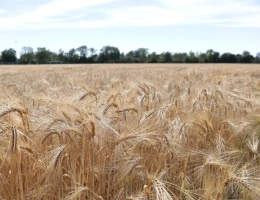
Hunting for farms for sale in the Ardennes means choosing between two worlds that the Aisne valley keeps apart: grass to the north, chalk to the south. The bocage of the Thiérache and the plateaux of the Ardenne massif carry dairy and suckler herds on permanent pasture, while the Rethélois, the Porcien and the Vouzinois belong to arable farming, led by sugar beet, lucerne and malting barley. The instructions we receive come from stockmen retiring without a family successor, from partnerships being restructured, from local rural agencies and from notaries. Each property joins the national pool of farms for sale in France.
An advert never says everything. You will find here the level of local land values, the sectors holding their ground, the districts where area comes free and the formalities that govern a first purchase. A project outside the family circle needs preparing well ahead: our white paper « Créer une exploitation agricole » (in French) sets out the method, from the choice of company form to the cash plan for the opening seasons.
Land forms the base of a farm's value. DVF, the property sales database published by the French tax administration (vineyards excluded), records a 2025 median of €5,702 per hectare in Ardennes (08), an average of €7,559 and 209 sales; four transactions in five fall between €4,229 and €14,812, against a national median of €5,307.
The SAFER land value benchmark sets €6,850 per hectare for vacant land and pasture offered for sale in the same year, -1.0% over one year and +25.0% over ten, against €6,460 nationally. Unusually, let land here is valued at €7,110, some 4% above vacant land. The gap is modest, but an inversion of this kind appears where let land falls outside SAFER's pre-emption right and where the stated price of vacant land is held down by side arrangements, key money or the separate sale of payment entitlements.
Against the Grand Est region, whose median is €5,611 per hectare, this department sits 2% higher. For commune-level detail and comparisons with neighbouring areas, see our land price observatory, then cost your purchase with our financial calculators.
Dairy farming forms the backbone of the northern half, on grass-based systems with strong forage self-sufficiency, often extended by on-farm processing or by a commitment to a regional cheese scheme. Suckler herds occupy the damp pastures of the older Ardenne and the valley bottoms that machinery struggles to reach. Southwards, arable businesses grow wheat, winter barley, oilseed rape, sugar beet and dehydrated lucerne on even chalk soils, with rotations closely tied to primary processing industries. Between the two, mixed farming holds the pre-Ardennes ridges and the Argonne.
The system chosen commits very different capital. A working farm in the Thiérache is judged on the milking parlour, slurry storage capacity, how tightly the fields group around the steading, and the value of the herd: equipment then counts as much as soil. A southern arable unit is assessed instead on the regularity of the block, the machinery line-up and the delivery contracts. Partial takeovers are common here and deserve close study: taking the land without the buildings, or the reverse, creates fragile balances that need costing before any commitment.
The Ardenne massif itself, around Rocroi, Revin and Givet, offers cold acid soils where grass rules and where area is released regularly. The Ardennes Thiérache, towards Signy-le-Petit, Rumigny and the north-west tip, keeps a dense bocage, living hedges and standard orchards: the dairy fabric is still close-knit but ageing. The Meuse valley, deeply cut between wooded slopes, leaves only narrow workable strips. Further south, the Porcien, the Rethélois and the chalk country around Attigny and Vouziers open into wide openfields, while the Argonne, clayey and forested, returns to livestock.
Competition for land is spread very unevenly. In the southern openfields, neighbouring businesses fight over every parcel released and deals are often struck before any advertising. In the north, buyers are few and an agricultural property can stay available for several seasons, which gives an incomer time to assemble finance and negotiate an entry date. Woodland covers a large share of the department as well: check how wooded parcels are classified and what rights of way serve the landlocked blocks.
Above a certain herd size, a livestock unit falls under classified-installation rules: ask for the current order, the storage and spreading requirements and the inspection history. The department's plains are designated nitrate vulnerable zones, which frames spreading periods, requires winter soil cover and sets the sizing of slurry stores — an item of work regularly underestimated at takeover. Ploughing out permanent pasture is regulated, and several wet or flood-prone stretches along the Aisne and the Meuse carry further restrictions.
On procedure, the notary brings the sale to the attention of SAFER Grand Est; the agency can pre-empt, then invite applications afresh, ranking new entrants first among its priorities. The authorisation to farm is then issued against area thresholds fixed regionally, and used to choose between rival candidates for the same property. Finally, occupancy must be verified field by field: a live tenancy gives the tenant a priority right to buy and fixes the date from which you may work the ground. Gather every tenancy, its expiry and its renewal terms before building your plan.
Stockmen close to retirement, partners going separate ways, specialist firms and Ardennes notaries publish their properties here, at the uneven pace of farm handovers. Filter first on type of production and on the share of forage area, two criteria more telling than budget alone in this department, then switch on the e-mail alert. A seller can equally put a listing online. For the regional overview, see farms for sale in Grand Est.