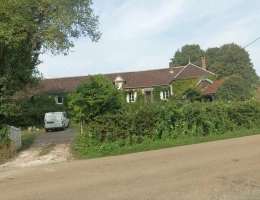
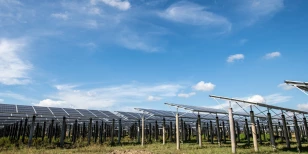
A market garden for sale in Yonne carries an advantage few departments share: Île-de-France begins just to the north, opening markets, wholesalers and box scheme networks far wider than the local customer base. The alluvial soils of the Yonne, Armançon and Serein valleys carry most of the vegetable cropping; nurseries and ornamental horticulture businesses complete the picture. Instructions reach us from growers handing over, from rural agencies and from notaries, stating the area cropped, the covered structures, the water resource and the outlets already running. They sit among our market gardens and nurseries for sale.
This page completes the listing on four fronts: what land is worth in the department, which areas genuinely keep producing sales, how to judge a set of greenhouses, and the checks specific to vegetable growing. To prepare the setting-up itself, our white paper « Créer une exploitation agricole » (in French) sets out legal status, the farming qualification and funding.
Land value drives much of the asking price for a market garden or nursery. French tax transfer statistics (DVF, vineyards excluded) show, for 2025, a median of €3,094/ha in Yonne (89), an average of €3,294/ha and 164 sales; 80% of transactions settle between €2,385 and €4,500/ha, against a national median of €5,307/ha.
On the SAFER side, the value of vacant land and pasture is set at €3,140/ha for 2025, moving -12.3% over a year and -14.7% over ten, against €6,460/ha nationally; expect an average discount of 17% where a lease is running.
The same acreage covers widely different realities here. Weight goes first to the type and age of the structures, their anchoring, thermal screens and venting, then to the resource: a licensed borehole, river pumping, drip lines, water storage capacity. Next come the washing station, cold store, packing area and sales room. Goodwill completes the picture: market pitches, wholesale agreements, box subscriptions, garden centre listings. Set the price against our land price observatory and our financial calculators.
Local stock gathers tunnels of every generation, multi-span houses on the better organised sites and, more rarely, heated glass devoted to raising transplants. Check how firmly the structures are anchored in alluvial ground, the age and tension of the films, corrosion on the hoops, how the doors run, the automatic vents and, where one exists, the boiler. An ornamental business reads differently: growing benches, heated floor, container standing ground, shade structures, potting machine, the stock of plants in production. For a field-grown nursery, value rests on levelling, drainage and overhead irrigation.
Packages combining house, shed, structures and land are the norm. Ask for the price to be split, because the residential market in the north of the department, driven by commuters, bears no relation to that of the Avallon country. Draw up a precise list of the machinery included, tractor and implements, planter, film layer, washer, grader, trolleys, refrigeration unit, and identify anything still on finance. Sold on its own, a vegetable farm parcel without structures or an abstraction licence falls back to the level of ordinary arable ground nearby.
The Yonne valley, from Auxerre to Joigny and on towards Sens, holds the most fertile and most easily irrigated soils together with the bulk of equipped vegetable holdings; Appoigny, Gurgy and Migennes mark out that corridor. The Sénonais, to the north, gains from proximity to the Paris region but pays for it with marked land pressure along the main routes. The Armançon valley, towards Brienon-sur-Armançon and Tonnerre, offers comparable conditions at more moderate prices. The Puisaye, westwards around Toucy and Saint-Fargeau, combines clay soils with many direct-selling micro-holdings. The colder Avallon country in the south stays marginal for vegetables.
That geography reads straight through into prices. The closer you get to Sens and the Paris region boundary, the tighter land becomes, including on parcels that remain zoned for farming, because residential and logistics demand piles onto agricultural demand. Westwards and southwards a smallholding is easier to secure, provided you accept a heavier delivery logistic towards the main centres of consumption, and that trade-off shapes most searches run in this department.
Start with water. Ask for the borehole or pumping file, its declaration receipt or abstraction licence, the annual volume allocated and the record of restriction orders, which recur on the department's watercourses in late summer. Then look at zoning: the alluvial valleys contain drinking water catchment protection perimeters and flood-prone sectors that limit where new structures may be put up. Confirm that the existing greenhouses were declared to the town hall, that the sales point meets the hygiene rules for direct supply, and that the electrical connection has enough capacity.
A takeover falls under the structures control, the French authorisation regime governing who may farm which land, and SAFER, the rural land agency, uses its pre-emption right frequently in areas close to towns. A rural lease in force runs with the land and binds the buyer. Where the sale includes a customer base, a trading name or subscribers, the goodwill transfers separately from the buildings. Finally, have the certifying body confirm how long each field has been in organic conversion.
The holdings on this page come from private sellers, agencies specialising in rural property and notarial offices in the department; a plant nursery for sale sometimes sits beside standalone greenhouses. Filter by area, by price and by type of production, create an alert that flags every new listing as it goes live, then extend the search to the market gardens for sale in Bourgogne-Franche-Comté.