

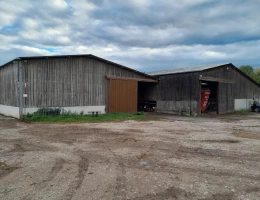
Customers are never far away here. A market garden for sale in Territoire de Belfort serves a dense urban belt, the one linking Belfort to Montbéliard and Héricourt, where farm gate sales, producer shops and weekly boxes find takers without heavy marketing. The flip side is the size of the department: farmland is scarce and holdings rarely come up. The offers that reach us, from retiring growers, rural property firms and notaries, state the covered area, the water resource, the machinery and the customer base transferred. They join our market gardens and nurseries for sale.
On so narrow a market you need to know what land genuinely costs locally, where the few opportunities surface, how to assess a set of structures and which approvals govern a setting-up. This page brings those together. Shaping the project, from legal status to the funding plan, is covered in our white paper « Créer une exploitation agricole » (in French).
Land value drives much of the asking price for a market garden or nursery. French tax transfer statistics (DVF, vineyards excluded) show, for 2025, a median of €3,820/ha in Territoire de Belfort (90), an average of €4,011/ha and 16 sales; 80% of transactions settle between €3,400 and €4,975/ha, against a national median of €5,307/ha. * Fewer than 30 recorded sales: indicative value.
On the SAFER side, the value of vacant land and pasture is set at €3,570/ha for 2025, moving -1.4% over a year and -11.0% over ten, against €6,460/ha nationally; expect an average discount of 17% where a lease is running.
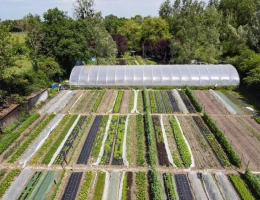
In a department short of land, equipment and goodwill carry the value. Examine the cover, multi-span houses or tunnels, its anchoring, thermal screens and venting, then the water, a licensed borehole or a mains connection, and the drip lines. Add the cold store, the washer, the packing area and the sales room, often decisive where selling happens on site. The customer book, markets held and subscribers included, then weighs very heavily. Place all of it with our land price observatory and our financial calculators.
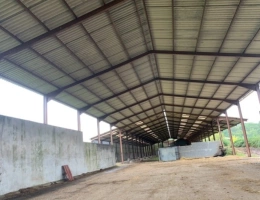
Sites on offer usually pair open-field tunnels with a few multi-span houses, sometimes a heated glasshouse given over to spring transplants. Check the anchoring and the permissible snow load, since winters at the foot of the Vosges test these structures; look at the age of the films, corrosion, automatic venting, thermal screens and what the heating burns. A greenhouse business in ornamental production is judged on other items: growing benches, heated floor, drained container standing ground, shade structures, potting machine, and above all a retail outlet open to the public, valued much like a shop in its own right.
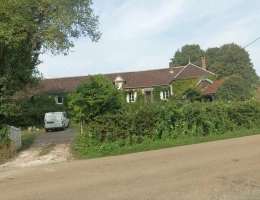
House, shed, structures and fields almost always form a single lot. Ask for the price to be broken down: the dwelling belongs to a residential market supported by local industrial employment, while the production tool is judged on earnings and funded on other terms. Draw up an inventory of the machinery included, tractor, cultivation equipment, planter, washer, trolleys, refrigeration unit, and check what remains committed to a finance house. Against that, a bare plot, however well sited, counts for little beside an equipped site that comes with its customer book.
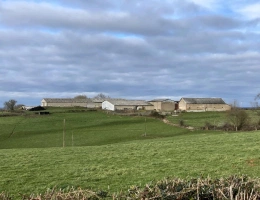
The north of the department, around Giromagny, Étueffont and Rougemont-le-Château, belongs to the Vosges foothills: acid soils, higher ground, a late spring and often sloping fields better suited to small covered areas than to open-field cropping. The Savoureuse valley concentrates urban development around Belfort, Valdoie and Bavilliers, where farmland is keenly contested but customers sit on the doorstep. The south, towards Châtenois-les-Forges, Grandvillars, Beaucourt and Delle, opens onto a more even agricultural plain with deeper soils, which holds most of the department's vegetable holdings and where open-field cropping becomes workable again.
Nearness to the Swiss border and to the neighbouring conurbations widens the market further, but it also props up prices: competition between farming, housing and business use is felt in almost every commune. Many buyers therefore widen the search into the adjoining cantons of Haute-Saône or Doubs while keeping their Belfort sales rounds, which buys more ground without giving up the urban outlet that makes the business work.
Begin with planning, which matters more here than elsewhere: read the commune's document, the reserved sitings, the growth projects and the exact zoning of each parcel, because pressure on land is strong and the long-term outlook turns on it. Then move to water: the borehole deed, declaration receipt or abstraction licence, the flow available at the end of summer and the prefectural restrictions imposed in dry seasons. Confirm that the structures were declared to the town hall, that the direct sales room complies, and that delivery vehicles can reach the site easily.
In legal terms everything rests on the structures control, the French regime that makes taking over farmland subject to authorisation, and on SAFER, the rural land agency, whose pre-emption is common on the urban fringe. Rural leases in force continue with the incoming operator. Where a customer base and a trading name are taken over, the goodwill is dealt with separately. Finally, check with the certifier how far any organic conversion has run, and weigh the seasonal labour available in an area where industry competes for workers.
Retiring growers, rural property practices and notaries across the Belfort area supply this page, where a plant nursery for sale, a vegetable farm or a mixed smallholding appears as instructions come in. Refine by area, by price and by production, create an alert so a scarce listing does not pass you by, then widen to the market gardens for sale in Bourgogne-Franche-Comté.


