

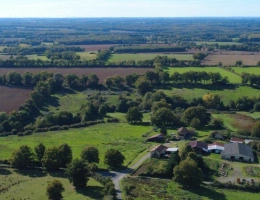
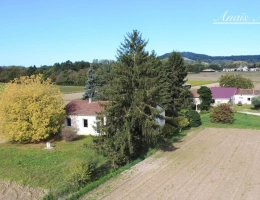
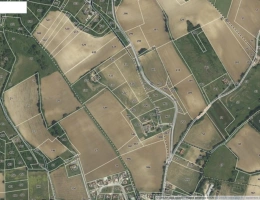
Looking for an arable farm for sale in Charente-Maritime leads into three distinct farming worlds: the Aunis plain, wide open to wheat, oilseed rape and sunflower; the drained marshes of the north and of the estuary; and the stony groie soils of the Saintonge, where irrigated maize has long held its place. The properties shown are entrusted by farmers reaching the end of their careers, by rural property firms and by notarial offices in Surgères, Saint-Jean-d'Angély or Saintes; they state the rotation, the rented share, the irrigable area, the storage and the machinery. Consider them alongside the arable farms for sale listed throughout the country.
This page rounds the listings out with the land values recorded in the department, the districts where sales follow one another, how to weigh up a Saintonge steading, its grain bins and its lorry access, and the checks attached to a cereal farm that depends on collectively managed water. If you are building a setting-up project, our white paper « Créer une exploitation agricole » (in French) marks out the stages.
Pricing the land comes first in any plan to buy an arable farm. On the basis of 2025 DVF sales (vineyards excluded), the median in Charente-Maritime (17) works out at €5,347/ha and the average at €5,256/ha, across 328 transactions. The central range covering 80% of sales runs from €2,974 to €7,165/ha; nationally the median is €5,307/ha.
The SAFER benchmark, the market's second yardstick, gives €5,760/ha in 2025 for vacant land and pasture (+0.2% over twelve months, +19.0% over ten years), beside a national €6,460/ha; tenanted land is worth about 17% less.
Two units of the same acreage are not worth the same money: everything turns on soil potential and how quickly the ground dries out, on how compact the blocks are, on the abstraction volume allocated and the state of the irrigation network, on ditch upkeep and drainage in the marsh, on storage capacity and the drier, on the age of the combine, on basic payment entitlements and on the outlet contracted with a cooperative or a grain merchant. To position yourself, open our land price observatory and our financial calculators.
The Aunis plain offers deep and consistent arable land suited to soft wheat, oilseed rape, barley and sunflower, with protein crops in the rotation. The drained marshes rest on heavy clays, locally called bri, fertile but awkward to work: how fast they dry governs when you can travel them at all, and depends entirely on the upkeep of ditches and collective hydraulic works. The stonier Saintonge groies come into their own with maize wherever water can be reached. Insist on soil analyses, workable depth and results block by block rather than a whole-farm average.
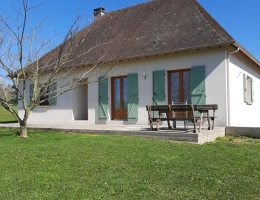
Buildings are dominated by framed sheds, rows of bins and wide concrete aprons, sometimes backed by a limestone farmhouse. Check the ventilation, the seal of the bins, the intake pit, the electrical supply available and whether the access carries weight in wet spells. A grain farm with a drier of its own gains real flexibility on late harvests. In a department where residential demand stays firm, the dwelling is always valued separately from the productive tool.
The north of the department, around Surgères, Courçon, Marans and Aigrefeuille-d'Aunis, forms the most uniform and most contested cropping block: compact field layouts, collection points close by, neighbours ready to expand. Around Saint-Jean-d'Angély and Matha, the Saintonge plains combine cereals, oilseeds and vines within the delimited cognac area, which lifts land values. Towards Rochefort and the estuary, the marshes impose their hydraulic constraints. In the Haute-Saintonge, near Jonzac and Montendre, sandy soils, forest and vineyards thin out the supply of arable land.
Competition from the vineyard and, along the coastal fringe, from residential and tourist uses pushes values upward, while the interior leaves more room to negotiate. Before committing, measure how far the blocks lie from the steading and from the collection silo, and allow for summer traffic on the coastal roads, which noticeably stretches harvest and haulage operations.
The transaction goes through the structures control, the prefectural authorisation governing new entrants and farm expansion, and SAFER, the rural land agency, may pre-empt once the notary has notified the sale. Each rural lease is examined on its own: renewal date, rent, practice commitments, and the tenant farmer's priority claim to buy. Water remains the central subject: the Charente and Sèvre Niortaise basins are classified as water allocation zones, summer abstraction is shared out by a single collective management body, and restriction orders are issued regularly. Have the fate of the allocated volume after the sale written down in black and white.
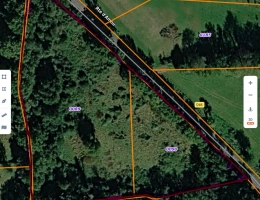
In the marshes, check membership of the syndicate responsible for ditches and hydraulic works, the contributions that go with it, the Natura designations and the requirements set by coastal flooding prevention plans. Elsewhere, verify the transfer of basic payment entitlements, the match between the graphical field register and the advertised areas, the catchment protection perimeters, and finally the fuel tanks and the crop-protection store.
Private sellers, rural property agencies and notaries across the department lodge their mandates here as they come. Target an area, a budget or a district, switch on an alert so you hear the moment a crop farm matches your plan, and carry on to the arable farms for sale in Nouvelle-Aquitaine.


