

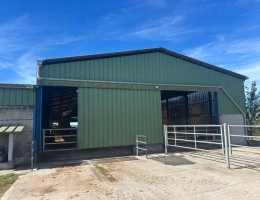
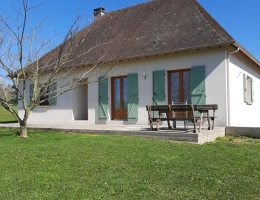
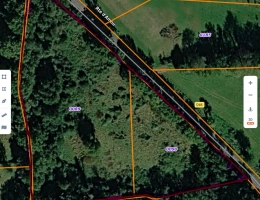
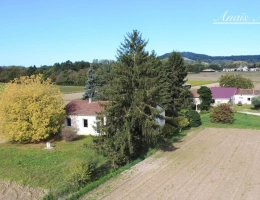
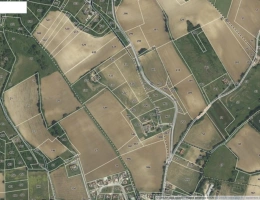
Buying one of the farms for sale in Charente-Maritime means choosing between two kinds of ground that this department sets side by side. On one hand the limestone-clay plains, ploughed for cereals and oilseeds, where the water supply governs the cropping plan. On the other the natural grassland of the coastal marshes, worth what the water level, the grazing rights and the environmental commitments attached to it allow. The holdings come from farmers standing down, from companies whose partner is leaving, from notarial offices in Saintes, Surgères and Jonzac, from succession advisers and rural agencies. Each listing states area, parcel layout, cropping, buildings and whatever remains tied to a tenancy. They take their place in our countrywide survey of farms for sale in France.
What decides a purchase sits under the listings rather than in them: what land is genuinely worth depending on whether it is limestone clay, chalky plain or marsh, which cantons see one handover after another, which sectors still carry the local farming economy, and which checks belong before a preliminary contract. Where the project is still open, our white paper « Créer une exploitation agricole » (in French) covers the choice of legal status, the costings and the approach to a bank.
Land forms the base of a farm's value. DVF, the property sales database published by the French tax administration (vineyards excluded), records a 2025 median of €5,347 per hectare in Charente-Maritime (17), an average of €5,256 and 328 sales; four transactions in five fall between €2,974 and €7,165, against a national median of €5,307.
The SAFER land value benchmark sets €5,760 per hectare for vacant land and pasture offered for sale in the same year, +0.2% over one year and +19.0% over ten, against €6,460 nationally. Land sold with a tenancy in place is valued at €5,140, a discount of about 11%.
Against the Nouvelle-Aquitaine region, whose median is €4,538 per hectare, this department sits 18% higher. For commune-level detail and comparisons with neighbouring areas, see our land price observatory, then cost your purchase with our financial calculators.
The plains of the Aunis and the Val de Saintonge carry the most visible part of local farming: arable holdings growing soft and durum wheat, oilseed rape, sunflower and maize, whose balance rests on secured irrigation. The north of the department keeps a core of dairy units geared to protected butter and cream, with renewed milking equipment and structures that have grown with each handover. In the marshes of Rochefort, Brouage and the Seudre, suckler beef enterprises use wet grassland that no other production could turn to account.
The Cognac vineyard, running along the eastern edge of the department, belongs to another section of the site and is not part of this selection. Around the main sectors sit niche productions that weigh heavily per hectare: early island potatoes, melon, asparagus and seed crops. There the valuation shifts from land to the contract, the specialist machinery and the storage; ask how long the commitments run and whether they pass to a buyer.
The Aunis, between La Rochelle, Surgères and Marans, combines deep soils with strong urban pressure: land trades high and parcels rarely come free in one block. The Val de Saintonge, around Saint-Jean-d'Angély, remains the cereal heart, with sizeable structures and an active market. The Saintonge romane and the approaches to Saintes mix cropping, livestock and good period buildings. Further south, the Haute-Saintonge, from Jonzac to Montendre, brings together woodland, grass and cropping on lighter soils, with the most moderate entry prices in the department.
Along the coast and on the Arvert peninsula, residential and holiday demand takes area out of farming every year and lifts the price of the little that sells. The marshes, by contrast, offer large volumes of grass at reachable levels, but impose a constrained way of farming. It is therefore in the Saintonge hinterland that a buyer finds the best ratio between area, buildings and borrowing capacity on an agricultural property.
Part of the department is classed as a nitrate-vulnerable zone and several catchments, including the Boutonne, fall under water-allocation rules: abstraction volumes are capped, revised and sometimes cut during the season. Before any offer on an irrigated holding, establish where the resource comes from, whether the abstraction permit is current, whether the farm belongs to a collective management body, and what restrictions were applied in recent years. On marshland, add the agri-environment schemes under way and the water-level easements.
Then come the fixed steps of French rural law, best taken in order. The sale is notified to SAFER first, which retains the option to pre-empt. An authorisation to farm is then applied for, assessed against the area thresholds set for Nouvelle-Aquitaine by the regional structures plan. Last, the status of each block: vacant farmland carries neither the value nor the availability of let parcels, on which the tenant keeps the first right to buy.
The flow of listings follows the pattern of retirements and thickens once harvest is over: setting an e-mail alert early beats dropping in on the list at random. Set the filter on the sector and on secured water first, and only then on area and budget. Handing on your own holding? Post your listing. For a wider view, open farms for sale in Nouvelle-Aquitaine.


