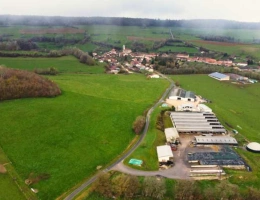
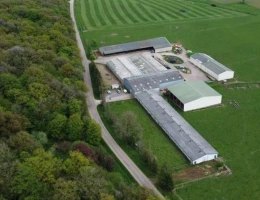
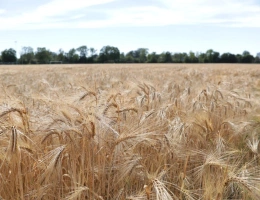
Acquiring an arable farm for sale in Bas-Rhin means entering one of the most intensive cropping areas in eastern France: the loess of the Kochersberg, the Rhine plain and the Outre-Forêt carry rotations led by grain maize and wheat, with sugar beet, oilseed rape and diversification crops alongside. The properties shown here are entrusted to us by farmers at the end of their careers, by rural land advisers and by notaries in Strasbourg, Haguenau or Saverne; they record how fragmented the parcels are, the irrigation equipment, the storage and the drying plant. They join the arable farms for sale presented nationwide.
What follows completes the listings: benchmarks for land values in Bas-Rhin, the districts where holdings pass from hand to hand, a method for judging an Alsatian farmstead and its drier, and the regulatory constraints peculiar to the plain. To prepare the setting-up itself, our white paper « Créer une exploitation agricole » (in French) details every stage of the route.
Pricing the land comes first in any plan to buy an arable farm. Land transaction data does not cover this department (Alsace-Moselle land register), so the figures below are those of the Grand Est region. On the basis of 2025 DVF sales (vineyards excluded), the median in the region works out at €5,611/ha and the average at €7,490/ha, across 1,233 transactions. The central range covering 80% of sales runs from €3,151 to €14,830/ha; nationally the median is €5,307/ha.
The SAFER benchmark, the market's second yardstick, gives €6,470/ha in 2025 for vacant land and pasture (-2.4% over twelve months, -5.5% over ten years), beside a national €6,460/ha; tenanted land is worth about 17% less.
Beyond area, a buyer looks at the depth of the loess and its water reserve, whether a licensed borehole and the irrigation gear that goes with it are included, how fragmented the ground remains after land reorganisation, maize drying capacity, bin volume, the condition of the machinery fleet, the basic payment entitlements and the contract tying the business to its cooperative or merchant. A grain farm that dries and stores on site gains real independence. Test your assumptions against the land price observatory, then refine the funding plan with our financial calculators.
The loess silts of the Kochersberg and the pays de Hanau rank among the most productive cropland in north-eastern France: deep and easy to work, they carry a rotation in which grain maize holds the central place, alongside wheat, sugar beet and oilseed rape. In the Ried and the ground near the river Ill, waterlogged soils call for drainage that is genuinely maintained; towards the Alsace Bossue, clay and sandstone land needs other approaches. Ask for soil analyses, the drainage plan, the abstraction permits and yields by block, and check whether any diversification of the rotation has already begun.
Equipment accounts for a large share of value here. Check the yield and compliance of the borehole, the age of the reel or pivot irrigator, the capacity of the drier and how it is fuelled, bin volume and ventilation, and lorry access. A cereal farm with a drier of its own controls the tight timing of the maize harvest. In the closed-courtyard farms typical of the plain, the half-timbered house deserves a separate valuation, so distinct are the rules of the Alsatian residential market.
The Kochersberg, between Truchtersheim, Marlenheim and Brumath, remains the department's granary and the district where land is most fiercely contested. The Outre-Forêt, around Soultz-sous-Forêts, Wissembourg and Seltz, offers larger holdings at a slightly lower entry cost. The Ried plain, from Benfeld to Erstein and Sélestat, combines irrigated cropping with flood constraints. To the west, the pays de Hanau and the Alsace Bossue, towards Bouxwiller, Sarre-Union and Drulingen, mix cropping with livestock on poorer ground. The Vosges foothills belong to the vineyard and fall outside the scope of arable land.
Scarcity owes as much to the growth of the Strasbourg conurbation and the corridors serving it as to the density of farms. Ground that comes free often goes to neighbours already established, and a complete takeover is an infrequent opportunity. In the Alsace Bossue and the northern Outre-Forêt, the terms of entry remain more open to a buyer arriving from another department.
Every takeover falls under the structures control, the administrative authorisation required to set up or expand, and SAFER, the rural land agency, may pre-empt once the sale is notified. Bas-Rhin also applies the local Alsace-Moselle law: ownership is entered in the livre foncier, the local land register, which changes how you verify title, easements and mortgages. Examine the rural leases parcel by parcel, paying attention to remaining terms and to the tenant's right of pre-emption, and put in writing any informal arrangement between families, common in the villages of the plain.
On the environmental side, find out about classification as a nitrate vulnerable zone, about the catchment perimeters protecting the Rhine aquifer, and about the flood risk prevention plans along the Ill and the Rhine: all three govern farming practice as well as building projects. Confirm the transfer of the basic payment entitlements, the validity of the abstraction permits, and the match between the graphical field register and the areas advertised.
The properties visible on this page reach us from retiring owners, from agencies specialising in rural estates and from Alsatian notarial offices. Narrow by area, by budget or by farming district, schedule an alert so no handover escapes you, and extend the search to the arable farms for sale in Grand Est.