
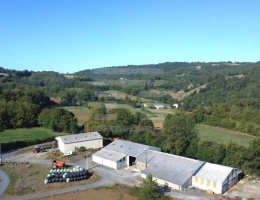
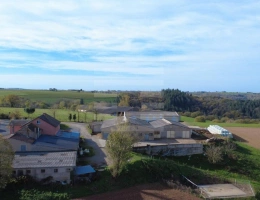
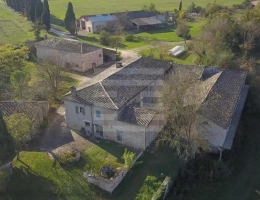
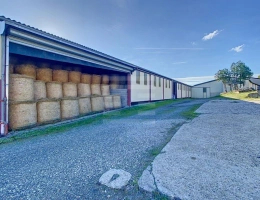

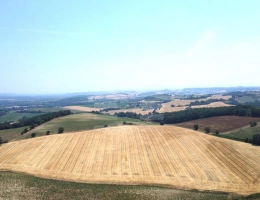
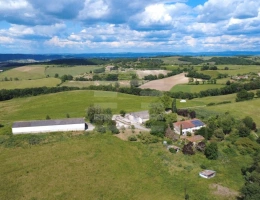
Looking for a goat farm for sale in Tarn leads into a department of two halves, where the eastern uplands carry grass-based herds while the Albi plain stays given over to field crops and vines. The holdings shown here are entrusted to us by breeders arranging their exit, by rural agencies covering the south-west and by notarial offices in the Albigeois, the Castrais and the Ségala; every description states how many animals are milked, what the goat shed consists of, which milking equipment is fitted, how much forage area comes with it and where the milk goes. All of them join our national directory of goat farms for sale.
This page adds what weighs at decision time: the value of local pasture, the districts where a caprine unit most often comes onto the market, how to judge an older livestock building, and the checks that come with making cheese on the farm. Our white paper « Créer une exploitation agricole » (in French) also sets out legal structures, permits and funding plans.
Land weighs heavily on the budget for a goat farm. Transfers published by the French tax authorities (DVF, excluding vineyards) put the median for farmland in Tarn (81) at €6,000/ha in 2025, with an average of €6,408/ha over 86 sales. Eight transactions in ten settle between €2,887 and €10,000/ha, where the national median is €5,307/ha.
A second reference, the SAFER land value benchmark, sets vacant land and pasture at €6,530/ha for 2025, +3.3% in a year and +5.5% over a decade; the French average is €6,460/ha, and a sitting tenant costs a plot roughly 17% of its value.
Beyond the hectares, the asking price of a caprine holding is built on the working tool and on the animals: the volume and ventilation of the shed, the milking platform or parlour, the bulk tank, hay storage, effluent handling, then the make room, drying room and ripening cellar where the milk is processed. The breeds kept, the health record, the ability to rear replacements and the strength of the outlet follow, whether a dairy contract or a market clientele. To place each heading, keep our land price observatory and our financial calculators within reach.
Buildings here mix recently raised timber-clad goat housing, converted sheepfolds and stone barns reworked as the herd grew. Summer heat, pronounced in the valleys as on the slopes, steers the visit: height under the ridge, adjustable openings, air movers, shade over the collecting yard, insulation of the milk room. Then come the milk line, its washing system and metering, the tank capacity, and the muck pad and slurry store, whose compliance puts an immediate figure on the work ahead. Hay storage volume matters a great deal in a department where dry summers sometimes force forage to be bought in.
Where the farm makes its own cheese, the reading changes: make room, drying room, ripening cellar, cold store and sales point form an asset worth what the approval, the volumes committed and the existing customer base make it. A unit that delivers is judged differently, on the regularity of collection and the terms of its contract. Faced with a farm offered with house, outbuildings and land, ask for a heading-by-heading breakdown: on the slopes near Albi or Gaillac the residential share climbs quickly.
Caprine holdings cluster in the eastern half of the department. The Ségala, around Carmaux, Monestiés and Pampelonne, combines pasture, woodland and generously sized livestock buildings. The monts de Lacaune, from Brassac to Murat-sur-Vèbre, offer grass, rough grazing and less contested land, even if the sheep sector weighs heavily on what becomes available. The Montagne Noire towards Dourgne and Mazamet, and the Sidobre, complete this string of grassland districts. The Gaillac vineyard, the Albi plain and the Tarn part of the Lauragais, by contrast, keep their land for crops and show markedly higher values.
No caprine cheese designation covers the department, so value rests on regional collection, on the markets of Albi, Castres and Gaillac, on producers' shops and on steady demand for organic produce. Being within reach of the Toulouse conurbation widens the direct-sales outlet further, but it also pulls up the price of properties sitting along the Castres-Toulouse corridor.
Depending on herd size, the unit falls under declaration, registration or authorisation within the French classified installations regime, any change of operator being notified to the prefecture; the smallest herds stay governed by the departmental health regulation, which watches distances from dwellings and neighbours. Water calls for serious examination on the slopes and at altitude: where the resource comes from, the abstraction permit, how the flow holds up in late summer, drinking arrangements on distant grazing, existing reservoirs and their legal status. Check too which agri-environmental commitments still run on the parcels.
Ask for the herd's health history, CAEV monitoring, the caprine arthritis-encephalitis virus, paratuberculosis screening and cell counts, along with the food safety plan and the approval or derogation covering direct supply where milk is processed on site. Organic certification is confirmed with the certifying body before any commitment. On land, rural leases continue with the buyer subject to the landlord's agreement, and the deal passes through the structures control, the French authorisation regime for taking over farmland, then through SAFER.
Retiring breeders, rural estate agencies and notaries based between Albi, Castres and Gaillac feed this page. Compare holdings on forage area, on budget or on where the milk goes, then arm an e-mail alert: a dairy goat holding draws more candidates here than there are sellers. Stepping back from the herd yourself? Post the listing. Your search can then reach across the goat farms for sale in Occitanie.