
Looking for a goat farm for sale in Hérault leads into a department of contrasts, where caprine herds hold the garrigue, the limestone plateaux and the slopes of the Haut-Languedoc while the plain stays given over to vines. The properties shown here reach us from breeders preparing to step back, from firms that specialise in rural land and from local notarial offices; each description states herd size, what the housing consists of, whether a processing workshop is attached and how the area splits between pasture and rough grazing. You will find them within our national selection of goat farms for sale.
Added to that is what listings never say: local land values, the uplands where a holding most often changes hands, the condition of buildings that must cope with severe heat, and the checks raw-milk processing imposes. The white paper « Créer une exploitation agricole » (in French) supports the project itself, from farming qualification through to the funding plan.
Land weighs heavily on the budget for a goat farm. Transfers published by the French tax authorities (DVF, excluding vineyards) put the median for farmland in Hérault (34) at €10,000/ha in 2025, with an average of €11,191/ha over 29 sales. Eight transactions in ten settle between €4,795 and €20,470/ha, where the national median is €5,307/ha. * Fewer than 30 recorded sales: indicative value.
A second reference, the SAFER land value benchmark, sets vacant land and pasture at €13,290/ha for 2025, -1.4% in a year and +74.0% over a decade; the French average is €6,460/ha, and a sitting tenant costs a plot roughly 17% of its value.
What changes hands here goes well beyond area. A buyer pays for the housing and its summer comfort, the milking platform, the bulk tank, the make room and its ripening cellar, the water resource, the reach of scrub-covered grazing, and then for the animals: breeds, age structure, replacement stock, health record. The outlet completes the sum, from Pélardon sold on market stalls to milk handed to a dairy. Weigh them with our land price observatory and our financial calculators.
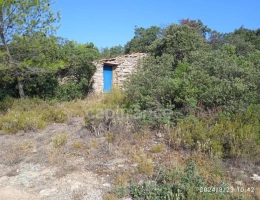
Local buildings mix converted stone sheepfolds, open-sided barns and new goat housing raised on a concrete slab. Climate drives the inspection: height under the ridge, cross ventilation, air movers, shade over the collecting yard, insulation of the milk room, everything that lets a herd pass the summer without losing yield. Then check the milk line and its washing system, the tank capacity and the reliability of the electricity supply in isolated hamlets, followed by hay storage volume, decisive where grass growth stops early. A unit whose effluent handling and services already comply costs more, but spares the buyer a long programme of works on a constrained site.
On-farm processing is the rule rather than the exception: make room, drying room, ripening cellar, cold store and sales point form a whole whose worth depends on the approval held, the volume handled and the customer base already built. A herd delivering into collection is weighed differently, on how reliably the tanker comes and on contract terms. As soon as a complete farmstead comes with dwelling, outbuildings and land, break the figure down item by item: the residential share quickly overtakes the farming asset as you move down towards the plain.
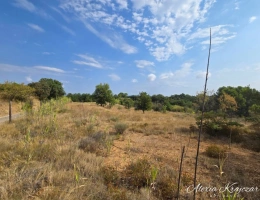
The Haut-Languedoc gathers most of the herds: the Espinouse and Caroux uplands, the Orb valley around Bédarieux and Olargues, the edges of the regional nature park, where heath gives cheap pastoral feed. The Lodévois and the southern Larzac, from the Salagou to Le Caylar by way of Lodève, offer windswept plateaux and buildings often inherited from sheep farming. Further west, the Minervois of Hérault and the foothills of Saint-Chinian combine vines with small units. The coastal plain, from Béziers to Montpellier, leaves little room for livestock and carries the sharpest land pressure.
The Pélardon designation covers a wide share of the department and underpins direct selling, carried by markets, producers' shops and a large urban and visiting clientele. That closeness is a genuine commercial asset, yet it tightens the land market as soon as you near the coast or the city; the upland cantons trade lower, which distance and summer drought account for.
A dairy goat holding is also judged on its administrative framework. Depending on numbers, the unit falls under declaration, registration or authorisation within the French classified installations regime, with any change of operator notified to the prefecture; smaller herds remain governed by the departmental health regulation and its siting distances from neighbours, a sensitive point in villages where new housing has crept towards the farms. Water calls for the same rigour: where the resource comes from, the abstraction permit, late-summer flow, restriction orders, and drinking arrangements on grazing far from the buildings.
Fire risk then becomes a management constraint of its own: statutory clearing obligations around buildings, access for fire crews, the state of the tracks, and grazing agreements signed with forest owners or a commune. Ask for the herd's status on CAEV, the caprine arthritis-encephalitis virus, and on paratuberculosis, and for the food safety plan where milk is processed. The sale finally passes through the structures control, the French authorisation regime for taking over farmland, then through SAFER.
Private sellers, rural estate agencies and notarial offices from the upland cantons and the Béziers area keep this page supplied. Sort what you see by grazing area, by budget or by how the milk is valued, then arm an e-mail alert: in this department a goat unit coming up for handover draws visits quickly. Arranging your own succession? Post the listing. Open the search out to all goat farms for sale in Occitanie.