
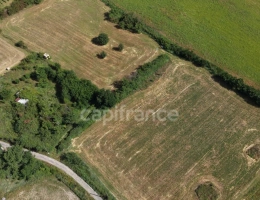
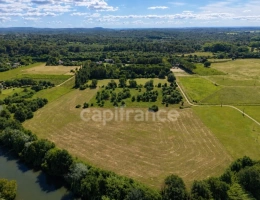

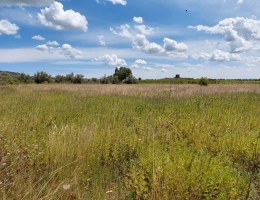
Buying a goat farm for sale in Gard means taking over a trade rooted in the Cévennes and on the limestone causses, where goats have long turned chestnut groves, heathland and stony slopes into milk that no crop could draw from them. The properties gathered here are brought to market by breeders organising their withdrawal, by agencies specialising in rural estates and by local notaries; they give herd size, the design of the building, the grazing area, how the milk is valued and whether a processing workshop is attached. They take their place in our national selection of goat farms for sale.
What you will find here usefully completes a listing: local land values, the valleys and plateaux where a holding most often surfaces, the condition of buildings to inspect on steep ground, and the controls attached to raw milk. To prepare a takeover or a start-up, our white paper « Créer une exploitation agricole » (in French) sums up the procedures, the legal forms and the funding.
Land weighs heavily on the budget for a goat farm. Transfers published by the French tax authorities (DVF, excluding vineyards) put the median for farmland in Gard (30) at €14,000/ha in 2025, with an average of €13,165/ha over 39 sales. Eight transactions in ten settle between €6,532 and €20,675/ha, where the national median is €5,307/ha.
A second reference, the SAFER land value benchmark, sets vacant land and pasture at €14,360/ha for 2025, +8.5% in a year and +48.8% over a decade; the French average is €6,460/ha, and a sitting tenant costs a plot roughly 17% of its value.
On terrain like this, the worth of a caprine holding sits in the working tool rather than in the hectares: the shed and its airflow, the milking platform, the bulk tank, the make room, the drying room, the ripening cellar and the sales point, the reach of the grazing, the water resource. The herd follows, through breeds, age and replacement, together with the outlet, from Pélardon sold at the gate or on market stalls through to milk taken by a dairy. Bring these against our land price observatory and our financial calculators.
Buildings range from a former silkworm house or schist fold reworked for goats to a shed set on a cut platform. Watch the bearing and drainage of the ground, the way rainwater is carried off slopes that react fast to a storm, ventilation within an often low volume, access for hay lorries and the water tanker, and whether forage is sheltered from the wind. The parlour, frequently built as a lean-to, is judged on its milk line, the capacity of the tank and the reliability of the electrical supply at isolated farmsteads. A holding already compliant sells better, and spares work that is awkward on a constrained site.
On-farm cheese making is the rule here rather than the exception: make room, drying room, cellar, cold store and sales point are valued according to the approval or derogation held, the volume handled and a customer base largely fed by the tourist season. A herd delivering to a dairy is assessed instead through the regularity of collection and the contract terms. Faced with a complete farmstead offered with dwelling, outbuildings and land, always ask for the detail: the residential worth of Cévenol stone can absorb most of the price.
The Cévennes of the Gard, from Saint-Jean-du-Gard to Lasalle, Saint-Hippolyte-du-Fort and on to Le Vigan and the slopes of the Aigoual, form the caprine heart of the department, with herds run over chestnut groves and rough grazing. The causses, around Blandas and the Gard side of the Larzac, offer wider areas but an uncertain water supply. The garrigue, between Anduze, Alès and the Uzège, combines dry grazing, stone farmsteads and customers on the edge of town. Towards the Rhône valley, the Costières and the Nîmes plain, vines, orchards and urban sprawl hold the ground and leave little room for goats.
The Pélardon designation area covers much of the department and shapes the marketing, alongside the markets of Alès, Uzès, Nîmes and Le Vigan, producers' shops and sales at the farm gate. The inner valleys and upland cantons remain the most affordable; the Uzège, the surroundings of Nîmes and the tourist districts show far more contested land, even for modest areas.
A dairy goat holding here is placed first against the French classified installations regime: depending on numbers the unit falls under declaration, registration or authorisation, and a change of operator must be reported to the prefecture, while smaller herds stay governed by the departmental health regulation and its distances from dwellings. Water commands everything else: where the resource comes from, the abstraction permit, late-summer flow, the restriction orders that come round often, and drinking arrangements on grazing far from the farmstead.
Fire risk and clearance obligations frame the use of scrubbed-over grazing, as does whether tracks stay passable for emergency services. Where the unit processes, insist on the food safety plan, the approval or derogation covering direct supply, the self-monitoring records and, where relevant, certification under the designation or organic rules. Parcels are often fragmented and partly rented: rural leases continue with the buyer subject to the landlord's agreement, and the sale remains subject to the structures control, the French authorisation regime for taking over farmland, then to SAFER.
Properties shown on this page come from retiring breeders, rural estate agencies and notarial offices based from the Cévennes to the Rhône valley. Rank them by altitude, by budget or by where the milk goes, then switch on an e-mail alert: a smallholding of this sort finds a buyer quickly in this department. Handing your farm on? Post the listing. Move on to goat farms for sale in Occitanie.