

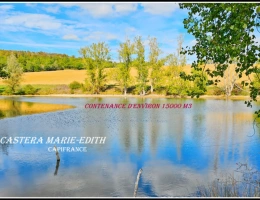
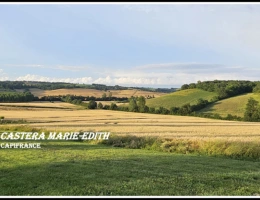
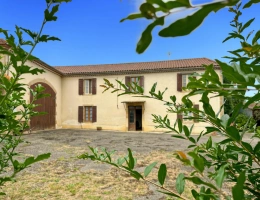
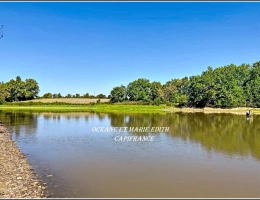
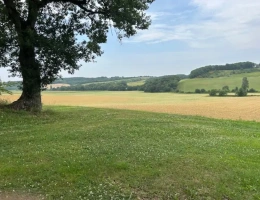
Acquiring a goat farm for sale in Gers means backing a department of rolling hills where caprine livestock stays a minority alongside cereals, vines and waterfowl, but where farmhouse units enjoy a solid gastronomic reputation and steady rural tourism. The properties assembled here come from breeders preparing their sale, from rural land specialists and from Gascon notaries; they give herd size, what the buildings consist of, the milking equipment installed, whether a cheese room is attached and how much of the cropping is grass. They sit alongside the rest of our national selection of goat farms for sale.
Beyond the description, this page sheds light on what weighs on the decision: local land values, the pays where a holding appears, the state of buildings often designed for other enterprises, and the checks specific to raw-milk processing. To build a takeover project, our white paper « Créer une exploitation agricole » (in French) describes the stages, from professional qualification through to funding.
Land weighs heavily on the budget for a goat farm. Transfers published by the French tax authorities (DVF, excluding vineyards) put the median for farmland in Gers (32) at €6,897/ha in 2025, with an average of €6,763/ha over 248 sales. Eight transactions in ten settle between €4,063 and €9,500/ha, where the national median is €5,307/ha.
A second reference, the SAFER land value benchmark, sets vacant land and pasture at €7,100/ha for 2025, -2.1% in a year and +6.4% over a decade; the French average is €6,460/ha, and a sitting tenant costs a plot roughly 17% of its value.
On a caprine holding, value concentrates in the working tool and in the trade. What counts first is the shed and its airflow, the parlour, the bulk tank, the make room, the drying room, the cellar and the sales point, then the water resource and forage storage capacity. Next come the animals, their breeds and their replacement, and finally the customers: open-air markets, producers' shops, restaurants, farmhouse table or dairy collection. Bring it all alongside our land price observatory and our financial calculators.
Caprine units here usually sit in buildings designed for something else: cob or brick barns, grain stores re-partitioned, former poultry buildings converted. Inspection starts with headroom under the roof frame, ventilation through hot dry summers, shade over the collecting yard, the stability of clay soils that move in drought, and insulation of the milk room. Then check the milk line and its washing system, tank capacity, the effluent store, hay storage and access for lorries along hillside tracks that can suffer after a storm.
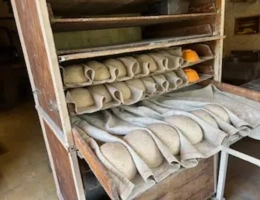
The cheese room makes all the difference here: make room, drying room, ripening cellar, cold store and sales point are valued through the approval or derogation held, the volumes handled and the customer base, often tied to markets and to welcoming visitors on the farm. A herd delivering to a dairy is estimated instead on the regularity of collection and the contract terms. When a complete property is offered with a Gascon house, outbuildings and land, ask for the price breakdown: characterful stone trades on a residential market quite separate from the farming asset.
The Astarac, around Mirande and Masseube, offers the grassiest hills, some of the most accessible land in the department and modest farms suited to a first entry. The Savès, towards Lombez and Samatan, benefits from being close to Toulouse, hence from direct outlets, but its ground is more sought after. The Armagnac and the Ténarèze, from Nogaro to Eauze and Condom, mix vines, livestock and tourism, with uneven prices depending on how close the vineyard sits. The Lomagne, around Lectoure and Fleurance, largely given to cereals and vegetables, leaves little area free for a herd.
No caprine designation applies in the department: selling rests on weekly markets, producers' shops, local restaurants and a holidaymaker clientele present much of the year. The hills in the south stay the most affordable; the wine-growing districts and the east, turned towards the Toulouse conurbation, show appreciably higher values for comparable areas.
Depending on numbers, such a unit falls under declaration, registration or authorisation within the French classified installations regime, a change of operator being brought to the prefecture's attention; smaller herds remain subject to the departmental health regulation and its distances from dwellings. In a department marked by dry summers and clay soils, the water resource must be documented: where it comes from, the abstraction permit, any hillside reservoir, late-season flow and use restrictions. Insist too on the herd's status for CAEV, the caprine arthritis-encephalitis virus, and paratuberculosis.
Processing presupposes a food safety plan, an approval or derogation covering direct supply and self-monitoring records open to inspection, completed by organic certification where it exists. On the parcels, the way they interlock with cereal farms makes it necessary to verify boundaries, access tracks and any irrigation easements. Rural leases continue with the buyer subject to the landlord's agreement, and the deal remains subject to the structures control, the French authorisation regime for taking over farmland, as well as to SAFER's pre-emption right.
Breeders at the end of their careers, rural estate agencies and Gascon notarial offices entrust this page with what you see on it. Select by grass area, by budget or by where the milk goes, then create an e-mail alert, because a goat cheese farm comes up infrequently in this territory. Organising your handover? Post the listing. Widen afterwards to goat farms for sale in Occitanie.