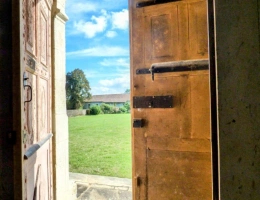
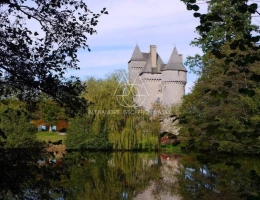
A historic monument for sale in Nouvelle-Aquitaine can just as easily be a Limousin abbey, a golden-stone Périgord chateau, a Charente manor house or a Basque fortified farmhouse. From Poitou to the Adour, by way of the Périgord, the Limousin and the Bordeaux area, the region brings together one of the most varied ranges of protected heritage in France, rooted in a long religious, military and wine-growing history. Properties on offer range from a classified building restored down to its outbuildings to a registered residence still awaiting complete renovation. Browse the historic monuments for sale listed by the region's private owners, agencies and notaries.
This page sets out the protected typologies found across Nouvelle-Aquitaine, the areas where they cluster, the obligations and grants attached to a classified or registered building, and the checks to carry out before buying. To place this project within the wider approach to purchasing a character residence, read our guide to buying prestige property in France.
Materials vary sharply from one area to another: golden limestone with lauze or flat-tile roofs in the Périgord, timber framing and white stone in the Charente and Charente-Maritime, granite across the Limousin, brick and stone around Bordeaux, and pebble-and-timber Basque building near the Adour. The dominant typologies are the remodelled fortified chateau, the fortified farmhouse, the Romanesque abbey or priory, the turreted Charente manor and the town mansion of Bordeaux, Angoulême or La Rochelle. A number of mills on the Charente, the Dordogne or the Vézère complete this protected built heritage.
Outbuildings, a dovecote, a private chapel, a wine store or a timber-framed barn, are often protected on the same footing as the main house. Many of these residences retain original features, roof timbers, carved fireplaces or wall paintings, while still standing as a residence to restore methodically, particularly the limestone renders and older roof coverings. Recent projects favour materials compatible with the old fabric and contractors trained in traditional techniques.
The Deux-Sèvres and the Vienne, around Niort and Poitiers, retain a dense Romanesque and Renaissance heritage. The Charente-Maritime and the Charente combine wine-growing manors and coastal fortifications, from Saintes to Cognac and La Rochelle. The Haute-Vienne, the Creuse and the Corrèze, at the heart of the Limousin, offer more secluded granite residences around Limoges, Guéret and Brive. The Dordogne, in the Périgord, concentrates chateaux and bastide towns along the Dordogne and the Vézère. The Gironde, around Bordeaux and the Arcachon basin, adds sought-after urban and wine-growing heritage. The Lot-et-Garonne, the Landes and the Pyrénées-Atlantiques complete the picture, from the Garonne valley to the Béarn and the Basque Country.
Bordeaux Saint-Jean, Angoulême, La Rochelle, Poitiers, Niort, Agen, Dax and the Basque Country stations are served by TGV, while the Haute-Vienne, the Creuse and the Corrèze remain linked to Paris by Intercités and TER trains. Only the Charente-Maritime, the Gironde, the Landes and the Pyrénées-Atlantiques front the Atlantic; the coastal areas and the wine-growing Bordeaux region rank among the most sought after, while the Limousin and inland Périgord remain more affordable for a protected property of comparable size.
Establish first whether the property is a classified building or a registered building: the former is subject to stricter oversight from the Architecte des Bâtiments de France and the regional heritage office for any works, including to its surroundings, while the latter allows more latitude for routine work. The historic-monument tax regime, which allows certain costs to be deducted, applies under conditions, to be checked with a notary before purchase, along with any grants available from the Fondation du patrimoine or the regional heritage office.
Selling a protected property requires the buyer to be informed of its status and, for a classified building, the administration to be notified; make sure the seller has already handled this step. On the technical side, have the roof timbers and lauze or tile coverings checked, since they are often heavy and costly to repair, along with the lime renders and rural drainage systems, and entrust restoration quotations to a qualified contractor trained in traditional stone and timber techniques.
Historic monument listings in Nouvelle-Aquitaine come from private owners, agencies specialising in protected residences and notaries; filter them by protection status, outbuildings and works already carried out, and set an e-mail alert to follow new listings. To widen your search to the region's full range of high-end properties, browse prestige property for sale in Nouvelle-Aquitaine.