

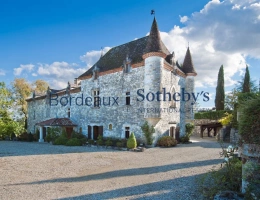
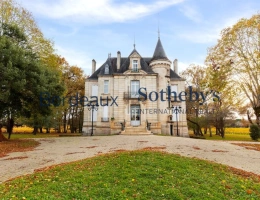
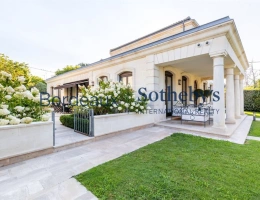
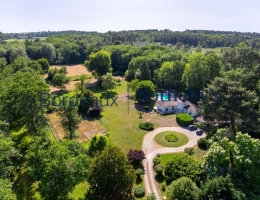
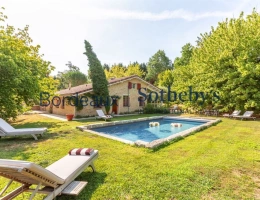
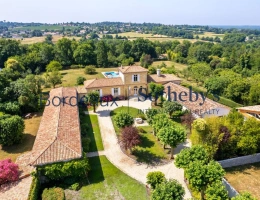
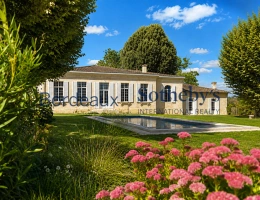
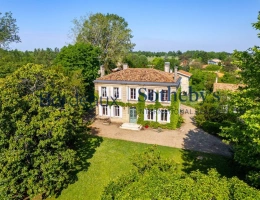
A historic monument for sale in Gironde can be found as readily in the Médoc vineyards as within the fabric of Bordeaux: a Girondine chartreuse with a single raised storey, an eighteenth-century townhouse in dressed stone, or a former convent converted into a residence around the Entre-deux-Mers. From the Médoc to Libourne, by way of Bordeaux, Cadillac and the Arcachon basin, the department retains a dense protected heritage combining classical façades and farm outbuildings. Properties range from a restored chartreuse with an adjoining wine cellar to an urban residence awaiting complete renovation. Browse the historic monuments for sale listed by the department's private owners, agencies and notaries.
This page sets out the protected building types found in Gironde, the areas where they cluster, the procedures and grants tied to historic-monument status and the checks worth making before buying, so a restoration project can be approached with a full grasp of the constraints involved. To approach the purchase of an outstanding residence as a whole, read our guide to buying prestige property in France.
The Girondine chartreuse, a long, low building with a single raised storey and a steeply pitched roof, dominates protected buildings across the vineyards, with pale limestone façades and evenly spaced mullioned windows. In town, the eighteenth-century Bordeaux townhouse displays carved mascarons, wrought-iron balconies and cobbled courtyards, while former convents and priories converted into residences survive along the Dordogne and the Garonne. Chapels, dovecotes and pigeon lofts complete certain rural estates.
Winemaking outbuildings form an integral part of the protected heritage: a vaulted cellar, a fermentation hall, an underground cave and sometimes a watchtower dating from troubled periods. Many chartreuses have kept their coffered ceilings and original parquet floors but need roof repairs or the consolidation of cellar buildings. Recent restorations favour lime renders and the retention of period joinery rather than systematic replacement.
The Médoc, around Pauillac, Margaux and Lesparre, holds the greatest concentration of chartreuses and classical residences at the heart of the vineyards, while Bordeaux and its outskirts offer protected townhouses and urban residences. To the east, the Libourne district, around Libourne and Saint-Émilion, mixes wine-country buildings with old priories, while the Entre-deux-Mers, between the Garonne and the Dordogne, offers more secluded farm estates. To the south, the Sauternes area around Langon and the Arcachon basin offer residences close to the ocean, within a distinct forested and coastal setting.
Bordeaux Saint-Jean and Libourne stations are served by TGV, placing the city a little over two hours from Paris; Bordeaux-Mérignac airport supplements international access. The most sought-after areas remain the wine-producing Médoc and the outskirts of Bordeaux, while the Entre-deux-Mers and the northern Libourne district offer comparable estates on more accessible terms.
Establish from the outset whether a building is classified or registered: the restrictions on altering façades, roofs and cellar buildings differ significantly, and any work within the surroundings of a protected building requires approval from the Architecte des Bâtiments de France. The historic-monument tax regime may, subject to conditions confirmed with a tax adviser, allow certain restoration costs to be deducted; furthermore, selling a classified building requires informing the buyer and notifying the relevant administration.
Have the condition of any vaulted cellars checked, since they are sensitive to damp and to the clay ground movement typical of the area, along with the compliance of any winemaking installations attached to the buildings. Restoration work on dressed stone or flat-tile roofs calls for qualified contractors, who are few in the department, and access via rural tracks or rights of way to neighbouring plots is worth clarifying before purchase.
Historic monument listings in Gironde come from private owners, agencies specialising in wine-country and urban heritage, and notaries; filter them by building type, area and the extent of outbuildings, and set an e-mail alert to follow new listings. To widen the search across the region, browse historic monuments for sale in Nouvelle-Aquitaine. Agencies familiar with vineyard estates can also clarify whether a chartreuse's protected status extends to its cellar buildings, which sometimes carry separate heritage listings from the main house.


