

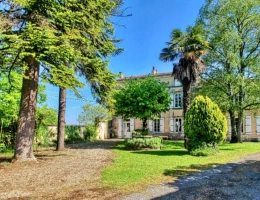

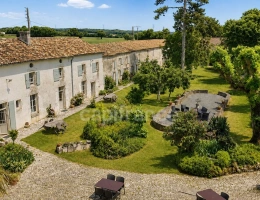


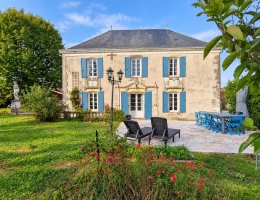
A historic monument for sale in Charente-Maritime is spread between coastal fortifications, such as the ramparts of La Rochelle and the naval arsenal of Rochefort, shipowners' houses in Saintonge and vine-growing chartreuses in the north near the Charente border. The coast, from Île de Ré to Île d'Oléron, holds mills, forts and older villas protected for their part in maritime history, while inland, around Saintes, a dense Romanesque and Gallo-Roman heritage survives. Browse the historic monuments for sale listed by the department's private owners, agencies and notaires.
This page presents the protected building types found in Charente-Maritime, how they are spread between the coast and inland Saintonge, the obligations tied to classified or registered status, the grants available, and the checks worth making before you buy. Coastal exposure and inland climate call for quite different checks, covered separately below. To place this project within a wider plan, read our guide to buying prestige property in France.
The coast holds a dense military heritage: the ramparts and towers of La Rochelle, the rope factory and fortifications of Rochefort, forts on Île d'Aix and Île d'Oléron, often a listed chateau or registered building for their defensive features. In the vine-growing north, around Cognac, chartreuses, low residences surrounded by cellars and vines, belong to historic trading houses. Inland Saintonge, around Saintes, is dominated by residences in pale limestone, close in tone to that of neighbouring Poitou.
Outbuildings reflect local uses: cellars and stores in the Cognac vineyard, boat sheds and salt driers on the islands, farm buildings inland. Condition varies considerably between fortifications maintained by local authorities and private residences sometimes left neglected, treated as a residence to restore. Recent projects favour lime, local stone and traditional techniques suited to the Atlantic climate.
La Rochelle and its urban area hold a dense stock of protected town buildings, while Île de Ré and Île d'Oléron offer sought-after coastal residences, from mills to older villas and fortifications. Rochefort, with its arsenal, and the Charente estuary keep a remarkable naval heritage. To the north, around Cognac and Jarnac, vine-growing chartreuses dominate the landscape, while to the south, towards Saintes, Pons and Royan, Romanesque buildings mix with nineteenth-century seaside heritage. Between these two poles, the Haute-Saintonge area, around Jonzac and Archiac, keeps protected farm and vineyard buildings, less visible than the major coastal sites but sought after for their quiet setting. The coast and the La Rochelle urban area remain the most sought-after areas; inland Saintonge, around Pons and Jonzac, stays more affordable.
The stations at La Rochelle and Surgères are served by TGV, with direct access to Paris in a little under three hours; the A10 motorway crosses the department from north to south. La Rochelle-Île de Ré airport adds to rail coverage, while the islands remain reachable by bridge or, seasonally, by ferry.
Distinguish from the outset a classified property, which requires the approval of the Architecte des Bâtiments de France for any work on protected features, from a registered one, more flexible outside the listed parts. The historic-monument tax regime, useful for financing major restoration, remains subject to strict upkeep conditions and sometimes public opening requirements, worth checking before any purchase on the coast or inland.
Selling a classified building requires the buyer to be informed of its status and the relevant administration to be notified, a formality worth preparing with the notaire from the preliminary contract onward. On the coast, have joinery and ironwork checked for salt-spray corrosion, along with exposure to marine flooding; inland, check dampness in limestone walls and the availability of contractors qualified in traditional restoration. Also ask for the local coastal risk prevention plan, a document that can limit extension or post-disaster rebuilding rights in certain municipalities.
Historic monument listings in Charente-Maritime are placed by private owners, agencies specialising in protected heritage, and notaires from the coast and inland alike; filter them by area, protection status and proximity to the coast, and set an e-mail alert to follow new listings. Some coastal notarial practices have particular experience of the formalities tied to selling a classified property. To compare with Charente, Vendée or Deux-Sèvres, browse the historic monuments for sale in Nouvelle-Aquitaine.