


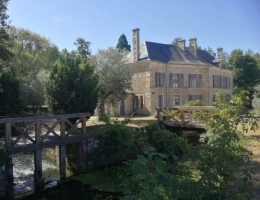
A historic monument for sale in Deux-Sèvres usually sits within one of three distinct landscapes: the wooded, granite Gâtine to the north-west around Parthenay, the Thouarsais and its Thouet valley to the north, and the limestone Mellois plain to the south, close to Charente. Niort, the préfecture built beside the Sèvre Niortaise, holds a medieval keep and older houses in local stone, while Thouars lines up Renaissance residences and fortifications along its rocky spur. Discover the historic monuments for sale listed by the department's private owners, agencies and notaires.
This content sets out the protected building types found in Deux-Sèvres, how they are spread across the Gâtine, the Thouarsais and the Mellois, the steps that come with classified or registered status, the grants available for restoring older fabric, and the points worth checking before you buy. Each area calls for a different reading of the same protected heritage, from dense Renaissance stock in the Thouarsais to scattered granite residences further west. To place this project within a wider framework, read our guide to buying prestige property in France.
The Gâtine, to the north-west, shows plain, massive grey-granite buildings, roofed in slate or machine-made tile depending on successive restoration campaigns. The Thouarsais, around Thouars and Bressuire, keeps Renaissance residences and medieval fortifications in dressed limestone, some protected as a classified building for their carved façades. The Mellois, the limestone plain to the south around Melle and Chef-Boutonne, offers lighter-toned houses whose materials echo neighbouring Poitou-Charentes, sometimes described as a residence to restore where upkeep has been neglected.
Outbuildings almost always accompany the main residence: dovecotes in the Gâtine, farm buildings and cellars in the Thouarsais, timber-framed barns in the Mellois. Condition varies widely, from perfectly maintained residences to buildings needing a full renewal of roofing and joinery. Recent restoration work favours lime renders and materials from local quarries to preserve the original appearance of this protected heritage. Interior features such as painted beams or a monumental fireplace sometimes carry their own protection, independent from the building's exterior status.
The Gâtine, around Parthenay and Secondigny, has scattered settlement, with residences often standing alone in the bocage, on the edge of Vienne and Maine-et-Loire. The Thouarsais, between Thouars, Bressuire and Argenton-l'Église, holds the most sought-after properties, thanks to its density of Renaissance heritage. Around Niort, the Sèvre Niortaise valley and the edges of the Marais poitevin offer urban and suburban residences, while the Mellois to the south, around Melle and Chef-Boutonne, remains the most accessible part of the department for a comparable size. The most sought-after areas stay Thouars and the Niort urban area; the deep Gâtine and the Mellois remain markedly more affordable.
Niort station is served by TGV, with a reduced journey time to Paris via the LGV Atlantique; the A83 motorway crosses the department from north to south, linking Niort to Nantes and Bordeaux. The Thouarsais and the Gâtine, further from these fast routes, remain accessible by road from Niort, Poitiers or Cholet, which lengthens journeys to the more rural areas. Buyers relocating from further afield often weigh this extra driving time against the lower cost of a comparable residence away from the Niort urban area.
First establish whether the property is classified or registered: the former requires the approval of the Architecte des Bâtiments de France and the regional heritage conservation office for any work on protected features, the latter allows more freedom outside the listed parts. The tax regime applying to historic monuments, which allows part of the restoration costs to be deducted, remains conditional on sustained upkeep over time, worth confirming with a professional before any decision.
Selling a classified building requires the buyer to be informed of its protected status and the relevant administration to be notified, a formality worth preparing with the notaire from the preliminary sale agreement onward. Have the damp-proofing of Gâtine granite walls checked, the roof frame of Thouarsais residences inspected, and confirm the availability of contractors qualified in limestone restoration, scarcer in rural areas than close to Niort or Thouars. A previous owner's undeclared works are also worth investigating, since bringing an older alteration into compliance can add materially to a restoration budget.
Historic monument listings in Deux-Sèvres come from private owners, agencies specialising in built heritage and local notaires; filter them by area, protection status and outbuildings, and set an e-mail alert to follow new listings. To compare with neighbouring Vienne, Charente or Vendée, browse the historic monuments for sale in Nouvelle-Aquitaine.