
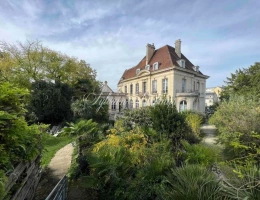


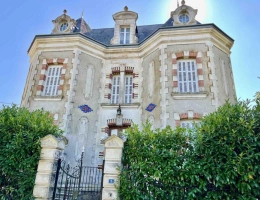
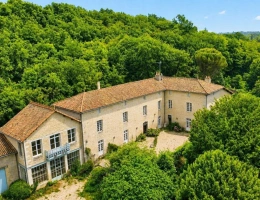
A historic monument for sale in Vienne belongs to a territory shaped by Romanesque art and medieval strongholds, from Poitiers, a city of art and history rich in Romanesque churches, to Chauvigny with its five ruined castles overlooking the river Vienne, by way of Montmorillon and its pale Poitou stone. The department holds manorial residences, priories, mills on the Clain or the Gartempe, and urban townhouses, protected for their architecture or their defensive remains. Discover the historic monuments for sale listed by the department's private owners, agencies and notaires.
This page gives an overview of the protected building types found in Vienne, the areas where they cluster, the steps tied to classified or registered status, the grants available for restoration, and the checks worth making before you buy. To go further into the subject as a whole, read our guide to buying prestige property in France.
Poitou stone, a pale, easily worked limestone, dominates protected buildings throughout the department, from the Romanesque façades of Poitiers to the fortified ruins of Chauvigny. Manorial residences often retain defensive features, round towers, curtain walls or the remains of a moat, inherited from periods of conflict with English Aquitaine. A single property may be a listed chateau for its keep and merely a registered building for its outbuildings, protection being applied feature by feature according to recognised architectural interest.
Outbuildings vary with the estate's original purpose: a manorial chapel, a dovecote, a wine press in the vine-growing Civraisien, a mill on the Clain or the Gartempe. Condition is very uneven, some residences keeping their vaults and Gothic fireplaces, others reduced to remains that need shoring up before any cosmetic restoration. Recent projects favour traditional masonry techniques, using lime and locally quarried stone.
Around Poitiers, the university préfecture, townhouses and urban residences predominate, close to the Futuroscope park. Chauvigny, to the east, holds a remarkable defensive heritage with its five castles above the river Vienne, while Montmorillon, to the south-east, known for its pale stone buildings, offers more rural residences across the Montmorillonnais. To the north, Châtellerault and the Clain valley keep nineteenth-century industrial and bourgeois residences, while the Civraisien to the south mixes vineyards with protected farm buildings. Areas near Poitiers and Chauvigny remain the most sought after; the Montmorillonnais and the Civraisien stay more affordable. Between these two centres, the Gartempe valley to the south also keeps residences and the remains of former commanderies, less well known but sought by buyers looking for a quieter setting.
Poitiers station is served by TGV, a little over an hour and a half from Paris, with Châtellerault completing rail coverage in the north of the department; the A10 motorway crosses Vienne from north to south. The more rural areas, around Montmorillon and Civray, remain far from the fast routes and need a longer drive from Poitiers. This relative distance partly explains why some protected residences in the Montmorillonnais stay on the market for a while before finding a buyer prepared to invest in their restoration.
First establish whether a feature is classified or registered, a distinction that sets the level of authorisation required: any project touching a classified feature needs the approval of the Architecte des Bâtiments de France and the opinion of the regional heritage conservation office, while a merely registered feature allows more autonomy. The historic-monument tax regime, potentially advantageous, remains conditional on upkeep and sometimes public opening requirements, worth checking case by case before buying.
Selling a classified building requires the buyer to be told of its status and the relevant administration to be notified as soon as the preliminary contract is signed. On the technical side, have the stability of older defensive features checked, towers and curtain walls, the watertightness of stone vaults, and confirm the availability of contractors qualified in traditional masonry, more common around Poitiers than in the remoter parts of the Montmorillonnais. Ask for a precise record of past works too, since some residences have undergone undeclared alterations that will need regularising before any new restoration campaign.
Historic monument listings in Vienne are placed by private owners, agencies specialising in protected heritage and local notaires; sort them by area, protection status and defensive remains, and set an e-mail alert to follow new listings. To compare with Deux-Sèvres, Charente or Haute-Vienne, browse the historic monuments for sale in Nouvelle-Aquitaine.


