

Finding a goat farm for sale in Gironde calls for patience: in a department where vines hold the stage and set land values, goat keeping survives through small independent units, built on farmhouse cheesemaking and on a large urban customer base. The properties we publish come from breeders arranging a sale, from agencies specialising in rural property and from notaries in the Bazadais, the Libournais and the Haute Gironde; descriptions state how many dairy goats are milked, the grass and rough grazing area, the condition of the buildings, the milking equipment and how produce is sold. All of them appear in our national record of goat farms for sale.
This page carries what the listing leaves out: what local land is worth according to its distance from the wine appellations, the districts where a holding turns up, how to appraise a livestock building and the checks imposed on a cheese room. Our white paper « Créer une exploitation agricole » (in French) supports a start-up project as readily as a takeover.
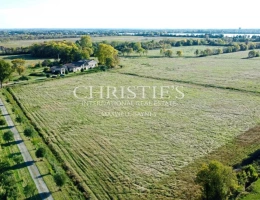
Land weighs heavily on the budget for a goat farm. Transfers published by the French tax authorities (DVF, excluding vineyards) put the median for farmland in Gironde (33) at €5,000/ha in 2025, with an average of €5,536/ha over 85 sales. Eight transactions in ten settle between €2,244 and €8,978/ha, where the national median is €5,307/ha.
A second reference, the SAFER land value benchmark, sets vacant land and pasture at €8,340/ha for 2025, -2.7% in a year and +56.5% over a decade; the French average is €6,460/ha, and a sitting tenant costs a plot roughly 17% of its value.
Price rarely turns on the number of hectares. What counts first is the shed, its air volume and its summer comfort, the milking block and bulk tank, then the cheese room itself, with its drying room, its ripening cellar, its chilled storage and the counter where customers are served. Forage kept under cover weighs too, since local grass slows markedly through summer. The animals add their share through breeds and replacement stock, and goodwill through market pitches, deliveries to retailers and an established clientele. Cross-check it all with our land price observatory and our financial calculators.
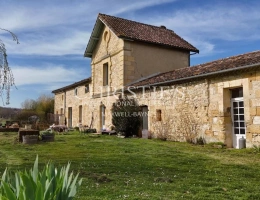
Few buildings in Gironde were ever conceived for goats: what changes hands is usually a farm shed re-partitioned, a former livestock building or a converted wine outbuilding. The visit dwells on ventilation and on heat, which bears down between the Garonne and the Dordogne: height under the ridge, opposing openings, roof lights, shade over the collecting yard and drinking arrangements. Then look at the level and drainage of the bedded areas, the compliance of muck pad and slurry store, and the storage volume for hay and straw, both often bought in. The milking platform, modest in size, is judged on its milk line, its washing system and its cooling.
The processing room carries most of the added value, because caprine milk collection is barely structured in the department and must not be assumed: question the company concerned before making an offer. Cheese room, drying room, cellar and sales point are appraised on the approval or the derogation covering direct supply, the volumes produced and how regular deliveries are. Where a dairy goat holding includes a house, a converted wine store and land, ask for the price to be broken down: residential pressure runs high within reach of Bordeaux.
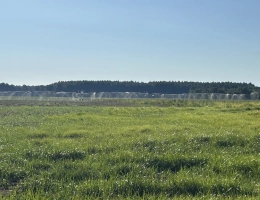
Supply sits where vines have not taken everything. The Bazadais, around Bazas, Captieux and Villandraut, combines meadow, heath and woodland, with appreciably cheaper land and a long livestock tradition. The south-west of the department, towards Hostens and the rim of the Grande Lande, offers more open ground but poor soils. The Haute Gironde, from Blaye to Saint-Savin and Cavignac, mixes small valleys, woodland and farmland outside the appellations. The Pays Foyen, near Sainte-Foy-la-Grande, and the northern Entre-deux-Mers complete the map. The Médoc, the Libournais and the heart of the Entre-deux-Mers, by contrast, stay largely out of reach for a livestock project.
No protected goat cheese designation applies in Gironde. Value therefore rests on short supply chains: the markets of Bordeaux and its surrounding communes, producers' shops, grocers and cheesemongers, restaurants, buying groups and the seasonal crowds of the Arcachon basin and the Médoc coast. That density of consumers is the chief asset of a caprine unit here.
Herds in Gironde usually fall under declaration within the French classified installations regime, the larger ones moving up to registration; below the threshold, the departmental health regulation fixes distances from dwellings, effluent storage and the conditions for muck spreading. In a well-populated department the neighbourhood deserves close checking: the communal planning document, reciprocal siting distances, access and machinery movements. Ask for the on-farm register, CAEV monitoring, the caprine arthritis-encephalitis virus, paratuberculosis screening, official testing results and cell counts before you commit.
Where the holding processes its milk, call for the food safety plan, the approval or derogation, the self-monitoring records and, where relevant, organic certification confirmed by the certifying body. Check the water resource and its abstraction permit, along with how grazing is managed during restrictions. Fire risk in the pine districts makes it worth verifying the undergrowth clearance obligations. Existing rural leases continue with the buyer subject to the landlord's agreement, and the deal passes through the structures control, the French authorisation regime for taking over farmland, then through SAFER.
Retiring farmers, rural estate agencies and notaries across Gironde are what keep this page supplied. Select on grassland area, on budget or on whether a processing room is included, then create an e-mail alert: sales stay scarce and demand runs steady around Bordeaux. Handing your herd on? Post the listing. Move on to goat farms for sale in Nouvelle-Aquitaine.