

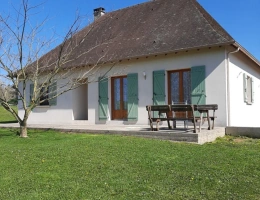
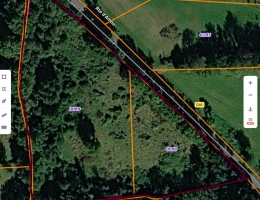
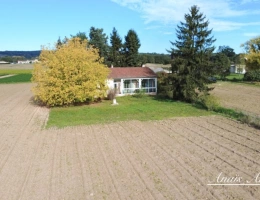
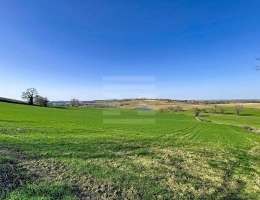
Buying a goat farm for sale in Creuse means settling on some of the most affordable farmland in France, in a department of grass and hedgerow where goats hold a niche shaped by small units, nearly all of which make their own cheese. What you will find here comes from breeders preparing to step back, from agencies dealing in rural property and from notarial offices in Guéret, Aubusson and La Souterraine; each description sets out how many dairy goats are milked, the nature of the buildings, the milking equipment, whether a cheese room is attached and how hay meadow and rough grazing are divided. Everything feeds our national selection of goat farms for sale.
Beyond the description, this page gives the bearings that make a decision possible: what local grassland is worth district by district, where holdings most often come up, how to read a converted building and which checks a farmhouse dairy calls for. Our white paper « Créer une exploitation agricole » (in French) sets out the stages of a start-up or a takeover.
Land weighs heavily on the budget for a goat farm. Transfers published by the French tax authorities (DVF, excluding vineyards) put the median for farmland in Creuse (23) at €2,644/ha in 2025, with an average of €2,780/ha over 149 sales. Eight transactions in ten settle between €1,871 and €4,013/ha, where the national median is €5,307/ha.
No SAFER land value is published for this territory, so the benchmark stays national: €6,460/ha for vacant land and pasture and €5,350/ha where a tenant is in place.
In a department where the hectare stays within reach, most of the capital sits somewhere other than the soil. What weighs is the shed itself, its volume and its air flow, the milking block and bulk tank, the hay storage that carries a long housing season, and then the processing unit: make room, drying room, cellar, cold store and sales point. The animals, their health status and their capacity to renew themselves round out the appraisal, as does the customer base attached to the farm. Measure every item against our land price observatory and our financial calculators.
Creuse built for cattle: a buyer almost always inherits a cowshed, a barn or a steel-framed shed partitioned, insulated and adapted by the farmer in place. Look at the roof frame, the covering, the level of the bedded areas and the movement of air, often restricted by narrow openings in older granite buildings. Forage kept under cover matters greatly on a plateau where stock come in early and go out late. On the milking side the platform is usually short: judge the state of the milk line, the washing system, the cooling and the electrical supply, which can be fragile at the end of a rural network.
The cheese room carries the margin. Its value rests on the approval or the derogation covering direct supply, the volume produced, the quality of drying room and cellar, and above all on how regular the outlets are. Milk collection rounds are scarce across this territory: a plan built solely on delivering to a dairy should be confirmed with the company before any offer is made. Where a dairy goat holding comes to market as a whole, with house, outbuildings and land, ask for the price to be broken down, since old stonework holds value in its own right.
Supply shifts with altitude and with the quality of the grass. The north-west, around La Souterraine, Dun-le-Palestel and Le Grand-Bourg, offers gentler hedged country, less fragmented parcels and a quick run down to Limoges. The centre, from Guéret to Ahun and Chénérailles, mixes meadow, woodland and small livestock farms. Eastwards the Combraille, from Boussac to Évaux-les-Bains and Auzances, lies away from the main roads and shows contained values. The south-east, from Aubusson to Felletin, Gentioux and Royère-de-Vassivière, climbs onto the Millevaches plateau: abundant grass, acid soils, hard winters and isolated farmsteads.
The department falls outside every protected goat cheese designation, so value comes from farm-gate sales, the markets of Guéret, Aubusson and Bourganeuf, producers' shops, consumer buying groups and summer visitors around the Vassivière lake. Being close to Limoges, and to a lesser degree to Montluçon, widens the customer base appreciably for a holding sitting on the edges of the department.
Herd sizes here usually fall under declaration within the French classified installations regime, the larger flocks moving up to registration; below the threshold, the departmental health regulation fixes distances from dwellings, the conditions for storing effluent and the rules on muck spreading. A change of operator is notified to the prefecture. Ask for the on-farm register, CAEV monitoring, the caprine arthritis-encephalitis virus, paratuberculosis screening and cell counts, then check the water points and their abstraction permit.
Where the unit processes its milk, call for the food safety plan, the approval or derogation held and the self-monitoring records; organic certification is confirmed with the certifying body. Measure forage self-sufficiency over a full season and how passable the tracks stay in winter. Existing rural leases continue with the buyer subject to the landlord's agreement, and the file passes through the structures control, the French authorisation regime for taking over farmland, then through SAFER, called on here by suckler herd farmers looking to expand.
Retiring breeders, rural estate agencies and notaries across Creuse entrust us with the properties published on this page. Narrow by grassland area, by budget or by whether a cheese room is included, then switch on an e-mail alert: opportunities are few and move quickly. Arranging your own handover? Post the listing. Carry on from there to goat farms for sale in Nouvelle-Aquitaine.