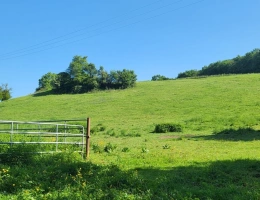
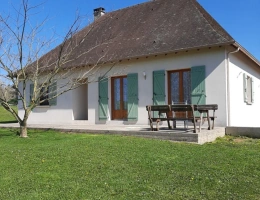
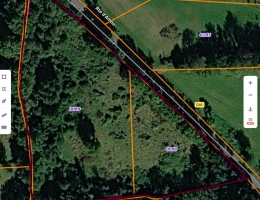
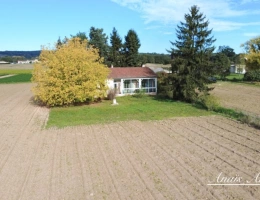
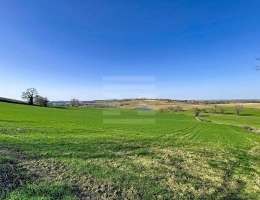
No other department weighs as heavily in the sector when it comes to a goat farm for sale in Deux-Sèvres: the caprine herd is dense, collection is organised, dairies are close at hand and the know-how passes from one generation to the next. Breeders arranging their retirement, agencies specialising in farm property and notaries in the Mellois, the Niort plain or the bocage entrust their sales here, spelling out how many dairy goats are milked, how the shed is laid out, what milking equipment is fitted, whether a cheese room exists and what forage area comes with it. Every one of them appears in our nationwide list of goat farms for sale.
Adverts describe the property; this page describes the setting: the level of local land values, the areas where such holdings surface most often, the condition to expect of buildings and equipment, and the commitments tied to a designation or a milk contract. To build your takeover plan, lean on our white paper « Créer une exploitation agricole » (in French).
Land weighs heavily on the budget for a goat farm. Transfers published by the French tax authorities (DVF, excluding vineyards) put the median for farmland in Deux-Sèvres (79) at €3,278/ha in 2025, with an average of €3,376/ha over 409 sales. Eight transactions in ten settle between €2,334 and €4,502/ha, where the national median is €5,307/ha.
A second reference, the SAFER land value benchmark, sets vacant land and pasture at €3,470/ha for 2025, -2.0% in a year and +9.1% over a decade; the French average is €6,460/ha, and a sitting tenant costs a plot roughly 17% of its value.
What separates two comparable holdings rarely comes down to acreage: housing and bedded area, milking platform or parlour, bulk tank and milk room, hay drier, silos, handling facilities and, where fitted, a make room, drying room and ripening cellar. The herd weighs through its genetics, its yields and its health status; the goodwill, through the milk contract or the customer base built up in direct selling. Put figures behind each of those items using our land price observatory and our financial calculators.
Buildings here split between long, widely opened sheds designed for large herds and smaller units raised on former barns. A buyer checks the frame and the roof, often fibre cement on structures from an earlier generation, the passive ventilation, the height under the ridge, the floor and bedding capacity, then the condition and throughput of the milking plant, the tank size and how easily the line washes. Forage storage and a barn hay drier count for a great deal, as do the slurry pit and the real spreading capacity, regularly flagged when a farm changes hands.
Alpine and Saanen animals dominate; a few herds keep Poitevine goats, the local breed, whose value is realised through short supply chains. Some units deliver to a cooperative or private dairy, others process on site, occasionally under a protected designation. When the sale bundles dwelling, outbuildings, livestock sheds and land together, ask for separate valuations: in this market the working tool often outweighs the house, which changes how the purchase is financed.
The Mellois, around Melle, Celles-sur-Belle, Chef-Boutonne and Sauzé-Vaussais, is the caprine core of the department, with substantial herds and a long-established dairy on the spot. The Niort plain and the southern edge towards Vienne extend that basin onto cereal ground, where field crops compete for every parcel. The Gâtine, towards Parthenay and Secondigny, offers hedged countryside, permanent pasture and units that are easier to afford. The bocage around Bressuire and Mauléon, and the Thouarsais around Thouars, mix cattle with goat units; the fringe of the Marais poitevin carries particular drainage constraints.
Chabichou du Poitou, a protected designation of origin whose area covers the department, shapes part of the marketing, alongside Mothais-sur-feuille, also recognised. These quality schemes come with a specification the incoming farmer should read before committing. For a dairy goat holding delivering to a dairy, negotiation turns instead on the contract terms, the volume committed and how close the collection round passes.
Herd sizes place most units within the classified installations regime, the French environmental permitting system, with declaration, registration or authorisation according to numbers, and notice to the prefecture when the operator changes. The manure plan deserves close reading: available area, distances, agreements with neighbouring arable farmers, genuine storage capacity. Where the farm processes, insist on the food safety plan, the approval or the direct-sale exemption, the own-checks and, under a designation, the certifying body's latest report, since certification never passes automatically to the buyer.
On the animal side, ask for milk recording results, health reviews and monitoring of CAEV, the caprine arthritis-encephalitis virus, and of paratuberculosis, both sensitive matters in dense herds. On land, separate owned from rented ground, secure the landlords' agreement, check the structures control, the French authorisation regime for taking over farmland, and anticipate SAFER, very present in a department where arable farming covets every parcel. A business of this kind trades better when the seller stays alongside for a full season.
Sellers, rural estate agencies and local notaries publish their properties here. Narrow by herd size, forage area, budget or the way the milk is valued, then save an alert: in this department a well-equipped unit changes hands fast. Preparing your own exit? Post the listing. For a broader view, browse goat farms for sale in Nouvelle-Aquitaine.