

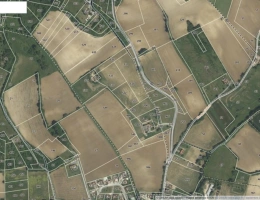
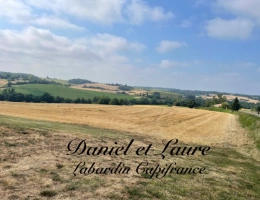
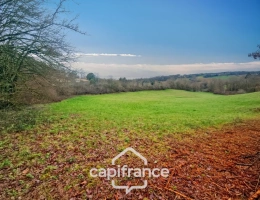
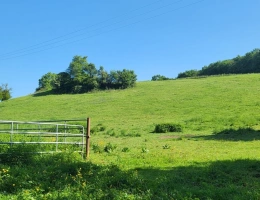
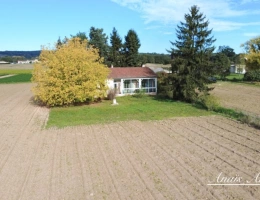
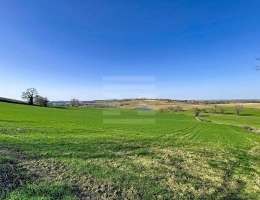
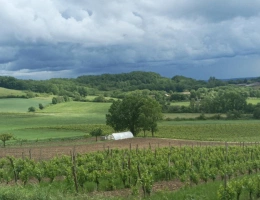
Taking over a goat farm for sale in Lot-et-Garonne means settling in a department of orchards, market gardens and arable crops, where goat keeping occupies the hillsides left aside by the most intensive productions. The properties shown here are entrusted to us by breeders arranging their handover, by rural property agencies and by notaries in Agen, Villeneuve-sur-Lot, Marmande and Nérac; descriptions mention the number of dairy goats, how meadow, rough grazing and woodland divide, the condition of the shed, the milking equipment and whether a cheese room is attached. Each one appears in our national selection of goat farms for sale.
To the listing we add what a decision rests on: what land is worth depending on whether it lies in the irrigable valley or on the slope, the districts where a holding comes free, how to appraise converted older buildings and the checks specific to farmhouse processing. Our white paper « Créer une exploitation agricole » (in French) guides newcomers through a start-up or a takeover.
Land weighs heavily on the budget for a goat farm. Transfers published by the French tax authorities (DVF, excluding vineyards) put the median for farmland in Lot-et-Garonne (47) at €7,501/ha in 2025, with an average of €8,547/ha over 150 sales. Eight transactions in ten settle between €5,015 and €14,141/ha, where the national median is €5,307/ha.
A second reference, the SAFER land value benchmark, sets vacant land and pasture at €8,870/ha for 2025, +0.3% in a year and +20.0% over a decade; the French average is €6,460/ha, and a sitting tenant costs a plot roughly 17% of its value.
Hectares alone will not explain the asking price. Look at the shed, its volume and its ability to hold off summer heat, the milking block and bulk tank, the storage for hay and concentrates, then the processing side: dairy, drying room, ripening cellar, chilled storage and the room where the cheese is sold. The animals count through their breeds, their health status and their replacement stock; goodwill counts through the market pitches held, the deliveries to retailers and the customers attached to the farm. Place these bearings against our land price observatory and our financial calculators.
Most sheds in this department are the result of a conversion: a stone barn taken in hand, a storage building partitioned off, a former finishing house or a poultry house reworked. The first thing to examine is thermal comfort, since summers run hot and dry on the Pays de Serres: height under the ridge, opposing openings, roof lights, air movers and enough drinking points. Then check the drainage of the bedded areas, the compliance of muck pad and slurry store, the space kept for replacement stock and the volume of forage under cover, decisive on slopes that burn off early in the season.
Processing makes the difference, since no organised caprine collection covers the department: no round can be assumed, so enquire with the company concerned. Cheese room, drying room, cellar and sales point are appraised on the approval or the derogation covering direct supply, the volumes produced and how regular the outlets are. Where a holding includes an old farmhouse, a dovecote or outbuildings of character, ask for the price to be broken down: the stonework holds value quite apart from the working tool.
Goat keeping sits on the higher ground. The Pays de Serres, between Penne-d'Agenais, Beauville, Tournon-d'Agenais and Prayssas, lines up limestone plateaux, small valleys and dry grazing, with land within reach as soon as you leave the plum orchards. The Albret, around Nérac, Mézin, Houeillès and Casteljaloux, combines woodland, heath and meadow at contained values. The Fumélois and the ground above the Lot offer wooded slopes and small structures. By contrast the Garonne, Lot and Dropt valleys, along with the Marmandais and the Villeneuvois, are taken up by fruit growing, market gardening and irrigated crops, at the highest prices per hectare.
No protected goat cheese designation applies in Lot-et-Garonne: value comes entirely from short supply chains. The markets of Agen, Villeneuve-sur-Lot, Marmande and Nérac, producers' shops, consumer buying groups, restaurants and steady visitor numbers along the Lot valley all support farm-gate selling. Being within reach of Bordeaux and Toulouse widens further the clientele open to a dairy goat holding in this department.
Herd sizes found here generally fall under declaration within the French classified installations regime, the fullest flocks moving up to registration; below the threshold, the departmental health regulation fixes distances from dwellings, effluent storage and the rules on muck spreading. The change of operator is declared to the prefecture. In a department where scattered housing is common, check the communal planning document, the reciprocal siting distances and access to the parcels. Ask for the on-farm register, CAEV monitoring, the caprine arthritis-encephalitis virus, paratuberculosis screening and cell counts.
Where the unit processes, call for the food safety plan, the approval or derogation, the self-monitoring records and confirmation of any organic certification from the certifying body. Water is a decisive point: borehole, hillside reservoir, abstraction permit and rota during the restrictions that recur each summer. Finally weigh up forage self-sufficiency over a full season. Rural leases continue with the buyer subject to the landlord's agreement, and the deal passes through the structures control, the French authorisation regime for taking over farmland, then through SAFER, called on by fruit growers and arable farmers seeking to expand.
Farmers reaching the end of their career, rural estate agencies and notarial offices across the department keep this page supplied. Filter on grassland area, on budget or on whether a processing room is included, then switch on an e-mail alert: opportunities remain infrequent. Selling your own herd? Post the listing. Extend the search with goat farms for sale in Nouvelle-Aquitaine.