

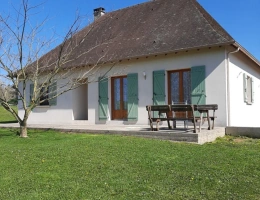
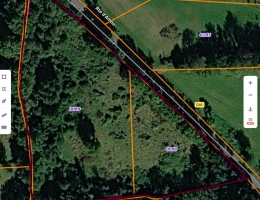
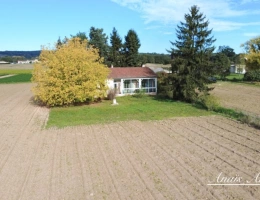
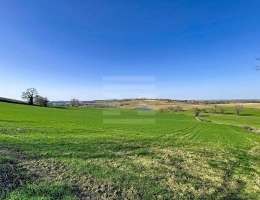
Buying a goat farm for sale in Charente-Maritime means stepping into one of the country's major caprine dairy basins, where collection has been organised for generations and where coastal visitors open a retail outlet rare elsewhere. The properties gathered on this page come from breeders preparing to stop, from agencies specialising in farming estates and from notarial offices in the Aunis, the Saintonge and the Haute-Saintonge; each description gives herd size, the nature of the shed, the milking equipment, the forage area and where the milk goes. They appear in our national directory of goat farms for sale.
What a listing leaves unsaid follows: how land values shift as you move away from the coast and the vineyard, the districts where a holding comes free, how to appraise a shed and which checks processing brings with it. To frame your project, our white paper « Créer une exploitation agricole » (in French) reviews legal structures, permits and funding.
Land weighs heavily on the budget for a goat farm. Transfers published by the French tax authorities (DVF, excluding vineyards) put the median for farmland in Charente-Maritime (17) at €5,347/ha in 2025, with an average of €5,256/ha over 328 sales. Eight transactions in ten settle between €2,974 and €7,165/ha, where the national median is €5,307/ha.
A second reference, the SAFER land value benchmark, sets vacant land and pasture at €5,760/ha for 2025, +0.2% in a year and +19.0% over a decade; the French average is €6,460/ha, and a sitting tenant costs a plot roughly 17% of its value.
The price of a dairy goat holding reads item by item here: the volume and ventilation of the shed, parlour and bulk tank, hay and concentrate storage, effluent works, young stock building, then, where one exists, the processing room with drying room, ripening cellar and shop. The animals, their breeds and their health record follow, ahead of the outlet: a collection contract, an organic commitment or a customer base built up on market stalls. Lean on our land price observatory and our financial calculators.
Caprine buildings in this department were frequently put up for the purpose: light roof frames, ventilated cladding, wide bedded areas and a central feed passage. The mild Atlantic climate limits insulation needs but calls for careful air movement and close attention to forage moisture, particularly near the marshes. The visit takes in the milking block, its milk line, washing system, metering and tank capacity, then the slurry store and muck pad, whose compliance decides what has to be budgeted. Hay and concentrate storage, the condition of the young stock building and the quality of the access for the collection lorry round off the inspection.
Where the holding runs as a goat cheese farm in its own right, value changes in nature: make room, drying room, cellar, cold store and sales point form an asset appraised on the approval held, the volumes and the customers, which the holiday season can swell sharply. Units that deliver are worth instead what their contract is worth, its volume and how long it still runs. Faced with a farm sold with house, stone outbuildings and land, ask for a breakdown: close to the coast the residential element quickly takes over.
Holdings sit mostly inland. The Aunis plain, around Surgères and Marans, draws on a long dairying culture and on collection facilities close by. The arable Saintonge, from Saint-Jean-d'Angély to Matha and Aulnay, brings together forage, straw and generously sized buildings. Further south, the Haute-Saintonge towards Jonzac and Montendre combines woodland, meadows and more affordable land. The communes of the Cognac vineyard, the coastal fringe, Ré, Oléron and the country around Royan keep their land for vines, tourism and building instead.
No goat designation covers the department, the Poitou areas lying further north: value therefore rests on regional milk collection and, for farms that make cheese, on markets, producers' shops and a large summer clientele between La Rochelle, Rochefort, Royan and the islands. That seasonality supports retail prices, but it forces production and labour to be organised around it.
By herd size, a caprine unit falls under declaration, registration or authorisation within the French classified installations regime, the change of operator being brought to the prefecture's notice; the smallest herds stay governed by the departmental health regulation. Water calls for particular care in a department subject to recurring restriction orders: where the resource comes from, the abstraction permit and any irrigation of forage crops. If parcels lie in marshland or a protected area, check easements, maintenance rules and any agri-environmental commitments still running.
Ask for the herd's health record, CAEV monitoring, the caprine arthritis-encephalitis virus, paratuberculosis screening and cell counts, and, where milk is processed, the food safety plan, the approval or derogation covering direct supply and the self-monitoring results. Organic certification is confirmed with the certifying body. On land, rural leases continue with the buyer subject to the landlord's agreement, and the operation passes through the structures control, the French authorisation regime for taking over farmland, then through SAFER, which watches competition from vines and cereals closely.
The sales published here come from retiring breeders, rural estate agencies and notaries based between La Rochelle, Saintes and Jonzac. Filter on forage area, on budget or on where the milk goes, then switch on an e-mail alert, because a smallholding of this kind attracts more buyers than there are sellers. Planning your own exit? Post the listing. Continue with goat farms for sale in Nouvelle-Aquitaine.