

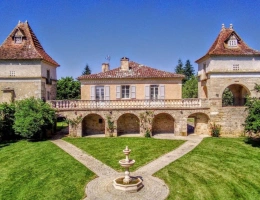

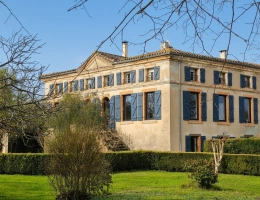
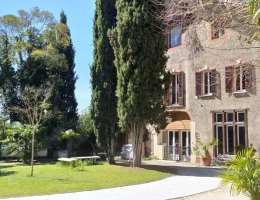


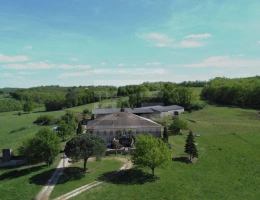
Looking for a historic monument for sale in Tarn-et-Garonne naturally leads towards the bastide towns of the Quercy blanc, the pink-brick townhouses of Montauban and residences tucked into the Aveyron gorges around Bruniquel and Saint-Antonin-Noble-Val. The department holds a notable share of classified or registered buildings, often linked to river trade on the Garonne, to religious orders or to the fortification of royal bastides. Properties range from an already renovated manor house to a former conventual building awaiting complete restoration. Browse the historic monuments for sale listed by the department's private owners, agencies and notaries here.
This page details the protected building types found in Tarn-et-Garonne, the areas where they cluster, the obligations attached to a registered building or a classified one, and the checks to make before buying, without addressing financial matters. For a fuller approach to this kind of purchase, read our guide to buying prestige property in France. Grants that may apply, including DRAC subsidies and support from the Fondation du patrimoine, are often tied to the property being opened to the public, a condition to check case by case.
Locally fired brick dominates in Montauban and along the Garonne, giving townhouses and former convents their pink façades with carved detailing, while the soft limestone of the Quercy blanc, to the west, was used for the bastide towns of Lauzerte, Auvillar and Beaumont-de-Lomagne, laid out on a medieval grid plan. Towards the Aveyron gorges, limestone cliffs supplied fortified residences clinging to the rock, at Bruniquel as at Saint-Antonin-Noble-Val. Roofing alternates between canal tile on the plain and limestone slabs on certain old religious buildings.
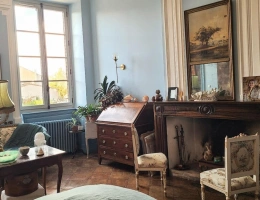
Protected properties often come with a cloister or a vaulted cellar inherited from a former priory, a freestanding dovecote amid the fields of the Quercy blanc, or a water mill on the Aveyron or the Tescou. A residence to restore frequently retains painted ceilings, Renaissance fireplaces and vaulted cellars, while lime renders and original window frames need ongoing upkeep. Some Montauban cellars retain segmental barrel vaults and provision niches cut into the thickness of the walls, features typical of the local merchant architecture.
Montauban and its outskirts hold most of the protected urban fabric, ranging from townhouses in the old centre to manor houses along the Garonne. Towards Moissac, known for its abbey and cloister, the river valley combines wine-growing residences with former boatmen's staging posts. To the west, the Quercy blanc and its bastides, around Lauzerte and Beaumont-de-Lomagne, offer more scattered rural buildings; to the north-east, the Aveyron gorges, around Bruniquel, Saint-Antonin-Noble-Val and Caylus, hold much sought-after clifftop residences. Local estate agents can also advise on which sectors carry the heaviest heritage-protection constraints before a visit is arranged.
Montauban station is served by TGV towards Paris and Toulouse, a little over an hour to the latter; Toulouse-Blagnac airport also remains within driving distance. The most sought-after areas are the Aveyron gorges and the outskirts of Montauban; the more rural Quercy blanc offers comparable properties with more modest access conditions. Beyond rail links, the departmental road running along the Garonne connects Montauban directly to Moissac and the bastide towns of the Quercy blanc, easing day-to-day travel.
First establish the property's exact status: a building classified as a historic monument follows a stricter authorisation regime than one only registered, and any work within the surroundings of a protected monument, including an outbuilding, requires approval from the Architecte des Bâtiments de France in liaison with the regional heritage office. Selling a classified building requires the seller to inform the buyer of its status and to notify the administration, a step the notary must anticipate. Buyers should also ask for copies of any past authorisation decisions issued by the Bâtiments de France office, which clarify what work has already been approved.
The historic-monument tax regime, which under conditions may allow certain restoration costs to be deducted, needs to be checked case by case with a qualified adviser before any purchase decision. On the technical side, check the foundations at the base of the cliff for clifftop residences in the Aveyron gorges, the condition of lime renders, and hand the works to a qualified contractor in heritage restoration, the only party authorised for this kind of intervention. A borescope inspection of the roof timbers is also worth arranging in the wooded areas near the Aveyron, where wood-boring insects are common.
Historic monument listings in Tarn-et-Garonne come from private owners, agencies specialising in listed chateaux and old residences, and notaries; sort them by building type, protection status and works required, and set an e-mail alert to follow new listings. To compare across the region, browse the historic monuments for sale in Occitanie.


