
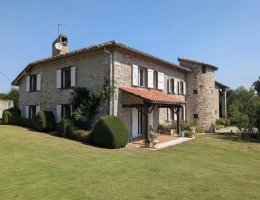
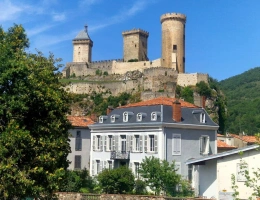

A historic monument for sale in Ariège usually belongs to a world of stone and mountain: fortified houses in the Couserans, ruined or restored chateaux on the Pyrenean piedmont, timber-framed townhouses in Mirepoix and abbey buildings in the Donezan. Cathar history, iron and marble mining, then nineteenth-century spa tourism, have left a scattered protected heritage across deep valleys and high plateaus. Slate or stone-slab roofs and granite façades predominate, with fragments of medieval fortification sometimes built into later structures. Browse the historic monuments for sale listed by the department's private owners, agencies and notaries.
This page sets out the protected building types found across Ariège, the mountain valleys where they cluster most densely, the steps involved in classified or registered status, and the grants that can support a restoration project, all without touching on cost or budget figures. For a broader view of buying a character property in this Pyrenean setting, read our guide to buying prestige property in France.
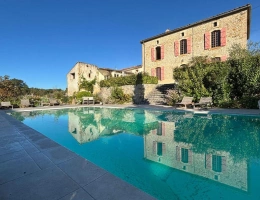
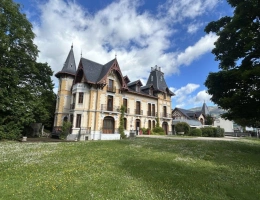
Protected buildings in Ariège stand out for their thick granite or schist walls, mullioned windows and steep slate or stone-slab roofs, built to shed the heavy snowfall of the Couserans and Haut-Ariège. Some residences keep defensive features such as a corner turret, machicolations or a doorway where a drawbridge once stood, evidence of a long-contested Pyrenean border. Around Mirepoix, timber-framed houses with covered arcades add to this built landscape, alongside plainer abbey buildings and priories.
Traditional outbuildings combine a byre-barn, a hayloft, a bread oven and sometimes a forge, a legacy of the ironworking tradition once centred on the Vicdessos valley and the Foix area. Many residences remained working farms into the twentieth century, leaving large utilitarian spaces still to be converted. Recent restorations favour lime renders, joinery in local timber and the retention of traditional roofs, expensive to renew but central to the building's character. Slate quarrying, once active in several Couserans valleys, also left its mark on nearby farmhouses built from the same local stone.
The Foix area, around Foix, Tarascon-sur-Ariège and Vicdessos, holds heritage tied to the former county and to mining, with the Ariège valley remaining a key route towards Andorra and Spain. To the west, the Couserans, around Saint-Girons and Saint-Lizier, keeps a dense rural pattern along its side valleys, while to the east, the Mirepoix area and the neighbouring Aude Pyrenees retain a more agricultural character. To the south-east, the Donezan and the Sault plateau, isolated at altitude, remain among the least densely built parts of the department.
Ariège has no TGV station: rail access runs on Intercités and TER services towards Toulouse, with Foix station as the main connecting point, while the RN20 forms the main north-south road corridor. Areas close to Foix and the main valley are the most sought after; the Couserans and the Donezan, further from centres, offer more affordable protected properties for a comparable size, particularly once winter access is factored into the search.
Draw a careful distinction between classified status and registered building status, since the room for manoeuvre on works differs considerably: in both cases, any project touching façades, roofing or surroundings must go before the Architecte des Bâtiments de France, and for a classified building, be approved by the regional historic monuments office. When a classified property is sold, the notary must confirm the buyer is informed of the status and that the administration is notified of the transfer.
Ask, subject to a professional's confirmation, about the conditions for accessing the historic-monument tax regime and about grants available from the Fondation du patrimoine or the DRAC Occitanie. Have the roof structure checked under the often-heavy stone-slab coverings, along with dampness in uninsulated stone walls, and reserve any restoration work for a qualified contractor familiar with mountain restoration techniques.
Historic monument listings in Ariège come from private owners, agencies based in the department and notaries; sort them by valley, type and outbuildings, and subscribe to an e-mail alert to keep up with new listings. Compare with neighbouring departments via historic monuments for sale in Occitanie.