


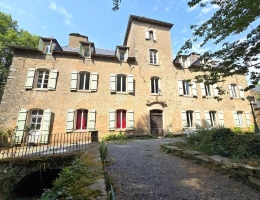
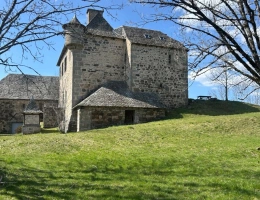
A historic monument for sale in Aveyron can be found from the granite plateau of the Aubrac to the limestone gorges of the Tarn, taking in the pink sandstone residences of the Rouergue and the fortified houses of the Ségala. Extensive livestock farming, the leather trade and the working of the causses have left an extensive protected heritage, marked by local stone and by stone-slab or slate roofs depending on the massif. Piedmont chateaux, Romanesque priories and fortified farmhouses make up a built landscape that has stayed close to its original farming setting. Browse the historic monuments for sale listed by the department's private owners, agencies and notaries.
This page sets out the protected building types found in Aveyron, the areas from the Aubrac plateau to the limestone causses where they are spread, the obligations attached to their status and the grants available for restoration, without any budget or cost discussion. To place the purchase of a Rouergue residence within a broader approach, read our guide to buying prestige property in France.
Protected buildings in Aveyron vary sharply with the terroir: pink sandstone or schist around Rodez and the Ségala, pale limestone on the Larzac and Comtal causses, granite on the heights of the Aubrac. Fortified houses often keep a corner tower or a dovecote built into the building's angle, while roofs combine schist stone slabs in the north of the department with canal tiles further south, around Millau and the southern Rouergue. Romanesque priories and chapels, scattered along old trade routes, keep the restraint typical of medieval Rouergue religious architecture.
The outbuildings reflect an old livestock and trading economy: a massive byre-barn for the herd, a hayloft, a bread oven, sometimes a former staging post on an old leather or cheese trade route. Many of these buildings remained tied to a farming estate until recently, which preserves the original volumes but often calls for the outbuildings to be brought up to standard. Restorations favour local materials, lime for the renders, and reinforced framing for the heaviest stone-slab roofs.
Around Rodez and Villefranche-de-Rouergue, protected heritage benefits from a dense old urban fabric and easy access via the department's main routes. To the south, Millau and the Tarn and Dourbie gorges hold residences perched above spectacular causse landscapes, while the Larzac, further south still, keeps a scattered rural pattern on a windswept limestone plateau. To the north-east, the Aubrac plateau, around Laguiole and Saint-Chély-d'Aubrac, keeps fortified houses and buron huts isolated among high-altitude pastures on the border with Lozère and Cantal.
Aveyron has no TGV station: rail access runs on Intercités and TER services, in particular towards Rodez and Millau, with the road remaining the main way in via the RN88 and the A75 motorway, which crosses the southern part of the department. Areas near Rodez and Millau remain relatively more accessible; the Aubrac and the most isolated causses offer protected properties on particularly affordable terms for a comparable size.
First establish whether the property is classified or registered, a point that determines the extent of control over works: in both cases, any project touching the façade, roof or surroundings needs approval from the Architecte des Bâtiments de France, with an additional sign-off from the regional historic monuments office for a classified building. When a classified building is sold, the seller must disclose this status to the buyer and the administration must be informed of the transfer under the prescribed procedure.
Have a professional confirm the conditions of the historic-monument tax regime, which can allow certain restoration costs to be deducted under conditions, along with any possible public-opening obligation. On the technical side, check the load carried by the roof structure under a stone-slab roof, winter access across the causses and the Aubrac, and the private drainage of isolated buildings, entrusting any restoration to a contractor qualified in historic-monument work.
Historic monument listings in Aveyron come from private owners, local agencies and notaries; filter them by area, type and outbuildings, and set an e-mail alert to follow new listings. Compare with neighbouring departments via historic monuments for sale in Occitanie.


