

In Côte-d'Or, a historic monument for sale in Côte-d'Or can mean a moated Auxois chateau, a Dijon townhouse in the old ducal quarter or a fortified farmhouse in the Châtillonnais, protected for their architecture or original decoration. From the wine-growing Arrière-Côte to the Châtillonnais plateau, by way of the Auxois and the Dijon hillside, the department retains heritage born of the former Duchy of Burgundy and its great abbeys. Browse the historic monuments for sale listed by private owners, agencies and notaries across Côte-d'Or.
This page reviews the protected building types found across Côte-d'Or, pinpoints the areas where they are most common, explains the obligations and grants that come with classification or registration, and lists the checks worth making before you buy. To place this project within a wider approach, read our guide to buying prestige property in France.
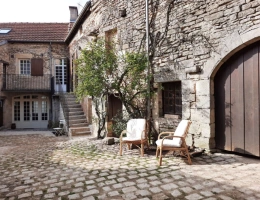
Burgundy limestone, quarried notably around Comblanchien and Nolay, clads most classified or registered residences in the department, paired with stone-slab roofs in the Châtillonnais and polychrome glazed tiles around Dijon and the hillside. Dijon townhouses retain pilastered façades and grand dressed-stone staircases, while Auxois chateaux, often fortified, show round towers and water-filled moats. Fortified farmhouses in the Châtillonnais keep corner turrets and boundary walls pierced with arrow slits. Steeply pitched roofs, covered in a checkerboard pattern of coloured tiles, rank among the most closely scrutinised features in any works application.
Outbuildings almost always complete these protected ensembles: dovecotes, private chapels, old wine-fermenting rooms on the hillside and farm buildings in the Auxois. Part of this heritage kept its agricultural use until the twentieth century, which explains substantial barns and stables, sometimes protected alongside the main house. Interiors combine fireplaces carved with ducal arms, old panelling and stone flooring, often well preserved in ensembles that have stayed within one family. A number of estates also keep a formal garden or a small park laid out in front of the main façade.
The Auxois, around Semur-en-Auxois, Flavigny-sur-Ozerain and Alise-Sainte-Reine, retains chateaux and priories within rolling hedgerow country; the Dijon hillside and the Arrière-Côte, between Dijon, Nuits-Saint-Georges and Beaune, offer residences close to the vineyard and the main routes. The Châtillonnais, to the north, around Châtillon-sur-Seine and the source of the Seine, presents a more remote limestone plateau where fortified farmhouses and small chateaux survive. The Saône valley, to the east, completes this patchwork with residences near the riverbanks and marshland. The Ouche valley, between Dijon and Pouilly-en-Auxois, adds rural residences close to the Burgundy Canal.
Côte-d'Or has stations served by TGV at Dijon and Montbard, placing Paris under two hours away; the A6 and A31 motorways cross near Dijon. The most sought-after areas remain the wine hillside and the outskirts of Dijon, while the more remote Châtillonnais and northern Auxois offer comparable monuments on more accessible terms.
Establish from the outset whether a property is classified or only registered: classified protection extends to the whole monument, whereas registration may be limited to the roof, façades or decorated rooms. For either status, works touching protected parts cannot start without clearance from the Architecte des Bâtiments de France, sought with the support of the regional heritage office of the Bourgogne-Franche-Comté DRAC. The historic-monument tax regime, which under conditions allows part of the restoration costs to be deducted, should be checked with a notary before any decision. Land adjoining a listed vineyard may also carry appellation restrictions worth clarifying with the local wine syndicate before any planting or fencing project.
Selling a classified building obliges the seller to inform the buyer of its protected status and to notify the relevant administration, a step the notary builds into the preliminary contract. Entrust stone-slab or glazed-tile roofing work to qualified contractors familiar with traditional Burgundian techniques, and have the moats and retaining walls, common in the Auxois, checked for condition.
Historic monument listings in Côte-d'Or are placed by private owners, agencies specialising in heritage property and notaries; sort them by building type, protection status and outbuildings, then set an e-mail alert to follow new listings. To compare with neighbouring departments, browse historic monuments for sale in Bourgogne-Franche-Comté.


