

In Doubs, a historic monument for sale in Doubs can be a Comtois farmhouse with a broad overhanging eave, a townhouse in old Besançon or a fortified farmhouse in the Haut-Doubs, protected for their architecture or original decorative features. From the Besançon citadel to the Haut-Doubs plateaus, by way of the Loue valley and the Montbéliard area, the department retains heritage shaped by its closeness to the Swiss border and by Vauban's military influence. Browse the historic monuments for sale listed by private owners, agencies and notaries across Doubs.
This page surveys the protected building types found across Doubs, locates the areas where they are most present, explains the obligations and grants that come with classification or registration, and notes the checks worth making before you buy. To place this project within a wider approach, read our guide to buying prestige property in France.
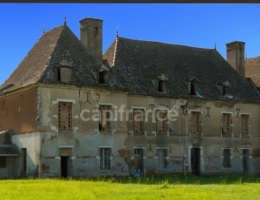
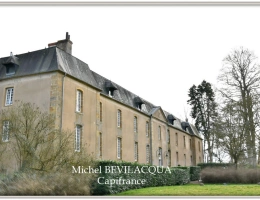
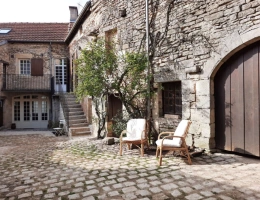
Grey or beige Comtois limestone clads most protected residences in the department, under shallow-pitched roofs covered with flat tiles in the Montbéliard area and with metal sheeting or wood shingles at altitude in the Haut-Doubs. Besançon townhouses, built for members of the former Franche-Comté provincial parliament, show ordered façades and paved inner courtyards. Fortified farmhouses and Comtois houses, recognisable by the broad eave that once sheltered firewood, often retain the region's characteristic central chimneys. Chamfered window surrounds and round-arched carriage gateways rank among the features most often registered as historic monuments.
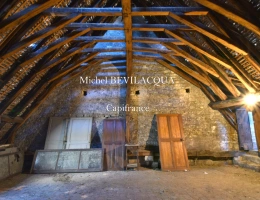
Outbuildings contribute fully to the heritage interest of these ensembles: old dairy sheds, hay barns, private chapels and farm buildings frequently accompany the main house. Part of this heritage kept its farming use until the twentieth century, which explains substantial barn volumes, sometimes protected alongside the house itself. Interiors combine fir panelling, stone fireplaces and coffered ceilings, well preserved in farmhouses that have stayed continuously inhabited. A number of farmhouses also retain a covered well or a small orchard within the enclosed courtyard.
Besançon, whose citadel, fortified by Vauban, ranks among the sites listed as world heritage, concentrates most protected townhouses within its historic centre encircled by the Doubs river. The Loue valley, between Ornans and Mouthier-Haute-Pierre, and the Montbéliard area, around Montbéliard and L'Isle-sur-le-Doubs, offer residences close to the rivers and former industrial sites. The Haut-Doubs, around Pontarlier and Morteau, on the Swiss border, retains secluded Comtois farmhouses on the plateaus, amid fir forests and steep-sided valleys. The Dessoubre valley, between Saint-Hippolyte and Vaucluse, adds rural residences set within narrow limestone gorges.
Doubs has stations served by TGV at Besançon and Montbéliard, placing Paris a little over two hours away; the A36 motorway links Besançon to Montbéliard and Switzerland. The most sought-after areas remain the outskirts of Besançon and the Loue valley, while the more remote and harsher Haut-Doubs offers comparable monuments on more affordable terms.
Establish first whether a property is classified or registered: classification, the stricter status, covers the whole building, whereas registration may be limited to the façades, the roof or certain decorative features. Exterior works, and sometimes interior ones for a classified building, require the approval of the Architecte des Bâtiments de France, in liaison with the regional heritage office of the Bourgogne-Franche-Comté DRAC, with heightened scrutiny near the Besançon citadel. The historic-monument tax regime, which under conditions allows part of the works to be deducted, should be confirmed with a notary before any offer. Cross-border proximity to Switzerland can also affect insurance and utility arrangements, worth clarifying early with a local notary.
The seller of a classified building must inform the buyer of its protected status and notify the sale to the administration, a formality the notary builds into the preliminary contract. Entrust roof timber and roofing work to qualified contractors familiar with Comtois building, and have insulation and foundations checked, since altitude and harsh winters in the Haut-Doubs place heavy strain on old masonry.
Historic monument listings in Doubs come from private owners, agencies specialising in heritage property and notaries; sort them by building type, protection status and outbuildings, and set an e-mail alert to follow recent listings. To compare with neighbouring departments, browse historic monuments for sale in Bourgogne-Franche-Comté.


