

Finding a historic monument for sale in Territoire de Belfort most often means a bourgeois residence in the town centre, a secularised convent or a fortified farmhouse on the Vosges foothills, protected under French heritage law. A gateway between the Vosges massif, the Jura and the nearby Swiss border, this small department holds classified and registered heritage shaped first by its defensive role and then by the industrial history that followed. Properties on offer range from restored townhouses near the historic centre to sandstone farmsteads still needing complete renovation. Browse the historic monuments for sale listed by the department's private owners, agencies and notaries.
This page sets out the protected building types found in Territoire de Belfort, the areas where they are concentrated, the obligations and grants tied to historic-monument status, and the checks worth making before any commitment. To place this project within a broader buying strategy, read our guide to buying prestige property in France.
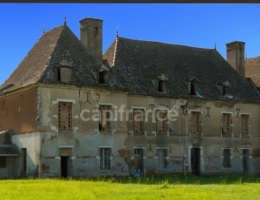
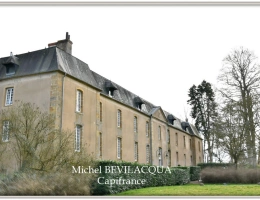
Protected buildings in Territoire de Belfort rest on pink Vosges sandstone, used both in the fortifications inherited from Vauban and in the eighteenth and nineteenth-century townhouses of the town centre. Around the citadel, several neighbouring buildings carry classified or registered status because of their proximity to the military works; in the countryside, barns and farmhouses on the Vosges foothills, often built of local stone with steeply pitched roofs, retain elements protected for their architectural or historical interest.
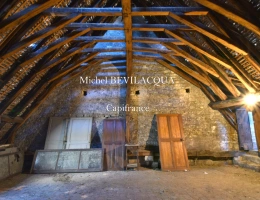
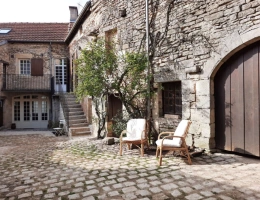
Outbuildings matter almost as much as the main house: sandstone outbuildings, a dovecote, sometimes an ice house or a former press tied to local hop and vine growing. Many of these buildings served farming or craft uses into the twentieth century, leaving simple interiors to be reworked but well-preserved period façades and roof timbers. Recent projects favour lime renders compatible with the local stone rather than modern materials.
Belfort and its historic centre, around the citadel and the nineteenth-century suburbs, hold the greatest share of the department's classified or registered buildings. The Savoureuse valley, towards Giromagny and the Vosges foothills, retains protected farms and rural residences at the foot of the first mountain slopes. To the south, towards Delle and the Swiss border, and to the east towards Beaucourt and Châtenois-les-Forges, nineteenth-century industrial and bourgeois heritage sits alongside older residences, set in an agricultural plain.
Belfort-Montbéliard TGV station, on the edge of the conurbation, links the department to Paris and Strasbourg in a little over two hours; the A36 motorway crosses the territory from east to west towards Mulhouse and Besançon. The most sought-after areas remain the historic centre of Belfort and its suburbs near the citadel; the Vosges foothills and the Delle area, more rural, offer protected monuments that stay markedly more accessible for comparable size.
Establish without delay whether the building carries classified or registered status, since the two levels of protection do not impose the same intensity of control over future works. Any work touching the exterior, the structure or the surroundings requires the prior approval of the Architecte des Bâtiments de France and, for a classified building, the opinion of the regional heritage office attached to the Bourgogne-Franche-Comté DRAC; the historic-monument tax regime can reduce the cost of restoration, subject to conditions that should be checked case by case. Bear in mind, too, that a classified building cannot be sold without informing the buyer of its status and notifying the relevant authorities.
On the technical side, have the sandstone façades checked for frost damage and rising damp, given a continental climate with harsh winters, and inspect the roof timbers of buildings close to the fortifications, some of which back onto older military works. Near the Savoureuse, check for damp in the valley floor, particularly in cellars set below the water table. For a property of this kind, rely on a heritage architect and on qualified contractors trained in the requirements specific to protected monuments in the area.
Historic-monument listings in Territoire de Belfort are placed by private owners, agencies specialising in character properties and notaries; filter them by building type, protection status and outbuildings, and set an e-mail alert to follow new listings. To compare with Haute-Saône, Doubs, Jura, Côte-d'Or, Nièvre, Saône-et-Loire and Yonne, browse the historic monuments for sale in Bourgogne-Franche-Comté.


