
Buying a historic monument for sale in Bourgogne-Franche-Comté often leads from the vine-covered slopes of the Côte-d'Or to the timber farmhouses of the Jura, taking in the abbeys of the Nivernais and the townhouses of old cloth towns in the Yonne. The region combines a considerable religious heritage, shaped by Cluny and Cîteaux, with rural residences built for livestock, wine and forestry across the Jura massif. Many of these properties, long kept within the same families, come to market with their outbuildings intact. Browse the historic monuments for sale listed by the region's private owners, agencies and notaries.
This page sets out the protected building types specific to Bourgogne-Franche-Comté, the areas where they cluster, the administrative steps attached to a registered building or a classified one, and the technical points to examine before starting any restoration, from vineyard to Jura forest clearing. To approach the purchase of an old residence as a whole, read our guide to buying prestige property in France.
In the Côte-d'Or and Saône-et-Loire, Burgundy's golden limestone dresses the noble residences, and roofs sometimes carry the polychrome glazed tiles inherited from the great religious commanderies. In the Nièvre and Yonne, the building turns plainer, in rendered rubblestone, around former priories and tithe barns. In the Doubs, Jura, Haute-Saône and Territoire de Belfort, the Comtois farmhouse and the fortified house use the massif's limestone, broad low-pitched roofs and the distinctive corbelled chimneys shaped by the local climate.
Outbuildings reflect past uses: a vat-house and cellar in the Côte-d'Or, a dovecote in the Nivernais, a hay barn and a comté cheese dairy in the Jura. Many of these residences to restore keep vaulted cellars, old wine presses or oak timber frames intact, but need services brought up to modern standard and rising damp treated, a recurring issue in this limestone subsoil. Local contractors generally favour traditional materials, the only ones accepted on a protected property.
The Côte-d'Or, around Beaune and Dijon, and Saône-et-Loire, between the Mâconnais and Charolais, hold the most sought-after wine-country residences. The Nièvre, around Nevers and the Morvan, and the Yonne, between Auxerre and Sens, offer more affordable priories and residences. In the Doubs, around Besançon and the Haut-Doubs, and the Jura, between Lons-le-Saunier and its lakes, fortified houses sit within fir-forest landscapes. The Haute-Saône, around Vesoul, and the Territoire de Belfort, on the doorstep of Alsace, round out the offer with lesser-known farmhouses and residences.
The Côte-d'Or, Saône-et-Loire, Doubs, Jura and Territoire de Belfort have TGV stations, at Dijon, Montbard, Le Creusot, Mâcon, Besançon, Dole and Belfort-Montbéliard; the Nièvre, Yonne and Haute-Saône are served instead by Intercités or TER links toward Paris or Dijon, though the A6 and A36 motorways keep road access straightforward from any of the eight departments. The most sought-after areas border the Côte-d'Or vineyards and the Besançon area; the Morvan, the Nivernais and the Haut-Jura remain markedly more affordable for a monument of comparable scale and restoration quality.
A classified chateau is not restored the same way as a residence that is merely registered: the exact nature of the protection sets the scope of approval required from the Architecte des Bâtiments de France and, where relevant, from the regional heritage office, and the seller must inform the buyer of the precise status before signing, with the administration also notified of the sale at that point. The historic-monument tax regime can ease certain restoration costs, under conditions to be checked with a notary beforehand.
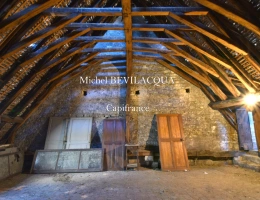
Have the vaulted cellars common in wine country checked, where damp and ground settlement need ongoing monitoring over several seasons, along with the timber frames of Comtois farmhouses exposed to repeated winter snow loads. Dry rot sometimes appears in the old timber framing of the Nivernais and the Yonne, making a full timber survey worthwhile before any commitment to restoration works of any scale. Also check winter access to properties in the Haut-Jura and Haut-Doubs, which can be cut off during prolonged snowfall each year.
Historic monument listings in Bourgogne-Franche-Comté come from private owners, agencies specialising in heritage property and notaries; sort them by department, grounds size, outbuildings and protection status, and set an e-mail alert to track new listings as they are published online. Compare with other regions through prestige property for sale in Bourgogne-Franche-Comté.



