



Considering a poultry farm for sale in Bourgogne-Franche-Comté? The region takes in the Bresse, shared between Saône-et-Loire and Jura, home of a protected farm chicken, but also units scattered across the arable plains of northern Burgundy and through the livestock country of the Morvan and the Jura plateaux. The listings gathered on this page are placed by farmers handing over, by specialist rural agencies and by notaries; they set out the floor area of the houses, the production system, the tenure of the land and the commercial outlet. They complete the full set of poultry farms for sale in France.
This page supplies what a listing leaves out: farmland prices across the region, the departments where most holdings come up, the parts of a poultry house worth inspecting and the administrative checks to run before signing. If you are setting up for the first time, our white paper « Créer une exploitation agricole » (in French) sets out the formalities, the support available and how to put the file together.
Land remains the largest item when buying a poultry farm. According to sales recorded by the French tax administration (DVF, vineyards excluded), the median price of agricultural land in Bourgogne-Franche-Comté stood at €2,773/ha in 2025, with an average of €2,907/ha across 1,303 sales; 80% of transactions fall between €1,813 and €4,185/ha, against a national median of €5,307/ha.
The SAFER benchmark of land values (2025 figures) puts vacant land and pasture at €2,740/ha (-6.2% year on year, -8.1% over ten years), against a national average of €6,460/ha; land already let sells around 17% lower.
Land is only part of the equation. On a poultry holding the value gathers in the buildings and their fittings: structure and insulation, ventilation control, heating, silos, water and power supply, concreted apron and entry room. Then come the production system, the range area available, the handling equipment and, where one exists, the customer base of a direct-sale outlet or a small packing station. Set these against the figures in our land price observatory, then test your assumptions with our financial calculators.
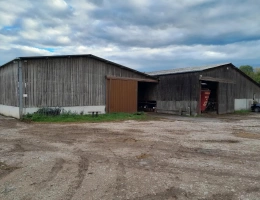
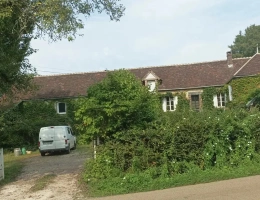
The stock of buildings mixes modest farm houses, often timber-clad and opening onto a range, more recent standard buildings attached to arable holdings, and laying-hen units on the floor or in aviaries producing table eggs. On site you look at the year of construction, the usable length, insulation and ventilation, the heating method, the condition of the floor and the silos, and whether there is a compliant entry room and a washing area. A broiler farm in sound health status and recently brought up to standard sells well above a building whose empty period stretches out because the equipment no longer performs.
The second driver is commercial. Some units work under an integration contract, with chicks and feed supplied and batches collected by the production organisation; others sell through short circuits, on the markets of Dijon, Chalon-sur-Saône or Besançon, or supply a nearby packing station. Ask about the remaining term of the contract, the conditions for transferring it and the batch-by-batch performance record. Where the dwelling house and the land are included, insist on a price broken down by item rather than a single overall figure.
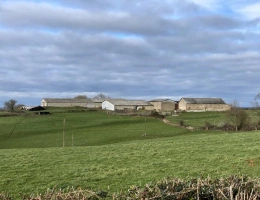
Saône-et-Loire carries most of the regional supply: the Bresse louhannaise, around Louhans, combines protected farm chicken with maize and grassland, and holdings come up there on a regular basis. Jura extends that zone in its Bresse fringe, west of Lons-le-Saunier, before giving way to the dairy systems of the plateaux. In the Yonne and Côte-d'Or, units are more often attached to arable farms with feed grown on the holding, the former looking towards the Paris consumer market and the latter towards the Dijon conurbation.
The Nièvre, between the Morvan and the Loire valley, mostly carries supplementary units on grassland farms, with a substantial share of selling at the gate; land there stays more affordable than elsewhere in the region. In Haute-Saône, supply is scattered between small farm units and buildings attached to crops in the Saône valley. The Doubs, dominated by cheese production, offers few specialised poultry holdings, as does the Territoire de Belfort, where projects tend to be peri-urban and built on direct sales. Widening the search across several departments remains the surest way to find laying hens or broilers on the market that match the project.
Poultry units come under the French classified installations regime: declaration, registration or authorisation according to flock size, with a change of operator notified to the prefecture. Ask for the applicable prefectural order and the receipt, then check that the activity actually carried on matches the regime declared. Biosecurity is the second task: a written plan, an entry room, clean and dirty routes kept apart, carcass and surroundings management, with housing measures triggered during avian influenza episodes, which do not spare free-range poultry in eastern France.
Look next at the manure spreading plan, the storage capacity for litter and the possible classification as a nitrate vulnerable zone, which governs applications and their timing. On the land, part of the parcels will be rented: the rural lease continues with the buyer with the landlord's agreement, and the sale passes through the structures control and SAFER. Have the position on feed stocks, bedding and the flock spelt out as at the day of handover.
Listings come from private sellers, rural estate agencies and notaries. Filter by department, by building area or by price, and set up an alert to follow new holdings as they are put on the market, whether a chicken farm, a broiler unit or an egg farm. Each listing points to whoever placed it, so you can request technical documents before a visit, and you can widen the search to all farms for sale in Bourgogne-Franche-Comté.