

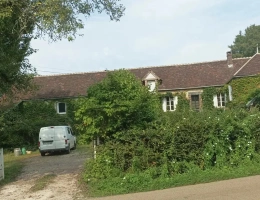
France's smallest mainland department puts very few holdings on the market, so anyone watching for a poultry farm for sale in Territoire de Belfort needs patience and a standing alert. Local farming runs on grass and milk, leaving poultry the role of a second enterprise: houses of moderate size, farmhouse birds on range, laying units whose eggs travel to the shops and markets of the Belfort conurbation. Sellers, rural agencies and notaries pass these properties to us with the buildings, the equipment and the adjoining paddocks described. Our national hub of poultry farms for sale lets you widen the net at once.
Past the listings, this page sets out the local benchmarks: land values in a heavily built-up department, the communes where supply gathers, the criteria for inspecting a livestock building and the formalities to anticipate. For a setting-up project, our white paper « Créer une exploitation agricole » (in French) describes the whole path, from legal form to the funding plan.
Land remains the largest item when buying a poultry farm. According to sales recorded by the French tax administration (DVF, vineyards excluded), the median price of agricultural land in Territoire de Belfort (90) stood at €3,820/ha in 2025, with an average of €4,011/ha across 16 sales; 80% of transactions fall between €3,400 and €4,975/ha, against a national median of €5,307/ha. * Fewer than 30 recorded sales: indicative value.
The SAFER benchmark of land values (2025 figures) puts vacant land and pasture at €3,570/ha (-1.4% year on year, -11.0% over ten years), against a national average of €6,460/ha; land already let sells around 17% lower.
Here more than elsewhere, value gathers in the buildings and the goodwill rather than in the hectares. Under scrutiny come the design of the house, its insulation and ventilation, the heating, the silos, the egg store, the collecting equipment, the quality of the ranges and their fencing. Add the flock, the delivery rounds, the market pitches and a dense nearby clientele, which is a commercial asset in its own right. Our land price observatory and our financial calculators let you test whether a price holds together.
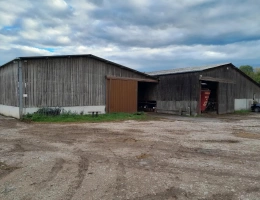
What comes up is seldom a large integrated unit: more often it is a mid-sized poultry house, a floor-laying room fitted into an older outbuilding, or mobile arks set out on pasture and moved between paddocks. Inspect the frame and roof, sized for snow at the foot of the Vosges, the insulation, air renewal, the heating, how flat and washable the floors are, the biosecurity entry room, the frost protection on the water system and the state of the fencing. The room left around the building governs any future extension and the movement of vehicles on the yard.
Integration contracts are uncommon at this scale: selling rests on the farm gate, weekly markets and a handful of grocers and restaurants. A takeover therefore carries customer habits and delivery arrangements that must be confirmed before signature, together with, where there is one, a slaughter room with its cold store and approval. When the property includes a dwelling house, outbuildings and paddocks, ask for the price to be split explicitly between the working tool and everything else.
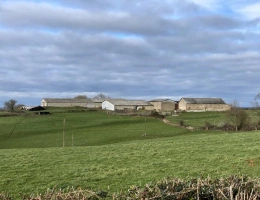
In the north, the Vosges foothills, from Giromagny to Rougemont-le-Château and Étueffont, are grass and forest country, dotted with ponds, where small mixed farms survive and where a broiler farm keeps family proportions and pasture comes with the buildings. The centre of the department, around Belfort, Valdoie and Bavilliers, is heavily urbanised: land is scarce, contested and dear, but customers are close at hand and plentiful. To the south, the plain of the Sundgau belfortain, from Delle to Beaucourt and Grandvillars, still holds livestock holdings and cultivated ground worth watching, with the occasional farmstead changing hands as a generation retires.
Nearness to Montbéliard, Mulhouse and the Swiss border keeps demand for farm produce and free-range eggs firm, while pushing up the price of built property across the department. Because sales are so few, it is sensible to follow neighbouring Haute-Saône and Doubs at the same time, where an egg farm or a chicken farm comes up more often, on larger acreages and on gentler terms.
In a department this populated, the distance to dwellings is the first thing to weigh: it governs how neighbours receive the unit and whether an enlargement is feasible at all. Read the local planning document and the set-back rules before picturing a new building. Depending on the number of birds kept, the holding falls under declaration, registration or authorisation within the French classified installations regime, with the change of operator notified to the prefecture. The biosecurity plan, the rest period between batches and the housing measures applied when avian influenza risk rises are checked in the same pass.
Land, finally, deserves close reading: rented parcels remain subject to the rural lease, which continues with the buyer once the landlord agrees, and the transaction goes through the structures control, the French authorisation regime for taking over farmland, and SAFER's pre-emption right. Make sure the area available supports a coherent spreading plan and proper manure storage, and have the buildings, the equipment and the land valued separately rather than as one lump.
The properties shown come from private owners, from rural estate agencies and from notaries' offices established in the region. Refine by area, by budget or by the type of unit you want, switch on an e-mail alert so you can move quickly in a narrow market, then extend your search to every one of the poultry farms for sale in Bourgogne-Franche-Comté.