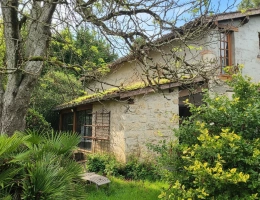
This department lives on farming systems set side by side, and a poultry farm for sale in Tarn-et-Garonne is seldom found among the orchards: it sits rather on the Bas-Quercy slopes and in the Lomagne, where free-range units, duck holdings and a few contracted standard houses stand close together. Farmers at the end of their careers, agencies specialising in agricultural property and notaries entrust these holdings to us, stating the built area, the production system and the organisation behind the unit. Each of them also appears among the poultry farms for sale listed across France.
A listing describes what is being sold, rarely what surrounds it. This page adds what land is worth in the department, where handovers occur, what the age of the buildings reveals and the health and administrative checks the sector calls for. To prepare a first venture, lean on our white paper « Créer une exploitation agricole » (in French).
Land remains the largest item when buying a poultry farm. According to sales recorded by the French tax administration (DVF, vineyards excluded), the median price of agricultural land in Tarn-et-Garonne (82) stood at €7,301/ha in 2025, with an average of €7,959/ha across 113 sales; 80% of transactions fall between €4,458 and €12,529/ha, against a national median of €5,307/ha.
The SAFER benchmark of land values (2025 figures) puts vacant land and pasture at €7,540/ha (+0.7% year on year, +20.4% over ten years), against a national average of €6,460/ha; land already let sells around 17% lower.
Away from acreage, judgement turns on the tool and on the outlet: dimensions and eaves height of the buildings, insulation, ventilation, heating, silos and feed lines, technical room, a concrete bay that washes down. Add the extent and quality of the range, any force-feeding room or processing workshop, and the customer base of a unit with laying hens supplying shops and markets across the Quercy. Place the figure with our land price observatory, then test the funding with our financial calculators.
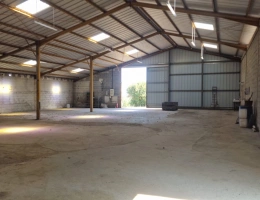
The department holds medium-length free-range houses opening onto a planted run, larger buildings for standard production and, here and there, facilities given over to ducks. A visit covers the structure and roof, asbestos on older coverings, insulation, air renewal, the heating system, the soundness of the slab and the condition of the silos. Capacity per batch, ease of access for lorries and the room available for a proper rest period between crops all get measured. Ageing equipment is deducted from the asking price more firmly than a seller tends to expect.
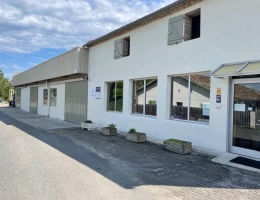
Where the property includes a cutting room, a cold store or a farm shop, the valuation changes nature: the health approval, the compliance of the installations and the turnover of a business built over years of markets are handled apart from the livestock buildings. Conversely, an integrated unit is worth first of all what its contract is worth, its term and the volumes planned. On holdings with a house, land and buildings, splitting the price between dwelling and working tool shapes both the funding and the tax treatment of the deal.
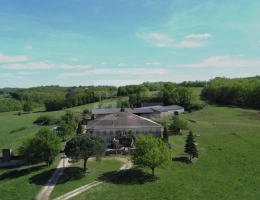
The Garonne valley and the Moissac area are dominated by orchards and market gardening, with irrigated land among the most sought after in the department: poultry supply there is marginal. The Bas-Quercy slopes, from Lafrançaise to Montaigu-de-Quercy and Lauzerte, and the north-east towards Caussade and Saint-Antonin-Noble-Val, carry more livestock and more affordable land. To the west, the local part of the Lomagne, around Beaumont-de-Lomagne, extends a Gers basin with a long poultry tradition.
The Montauban area concentrates residential demand and farmland grows scarce close to the town. For a takeover project, the slopes remain the most open ground: buildings are sometimes old, but range area is available and neighbours are further off, which leaves room for a later extension.
The sector was badly hit by successive avian influenza episodes in south-west France, and duck units are subject to reinforced rules: stocking densities, housing during risk periods, separation of units, self-checks. The biosecurity plan and how far it is actually applied are verified during the visit, as is the holding's status under the classified installations regime, the notification of the change of operator and the requirements of the prefectural order. Surroundings, fencing and parking areas are part of that framework.
Legally, the buyer checks the status of the parcels, the continuation of rural leases, the structures control and the possible intervention of SAFER, the body with a pre-emption right over farmland. Ask as well for the health results of recent batches, the treatment history and any compensation received. Separate valuations of buildings, equipment, flock and land avoid unpleasant surprises when funding approval is sought.
Private sellers, rural estate agencies and notarial offices feed this selection as handovers come along. Filter by building area, by price or by type of production, from a free-range poultry holding with a run to a single house, set up an alert so nothing slips past, and carry on to poultry farms for sale in Occitanie.