

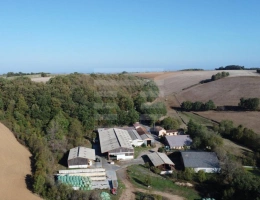
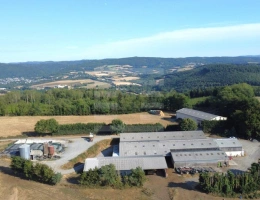
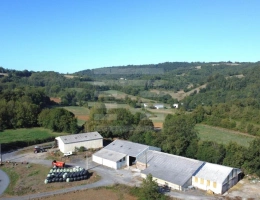
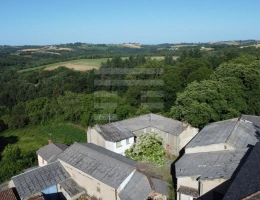
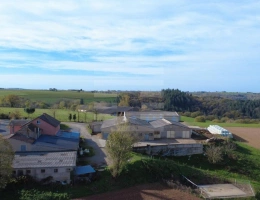
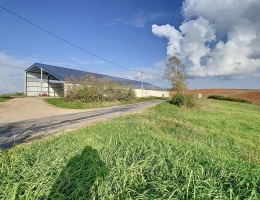
Looking for a poultry farm for sale in Tarn means prospecting a department where livestock holds the Ségala plateaux, the foothills and part of the Albigeois. Free-range birds raised under a quality label have a long history here, alongside standard houses run in batches and a few egg units, though a laying-hen holding comes up far less often than a broiler one. The properties are placed by farmers arranging their retirement, by rural property firms rooted in south-west France and by notaries, each giving the covered area, the way the flock is run and the buyer who collects the batches. They join the wider picture of poultry farms for sale nationwide.
Beyond the particulars, this page gives you what you need to place an offer in context: what land is worth locally, which areas release the most holdings, the condition to expect from a varied building stock and the inspections the sector requires. Anyone preparing to set up will find the route mapped out in our white paper « Créer une exploitation agricole » (in French).
Land remains the largest item when buying a poultry farm. According to sales recorded by the French tax administration (DVF, vineyards excluded), the median price of agricultural land in Tarn (81) stood at €6,000/ha in 2025, with an average of €6,408/ha across 86 sales; 80% of transactions fall between €2,887 and €10,000/ha, against a national median of €5,307/ha.
The SAFER benchmark of land values (2025 figures) puts vacant land and pasture at €6,530/ha (+3.3% year on year, +5.5% over ten years), against a national average of €6,460/ha; land already let sells around 17% lower.
Once the land is priced, the rest of the value sits in the tool: usable length of the houses, insulation, climate control, feed lines and drinkers, biosecurity entry room and a washing bay in working order. The planted range required by free-range specifications counts too, as does the share taken by direct sales on the markets of Albi and Castres. Set the asking price against our land price observatory, then test the deal with our financial calculators.
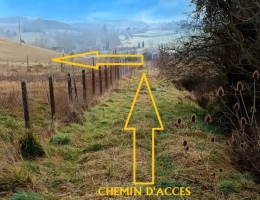
The local stock mixes modest farm buildings opening onto a wooded range with newer houses built for standard production. A buyer notes when it went up, the frame, the roof and how well the walls hold heat, the way air is renewed, the heating and what fuels it, the state of the slab and whether the entry room complies. Silos, the feed auger, drinker lines and weighing gear complete the inventory, along with access for collection lorries, which hillside roads often make awkward. A house recently brought up to standard sells on quite another footing from an older one.
Value then rests on the outlet. A unit tied by an integration contract or belonging to a producer group passes on a marketing framework with it: how long it still runs, and on what terms it transfers, are worth reading closely. Farms that slaughter and sell for themselves are judged differently, the cutting room, the health approval and the customer base forming a business in their own right. Where the property includes a house, land and buildings, ask for the price to be split line by line.
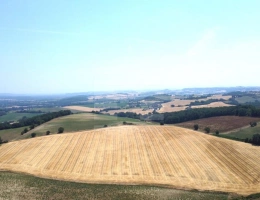
Production is found mainly in the northern and eastern half of the department: the Ségala around Carmaux and Monestiés, the edges of the Viaur valley, then the foothills towards Réalmont and Lacaune, where livestock still dominates. The Lauragais side, around Puylaurens and Lavaur, more often pairs arable cropping with indoor units. The Gaillac slopes, largely given over to vines, offer few opportunities and dear land. Around Albi and Castres, peri-urban pressure and fragmented parcels make it harder to assemble a coherent holding.
Distance to abattoirs and feed mills stays decisive in a wide, hilly department: it drives collection costs as much as access to contracts. A broiler farm comes up more readily on the northern plateaux, away from the two towns and the vineyard, where the balance between land prices and usable buildings is at its best.
Three regimes govern poultry units — declaration, registration, authorisation — and the number of birds kept decides which one applies; a new operator must make themselves known to the administration, and the order in force may carry requirements that have become onerous. The buyer goes through the manure spreading plan, storage capacity, the upkeep of the biosecurity plan and the measures taken against avian influenza, whose recent episodes marked the whole of south-west France. The statutory distance to dwellings, measured on site, governs any future extension.
The land tied to a unit is seldom all freehold. Where a tenancy runs, it passes to the newcomer provided the owner agrees; the sale may also draw the attention of SAFER, the public body able to step into a farmland transaction, and a permit to farm is required under the French structures control. Have buildings, equipment and parcels appraised apart. For setting-up support, the agricultural qualification must be held and the file lodged before signature.
The properties gathered here are entrusted to us by private sellers, by rural estate agencies and by notaries based in the department. Tune the search to covered area, budget or the production you want, from an egg farm to a single house, switch on an alert to follow new listings, then move up a level to poultry farms for sale in Occitanie.


