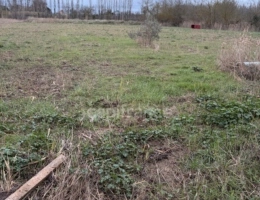
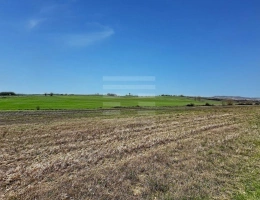
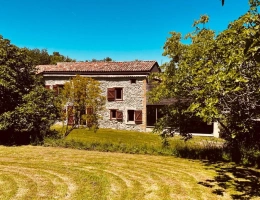
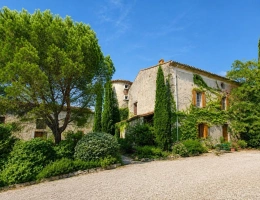
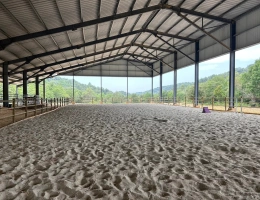
Between the Lauragais plain, the garrigue and the foothills of the Montagne Noire, a poultry farm for sale in Aude is rarely an industrial affair: what comes up is mostly farm-scale houses opening onto a wooded range, duck units inherited from the local confit tradition, laying units whose table eggs travel through short supply chains, and a few standard houses run under an integration contract. The files are entrusted by farmers arranging their departure, by rural agencies based in the department and by notaries; each states the covered area, the husbandry system and the outlet in place. They join the national record of poultry farms for sale.
A listing says little about the setting. This page places farmland values across Aude, shows which areas genuinely see holdings change hands, points to the parts of a chicken farm worth surveying and sets out the duties attached. Where the plan is to start rather than to enlarge, our white paper « Créer une exploitation agricole » (in French) walks through the stages, from legal structure to funding.
Land remains the largest item when buying a poultry farm. According to sales recorded by the French tax administration (DVF, vineyards excluded), the median price of agricultural land in Aude (11) stood at €5,765/ha in 2025, with an average of €6,627/ha across 59 sales; 80% of transactions fall between €3,315 and €10,351/ha, against a national median of €5,307/ha.
The SAFER benchmark of land values (2025 figures) puts vacant land and pasture at €6,610/ha (+3.9% year on year, +0.2% over ten years), against a national average of €6,460/ha; land already let sells around 17% lower.
Land explains part of the asking price and no more. What counts first is the usable length of the house and its insulation, the ventilation, the heat source, the silos, the entry room and the slab; then the wooded range around it, which governs stocking density and access to farm-scale specifications. Add the strength of the producer group, the distance to an abattoir or packing station, and the customers attached to a direct-sales workshop. The land price observatory and our financial calculators help place each item within a budget.
The properties on offer cover situations with little in common. A shed built for standard batches is not judged like a farm-scale house fitted with pop-holes and opening onto a wooded run, nor like a floor-housed egg farm whose value rests as much on nest boxes, belts and the collection line as on the shell. Look at the frame and roof, the insulation, the ventilation and its probes, the heating, the silo capacity and whether the house can truly be washed down during the sanitary break. A grading room alters what it costs to bring the site back into service.
The birds do not always come with the walls: under an integration contract they remain the property of the producer group, which eases the opening cash position but ties profitability to the term still running. Ask for the transfer conditions before making an offer. A unit that slaughters, cuts and sells on site changes hands with its health approval, its processing room and its list of customers, each worth its own figure. Where the sale takes in the house and land, insist on a split price.
The Lauragais and the Razès, around Castelnaudary, Bram and Fanjeaux, hold the greater share of units: cereal and oilseed land, feed grown nearby, and a long local habit of raising poultry and ducks tied to the regional table. The Piège and the Cabardès carry smaller units, often attached to a sheep flock or to arable land. Towards the Minervois, the Corbières and the Narbonne country, vines take up the ground and poultry appears only as a sideline, outdoors and sold direct. The upper Aude valley and the Limoux country round out the picture with smaller, more isolated holdings.
That geography shows in asking prices. In the west of the department, a broiler farm is negotiated above all on its technical features and its closeness to downstream facilities. Along the Mediterranean edge, around Narbonne as much as Carcassonne, competition from housing and viticulture lifts the price of built property and thins out available farmsteads, which stretches timescales and points buyers towards an existing site rather than a new build.
Flock size decides which regime applies: declaration, registration or authorisation as a classified installation, with notice of the change of operator given to the prefecture at handover. Ask for the applicable order and the inspection history, since a site regularised late may carry demanding requirements on distance to dwellings, on noise or on air treatment. Animal health forms the second block, with the written biosecurity plan, the separation of clean and dirty areas, the fencing of the ranges and the avian influenza measures that govern access to the site.
In a Mediterranean department, water deserves a check of its own: where the supply comes from, what it delivers, whether the borehole is registered, and what applies in a period of restriction. Ask too about fire risk in the garrigue and clearance obligations around the buildings. Rented parcels stay governed by the rural lease, which continues with the buyer subject to the landlord's agreement, and the sale passes through the structures control, the French authorisation regime for taking over farmland, then through SAFER.
The properties gathered here are entrusted by private vendors, rural property professionals and notarial offices. Narrow the search by covered area, by budget or by production, from a modest unit of free-range poultry to a holding with laying hens already established in short supply chains, then switch on an alert. You can also browse every poultry farm for sale in Occitanie.