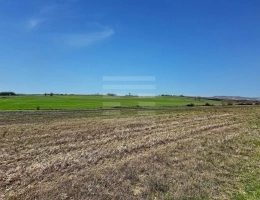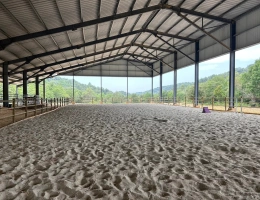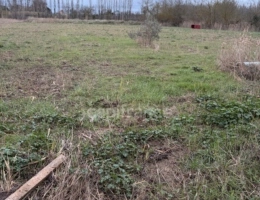
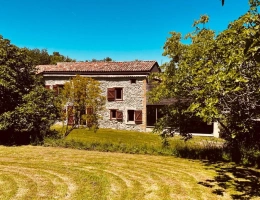
The market for farms for sale in Aude only makes sense once you have crossed the department from west to east. You set out on the heavy soils of the Lauragais, combine country, where fields are laid out in regular blocks; at the far end you reach sheep-grazed garrigue, planted sun-facing slopes and lagoon margins exposed to a relentless wind. Everything in between changes: rainfall, the size of holdings, the kind of buyer. The properties shown are entrusted by farmers ending their careers, by heirs, by succession advisers and by Aude rural agencies, each file setting out areas, soils, any irrigation, buildings and working assets. They round out the inventory of farms for sale in France listed across this portal.
What follows supplies what is usually missing at decision time: what land is worth district by district, which productions hold the department up, where handovers follow one another and which approvals a purchase must clear. A project still at the intention stage should begin with our white paper « Créer une exploitation agricole » (in French), devoted to setting up.
Land forms the base of a farm's value. DVF, the property sales database published by the French tax administration (vineyards excluded), records a 2025 median of €5,765 per hectare in Aude (11), an average of €6,627 and 59 sales; four transactions in five fall between €3,315 and €10,351, against a national median of €5,307.
The SAFER land value benchmark sets €6,610 per hectare for vacant land and pasture offered for sale in the same year, +3.9% over one year and +0.2% over ten, against €6,460 nationally. SAFER publishes no local figure for let land, too few sales being recorded; nationally, land sold with a farm tenancy in place trades at a discount of about 17%.
Against the Occitanie region, whose median is €7,015 per hectare, this department sits 18% lower. For commune-level detail and comparisons with neighbouring areas, see our land price observatory, then cost your purchase with our financial calculators.
In the west, the arable holdings of the Aude Lauragais live on durum wheat, sunflower, oilseed rape and sorghum, with blocks of seed crops and field-grown pulses, and supplementary irrigation wherever the network reaches. Eastward and south, drought imposes other systems: sheep flocks run on garrigue grazing, cheesemaking goat units, olive groves and orchards in the Aude valley, and market gardening under cover on the irrigated ground of the Narbonne plain. Vines, from the Corbières to the Minervois and the Limoux basin, belong to our wine-estate category and are not listed here.
For a buyer the trade-off comes down to one question: area, or added value? An arable block in the west is judged on how evenly the fields lie, on the horsepower it demands and on the water balance of its clay-limestone soils. A livestock or planted holding in the east is judged on its water, on exposure to the prevailing wind and on an established route to market, since direct selling weighs heavily in local budgets.
The Aude Lauragais, around Castelnaudary and Bram, concentrates the largest structures and the highest land values in the department; supply is thin because neighbours are expanding. The Razès and the Limoux basin offer medium-sized mixed units spread across the hillsides. To the north, the Cabardès and the Aude flank of the Montagne Noire bring pasture, woodland and more dependable rainfall, at markedly lower entry prices. The Minervois and the Corbières, very dry, alternate rough grazing, reclaimed scrub and plantations.
Along the coastal fringe, between Narbonne, the lagoons and the Clape hills, farming coexists with urban growth, tourism and strict building rules. An agricultural property there reaches figures unrelated to those inland, and fragmented parcels make it hard to assemble a coherent unit. Buyers looking for area do better on the upland margins of the department.
In a department exposed to severe low flows, the irrigation file sets value as much as the soil does. Check where the water comes from — pressurised network, river intake, declared reservoir, authorised borehole — the volume allocated, the tariff and how often restriction orders have been issued in recent years. Two neighbouring parcels, one served and one dry, are not comparable, and the gap has widened through successive dry seasons. Replanting and conversion plans deserve the same caution.
The standard procedures then frame the deal: the notary informs SAFER, which holds a pre-emption right exercised in favour of a candidate chosen after advertising; approval to farm assessed against the thresholds set for Occitanie; and the tenant's priority over land he already works. Locally, add nitrate-vulnerable-zone status on certain catchments, the rules applying to coastal communes and the prescriptions attached to protected natural areas around the lagoons.
Instructions arrive through two very different channels: planned handovers in the arable west, prepared long in advance, and less predictable sales in the east, where heirs often decide after the event. Two filters save time in this department: water availability and distance from the farmyard. Set them, then switch on an e-mail alert; sellers can list a property at any time. Widen the search to farms for sale in Occitanie.