
Taking over a poultry farm for sale in Pas-de-Calais means reading a department where poultry grew up beside arable farming: broiler and turkey houses run alongside cereals, potatoes and sugar beet, farm-scale flocks in the Boulonnais hills, and a number of laying units whose table eggs travel towards the Lille conurbation and the coast. The Licques country has long been known for its farm-reared turkeys, and that reputation still shapes part of what comes on the market. Sellers are farmers nearing retirement, rural property specialists and notaries; the files state the covered area, the production system and the organisation the unit belongs to, and sit within the national picture of poultry farms for sale.
Beyond the listings, this page supplies what is missing at the first visit: farmland values across the department, the districts where handovers genuinely appear, how to read the buildings on offer and the checks the sector imposes. If you are setting up rather than expanding, our white paper « Créer une exploitation agricole » (in French) maps the route from funding to the agricultural qualification.
Land remains the largest item when buying a poultry farm. According to sales recorded by the French tax administration (DVF, vineyards excluded), the median price of agricultural land in Pas-de-Calais (62) stood at €7,500/ha in 2025, with an average of €8,667/ha across 326 sales; 80% of transactions fall between €6,066 and €14,000/ha, against a national median of €5,307/ha.
The SAFER benchmark of land values (2025 figures) puts vacant land and pasture at €13,070/ha (+0.8% year on year, -0.8% over ten years), against a national average of €6,460/ha; land already let sells around 17% lower.
Land tells only part of the story. What is paid for lies first in the usable length of the houses, the frame, the insulation, the ventilation, the heating and its running cost, the silos, the biosecurity entry room and an access lorries can use in winter. Then come the integration contract or producer-group membership, the spreading capacity around the site and, for units selling direct, the health approval and the customer base already built. To place an asking price, cross the land price observatory with our financial calculators.
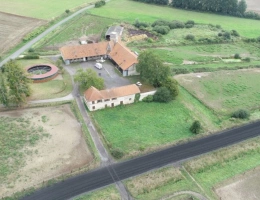
The local building stock runs from long windowless broiler houses, designed for standard batches, to buildings with grass or wooded range for farm-reared birds, by way of turkey units and a few laying aviaries. Buyers note the year of construction, the span of the frame, the insulation, the type of ventilation, the heating system, whether the entry room complies and the capacity of the silos. A house recently brought up to standard, fitted with a heat exchanger and modern controls, sells well above an older set of buildings whose return to service calls for the heating and ventilation to be rebuilt.
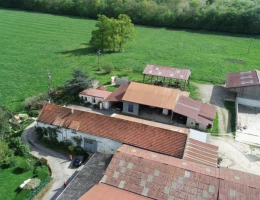
Value also rests on the outlet. A unit under an integration contract, supplied with chicks and feed and emptied on agreed dates, is not judged like a chicken farm selling direct, whose worth lies in its cutting room, its health approval and its trade at markets and producer shops. Where the property is offered with a dwelling house, sheds and land, ask at the first visit for an item-by-item breakdown: the production tool, the house and the land follow different pricing logics and are not financed in the same way.
Poultry is found mainly in the western half of the department. The Boulonnais and the Licques country hold farm-scale turkey and chicken units backed by grassland, with a local slaughtering facility that eases marketing. The Ternois and the high Artois country, around Saint-Pol-sur-Ternoise and Fruges, combine indoor houses with cereal rotations; the Montreuillois and the Sept-Vallées mix hedged farmland, vegetable growing and small flocks. Towards Arras, land carrying beet and potatoes reaches high values and poultry remains a sideline. The coastal strip and the former coalfield release very little farmland.
For a first purchase, the inland high country and the edges of the Ternois offer the most workable balance between land cost, the supply of buildings worth taking on and the distance to downstream facilities. Closer to Arras, Béthune or the Opal Coast, competition for land lifts the price of holdings sold with a house, without the buildings themselves being any newer: much of what you pay there is the site rather than the tool.
Poultry units fall under the French classified installations regime: depending on the flock held on site, the holding is subject to declaration, registration or authorisation, and any change of operator must be notified to the prefecture. Read the order in force before making an offer, since long-standing requirements on distance to neighbours, odour or manure storage can rule out an extension. Check as well the biosecurity plan, the fencing of the ranges, and the avian influenza measures, which impose housing periods in higher-risk areas.
On the land itself, part of the acreage is usually rented: the rural lease continues with the buyer subject to the landlord's agreement, and the transaction goes through the structures control, the French authorisation regime for taking over farmland, and through SAFER's pre-emption right. The manure spreading plan and the nitrate directive govern how many birds the site can hold, and therefore any later extension. Have the buildings, the equipment and the land valued separately rather than accepting a single overall figure.
Retiring farmers, rural estate agencies and notaries supply this page. Narrow by covered area, by budget or by the kind of free-range poultry or indoor unit you are after, set an alert so new files reach you as they are published, then widen towards the poultry farms for sale in Hauts-de-France when departmental supply stays thin.