
A poultry farm for sale in Oise most often takes the form of a unit grafted onto an arable holding or onto a livestock farm in the pays de Bray. The department crops heavily, keeps a little livestock, and draws on its nearness to the Paris region to sell farm-reared birds and table eggs through short supply chains. You will find contract broiler houses, turkey and duck units, and laying flocks. These holdings are sent to us by sellers, by rural property agencies and by notaries, with the buildings and the marketing route described. They form part of our national offer of poultry farms for sale.
This page is built to complete the listings: the value of farmland in the Oise, the districts where units come free, how to examine buildings of widely different ages, and the checks specific to poultry keeping. If you are preparing a first entry into farming, our white paper « Créer une exploitation agricole » (in French) walks through the stages, from professional qualification to the cash plan.
Land remains the largest item when buying a poultry farm. According to sales recorded by the French tax administration (DVF, vineyards excluded), the median price of agricultural land in Oise (60) stood at €7,927/ha in 2025, with an average of €8,723/ha across 174 sales; 80% of transactions fall between €6,000 and €13,118/ha, against a national median of €5,307/ha.
The SAFER benchmark of land values (2025 figures) puts vacant land and pasture at €10,740/ha (+14.1% year on year, +27.3% over ten years), against a national average of €6,460/ha; land already let sells around 17% lower.
Outside the area farmed, value concentrates on the building and the outlet: usable dimensions, insulation, ventilation, heating, feed line, silos, entry room, concreted apron and lorry access usable in every season. A planted range, an official quality scheme, organic certification already obtained or a live integration contract each add their share. For laying units, the grading room and the customer base form goodwill distinct from the walls. Place the offer using our land price observatory and test your figures with our financial calculators.
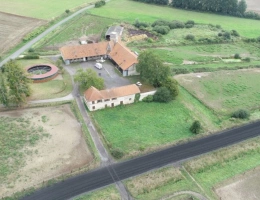
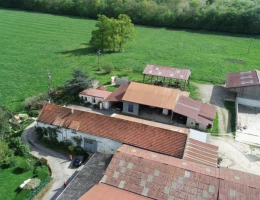
The local stock is mixed: long mechanised buildings on the cereal plateaux, medium-sized houses with a range in the western bocage, old barns converted on farms geared to direct selling. Buyers check the year of construction, the frame, insulation, ventilation, heating and floor condition, then the equipment: silos, feed augers, drinking lines, lighting and standby generator. Whether the entry room is compliant, and whether a full empty period can be kept between batches, are among the first points to settle, because their absence means immediate work and a discount on the asking price.
The marketing route shapes the rest. Under contract with a producer group, the unit depends on the organisation's policy, the remaining term and the conditions for transferring the agreement to the buyer. Selling direct, the shop, the round and the health approval form goodwill negotiated alongside the walls. In a holding sold with a dwelling house and land, the residential share is substantial here: a clear breakdown of the price is the only way to put a solid file in front of a lender.
The Picardy plateau, around Grandvilliers, Breteuil and Saint-Just-en-Chaussée, remains arable country: sought-after land, few livestock buildings and those usually tied to a long-standing diversification. The pays de Bray, west of Beauvais, keeps its hedged fields, pasture and dairy holdings, a setting that suits farm-scale poultry units. The Vexin to the south, and the Valois around Senlis and Crépy-en-Valois, feel pressure on land from the Paris region but offer customers close at hand. The Noyon area and the Oise and Aisne valleys complete the department with mixed holdings.
A direct-selling project will therefore find its place to the south and east, next to the consumer areas, provided you accept high prices and sensitive neighbours. A contract-based project, more dependent on logistics, is easier to build in the north and west, where buildings stay affordable and access is sized for heavy vehicles. In every case, road access and room to manoeuvre govern how batches are collected.
Depending on flock size, the unit falls under declaration, registration or authorisation as a classified installation, and the buyer notifies the prefecture on arrival. Ask for the applicable order, any additional requirements and the inspection history. In a department close to the Paris region, where many villages have become residential, the distance to dwellings and the management of nuisance determine whether the unit can be developed: settle this before offering, by comparing the cadastral plan with the commune's planning document.
Next examine the spreading plan and manure storage capacity, the Oise being classified a nitrate vulnerable zone, then the biosecurity plan and the housing arrangements required when avian influenza risk rises. For the land, the rural lease continues with the buyer if the landlord agrees, and the sale goes through the structures control, the French authorisation regime for taking over farmland, and SAFER's pre-emption right. Valuing land, buildings and equipment separately remains the prudent rule.
The holdings shown come from farmers selling on their own account, from rural estate agencies and from notaries in the department. Refine by area, price or production to pick out the laying unit or the broiler farm you are after, then create an alert to follow new publications. The regional view, covering every poultry farm for sale in Hauts-de-France, extends this selection.