
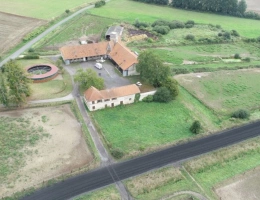
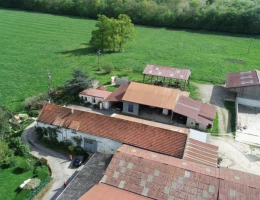
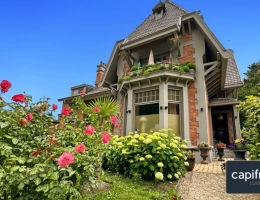
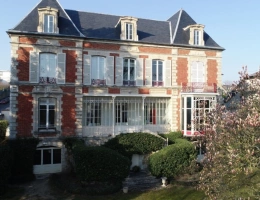
Few departments offer vegetable-growing country as varied: a market garden for sale in the Pas-de-Calais may be a marsh plot reached by water, an open-field farm on the Artois plateau supplying processors, a covered site near Béthune or a nursery set back from the coast. The particulars that come with these holdings, sent to us by retiring growers, by rural land specialists and by the department's notaries, set out the nature of the soil, how much stands under cover, where the water comes from and how the produce is sold. All of them appear in our national record of market gardens and nurseries for sale.
The rest — the level of land values here, the districts where holdings do come free, the condition of greenhouses and buildings, the technical and health controls the trade imposes — is gathered on this page. If your project is still at the setting-up stage, the white paper « Créer une exploitation agricole » (in French) runs through the administrative and financial steps involved.
Land value drives much of the asking price for a market garden or nursery. French tax transfer statistics (DVF, vineyards excluded) show, for 2025, a median of €7,500/ha in Pas-de-Calais (62), an average of €8,667/ha and 326 sales; 80% of transactions settle between €6,066 and €14,000/ha, against a national median of €5,307/ha.
On the SAFER side, the value of vacant land and pasture is set at €13,070/ha for 2025, moving +0.8% over a year and -0.8% over ten, against €6,460/ha nationally; expect an average discount of 17% where a lease is running.
Value is built somewhere other than the land register alone. What is looked at is the bearing capacity and drainage of the soil, how secure the water supply is, the covered area and its age, the cold store, the washing and grading line, the lifting machinery, the stock of plants growing on and, in many handovers, a base of market, wholesale or garden centre customers passing over with the business. Our land price observatory places the land component; our financial calculators test the funding structure.
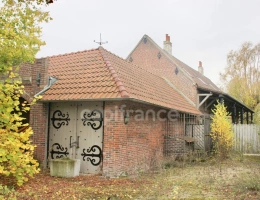
In the Saint-Omer marshes the parcels are fragmented, edged with ditches and sometimes reachable only by flat-bottomed boat: a viewing has to cover the banks, the water control works, how the ground bears after rain and how the crop is really moved out. Elsewhere the assessment becomes conventional: the frames of tunnels and multi-span houses, the state of films and vents, anchoring, ventilation, the drip network, then the grading shed, washer, grader and refrigerated volume. A greenhouse business in ornamentals adds the boiler house, the thermal screen, the benching and the sub-irrigation, all heavy on annual costs.
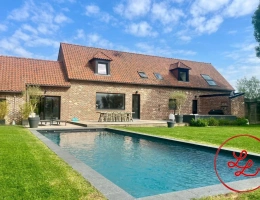
Living stock deserves a valuation of its own. On a plant nursery for sale, the containers growing on tie up serious capital, priced according to species and the time still needed before sale. Where the transaction brings together a dwelling, buildings and land, a common arrangement in Artois villages, insist on a precise breakdown: the house belongs to the local residential market, the working unit to agricultural references, and banks do not fund the two in the same way.
The Saint-Omer marsh, around Clairmarais, Salperwick and Tilques, keeps an old market gardening tradition alive on very fertile black soils, with cauliflower among its emblematic crops. The Lys plain, towards Aire-sur-la-Lys, Lillers and Béthune, combines field vegetables with endive units on deep silty ground. The Artois and Ternois plateaux, around Arras and Saint-Pol-sur-Ternoise, grow mainly vegetables for processing, slotted into cereal rotations. Behind the coast, from the Boulonnais to the Montreuillois, a number of holdings make the most of a dense seasonal clientele and light sandy soils.
The land market mirrors those differences. Marsh ground, scarce and sought after, trades above the department's usual references and a vegetable farm there finds a buyer quickly, while the inland plateaux stay more affordable for anyone willing to move away from nearby markets. Along the coastal strip, competing residential and tourist uses bear on the price of parcels, including where what is offered is no more than a smallholding without buildings.
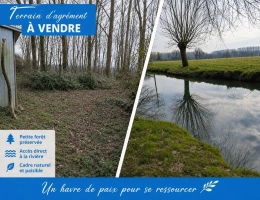
In wetland, water is both the resource and the constraint. Have it spelled out who maintains the channels and ditches, what dredging easements apply, how the costs of the drainage syndicate are shared and what the record of winter flooding looks like. On the plateaux the question becomes the borehole: prefectoral authorisation, volume granted, meter, restrictions in dry spells. Then check how the parcels are classified in planning documents and under protected-area designations, frequent in the marshes and the coastal hinterland, since these govern building, drainage and ploughing up grassland.
The handover follows ordinary French rural law: authorisation to farm under the structures control, SAFER's pre-emption right, and rural leases in force continuing with the buyer. On holdings selling direct, ask exactly what the goodwill covers, from market pitches to agreements with collective retail outlets. Have any organic certification and its start date confirmed by the certifying body, and gauge the availability of seasonal labour, which the coast competes for through the summer.
This section brings together holdings offered by their owners, by agencies dealing in rural property and by the department's notaries. Define an area, a budget and a line of production, create an alert to follow listings day by day, then continue to market gardens for sale in Hauts-de-France.