

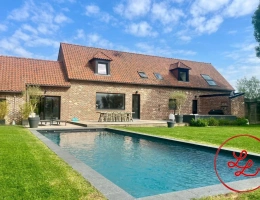
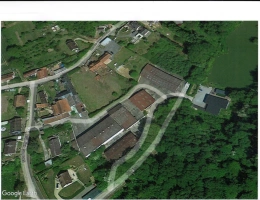
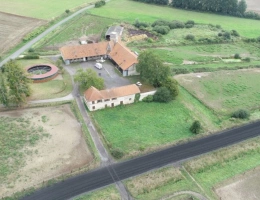
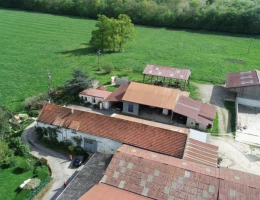
On the doorstep of the Paris-area consumer market, a market garden for sale in the Oise works on two fronts: field vegetables grown on the plateaux, largely destined for processing and for the wholesale trade, and local production supplying markets, box schemes and producers' shops. Alongside them sit ornamental growers and nurseries working for garden centres and municipalities. The holdings gathered here are entrusted to us by farmers nearing retirement, by rural estate agencies and by notaries of the department, with detail on areas, structures, irrigation and contracts running. They join our national selection of market gardens and nurseries for sale.
A listing rarely tells you whether the asking price holds up. This page supplies the rest: local land values, the districts where holdings come up most regularly, how to appraise a set of structures and a stock of young plants, and the checks the trade imposes. To build the project itself — legal form, farming qualification, funding — turn to our white paper « Créer une exploitation agricole » (in French).
Land value drives much of the asking price for a market garden or nursery. French tax transfer statistics (DVF, vineyards excluded) show, for 2025, a median of €7,927/ha in Oise (60), an average of €8,723/ha and 174 sales; 80% of transactions settle between €6,000 and €13,118/ha, against a national median of €5,307/ha.
On the SAFER side, the value of vacant land and pasture is set at €10,740/ha for 2025, moving +14.1% over a year and +27.3% over ten, against €6,460/ha nationally; expect an average discount of 17% where a lease is running.
What changes hands here goes well beyond the croppable area. A buyer pays for ground that drains quickly, for secured water, for covered space in working order, for a cold room, for a washing line of the right size, for specialised machinery, sometimes for a stock of plants still growing on and, very often, for goodwill: long-standing market pitches, a base of subscribers, listings won with a wholesaler or a garden centre. To frame the land element, consult our land price observatory; to measure the borrowing involved, work through our financial calculators.
Situations vary widely. On open-field holdings, value sits in the planting and harvesting machinery, in ventilated storage, in the grading shed and in lorry access; irrigation by reel or drip line governs how steady the volumes are, and therefore how solid the processing contract is. On a vegetable farm geared to short supply chains, what counts is rather the cold tunnels, a few multi-span houses, the cold room, a compliant room for direct supply and the space for making up orders. A plant nursery for sale is judged on its container beds, its overhead watering and the age of the stock growing on.
An ornamental holding adds an item buyers underestimate: the boiler house, its fuel and its efficiency, the thermal screen, the climate control, the benching and the recovery of drainage water. Ask for the consumption recorded over recent seasons before committing, because a greenhouse business without heating or regulation simply cannot grow the same range. Where a dwelling comes with the working unit, common in the villages of the Valois and the Beauvaisis, have the price split between house, farm buildings, structures and land.
The Plateau picard, around Saint-Just-en-Chaussée and Breteuil, offers deep silts where field vegetables slot into arable rotations, with industrial outlets and pronounced irrigation needs. The Valois and the plain running down towards Senlis, Crépy-en-Valois and Nanteuil-le-Haudouin benefit from Île-de-France next door: direct selling, box schemes and restaurant deliveries meet a large clientele. The Oise valley, from Noyon through Compiègne to Creil, keeps alluvial parcels that are easy to irrigate. Westwards, the Beauvaisis and the pays de Bray, heavier and more given to grass, carry mainly small mixed holdings.
Pressure on land is not the same everywhere. Along the Creil-Chantilly axis and the Paris-area fringes, urban growth and residential demand make parcels scarce and explain the price of anything already equipped. Towards the Noyonnais, the northern plateau or the edges of the pays de Bray, the entry cost falls appreciably: a smallholding is easier to come by there, provided you organise delivery logistics and accept a thinner ring of growers around you.
Irrigation here draws on closely monitored groundwater: ask for the order authorising the borehole, the annual volume granted, the meter and its readings, and the history of summer restrictions. Check whether the parcels lie within a drinking-water catchment protection perimeter, a frequent constraint in the valleys, or in a zone classed as vulnerable under the nitrates directive, which frames fertilisation and cover crops. Then look at planning: tunnels and greenhouses erected without a declaration turn up more often than people expect, and regularising them afterwards takes time. The distances to observe when spraying near housing are worth measuring on the cadastral plan.
On the legal side, the purchase remains subject to the authorisation to farm issued under the structures control, and SAFER watches over transfers; a rural lease in force binds the incoming buyer, including where the structures stand on rented ground, a configuration to clear up before any offer. If the price includes goodwill, have listed what passes over: market pitches, commitments to a garden centre, the trading name, the customer file. Seasonal labour and where to house it close the file.
The holdings shown come from private vendors, from firms that handle rural property alone and from notaries practising locally. Adjust the filters for area, price and production, set an alert to hear of every new listing, and carry your search onward to market gardens for sale in Hauts-de-France.