
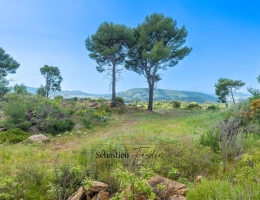
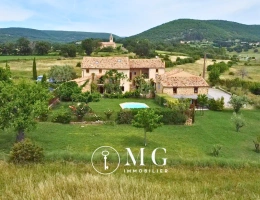
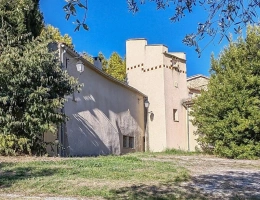
An arable farm for sale in Provence-Alpes-Côte d'Azur turns up only where plain and water allow: the Camargue and the Crau for rice and durum wheat, the Valensole plateau and the middle Durance, the Comtat around Carpentras, and the Buëch and Champsaur valleys for mountain cereals. Everywhere else, vines, olives and orchards hold the ground. The properties we publish come from farmers handing over, from firms specialising in rural property and from notaries; they set out the rotation, the water supply and the machinery included. Each one joins our national list of arable farms for sale.
Beyond the listings, you will find here the value of cropping land in the region, a close reading of where supply sits, the equipment worth inspecting on a crop farm on the market, and the checks that precede any takeover. Anyone starting out will find our white paper « Créer une exploitation agricole » (in French) useful, from choosing a company form to closing the finance.
Pricing the land comes first in any plan to buy an arable farm. On the basis of 2025 DVF sales (vineyards excluded), the median in Provence-Alpes-Côte d'Azur works out at €13,518/ha and the average at €14,884/ha, across 59 transactions. The central range covering 80% of sales runs from €5,947 to €23,101/ha; nationally the median is €5,307/ha.
The SAFER benchmark, the market's second yardstick, gives €12,260/ha in 2025 for vacant land and pasture (+2.8% over twelve months, +12.5% over ten years), beside a national €6,460/ha; tenanted land is worth about 17% less.
In this region, water access creates value as much as soil does. An outlet on an irrigation canal, an established water rota, a buried pressurised network, a well-kept pumping station, the level field surfaces inherited from gravity irrigation, the shed and grain bins, the quality of the machinery and the basic payment entitlements all feed into the asking price. Measure it against our land price observatory and test whether the project stacks up using the financial calculators.
Assessment starts with the water network: where the supply originates, canal, borehole or reservoir, the nature of the right attached to the field, membership of a water users' association, the annual charge, and the condition of sluices, channels or pressurised hydrants. Working gravity irrigation saves capital but calls for a particular way of farming and level ground; switching to drip or a pivot needs a budget the vendor has not always committed. Buildings follow: a stone mas or farmstead, a machinery shed, bins, a concrete apron, a workshop and a lockable crop protection store.
The machinery deserves a written inventory, since it makes up a sizeable share of the deal here: tractors, cultivation equipment suited to stony ground, and harvesting kit often shared with neighbours or hired from a contractor. Where the sale takes in a bastide, outbuildings and the arable land, splitting the price between dwelling and working assets becomes decisive: the Provençal residential market values stone buildings far above their farming worth, which pushes up the funding a takeover requires.
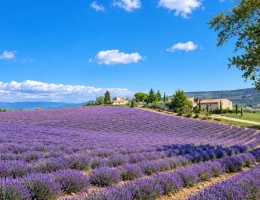
Bouches-du-Rhône holds most of the area: the Camargue around Arles, France's only significant rice-growing zone, combines rice, durum wheat and grassland, while the Crau alternates irrigated hay meadows with cereals on stony soils. Vaucluse grows durum wheat and seed crops in the Comtat and on the Durance terraces, between market gardening and orchards. Alpes-de-Haute-Provence adds the Valensole plateau, where durum wheat sits alongside lavender and lavandin, together with the Durance valley, better irrigated and more regularly laid out.
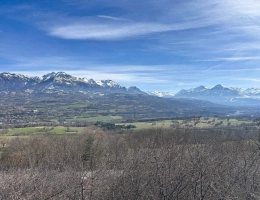
Hautes-Alpes offers upland cereals in the Champsaur, around Gap and in the Buëch valley, on holdings that are frequently mixed and where land costs less. In the Var, arable farming stays marginal: vines dominate and ploughed fields appear mainly on valley floors or as a complement to livestock. Alpes-Maritimes has almost nothing of this kind on offer, farmland being scarce and heavily contested. A buyer is therefore best advised to look first at the Rhône delta, the Durance corridor and the inland plateaux.
Water carries the legal risk. Irrigation rights attach to the land and pass with it, but keeping them depends on paying the charges and observing the water users' association rules: ask for receipts, the service regulations and the history of water rotas. Several areas fall within a water protection perimeter, a regional nature park or a listed site, each of which governs land clearance, new buildings and sometimes changes of cropping. Fields close to built-up areas may also carry easements or sit within development plans, which a planning certificate will reveal.
On tenure, establish exactly how the land is occupied: a written French farm tenancy, a precarious agreement, a loan for use or plain tolerance each unwind differently. The takeover still goes through the structures control, the authorisation regime for farming land, and the sale is notified to the SAFER rural land agency, which sometimes pre-empts to keep land in farming. Lastly, with drought orders now recurrent, ask which prefectoral restrictions applied in recent seasons and what they left genuinely available.
Owner-occupiers, rural estate agencies and notaries entrust these listings to us. Use the area, price and department filters, create an alert to follow new handovers, and carry on towards farms for sale in Provence-Alpes-Côte d'Azur across every type of production if that suits you.


