

Considering the takeover of an arable farm for sale in Oise means targeting a large-scale cropping department on the edge of the Paris region, where the silts of the Picardy plateau and the Estrées plain produce wheat, barley, oilseed rape, sugar beet and potatoes. The files come from farmers preparing their handover, rural property practices and notarial offices in Beauvais, Compiègne or Clermont; they set out soil potential, industrial contracts, storage and the split between owned and rented ground. They sit alongside the arable farms for sale published in other regions.
On this page: land values recorded in the department, the districts where holdings come free, how to appraise a Picard farm with its bins and its storage buildings, and the checks called for on a crop farm caught between the pressure to expand and the spread of the city. The white paper « Créer une exploitation agricole » (in French) details the setting-up route.
Pricing the land comes first in any plan to buy an arable farm. On the basis of 2025 DVF sales (vineyards excluded), the median in Oise (60) works out at €7,927/ha and the average at €8,723/ha, across 174 transactions. The central range covering 80% of sales runs from €6,000 to €13,118/ha; nationally the median is €5,307/ha.
The SAFER benchmark, the market's second yardstick, gives €10,740/ha in 2025 for vacant land and pasture (+14.1% over twelve months, +27.3% over ten years), beside a national €6,460/ha; tenanted land is worth about 17% less.
Acreage tells only part of the story behind an asking price. What also counts is how tightly the blocks sit around the yard, the depth of the silt, irrigation where it exists and the permit behind it, grain storage capacity and its ventilation, refrigerated potato buildings, shares tied to a sugar factory, harvesting machinery and basic payment entitlements. A grain farm bringing its industrial contracts along with its land is valued quite differently from a plain block of fields. Refine your approach with our land price observatory and our financial calculators.
The Picardy plateau in the north of the department and the Estrées plain offer deep, consistent silts well suited to industrial crops; the Valois and the Multien, in the south-east, show a comparable profile with very open field patterns. The pays de Bray, to the west, breaks with all of that: heavy clays, marked relief, a grassland and dairy tradition. Ask for the soil analyses, the field plan, the drainage records and the results of recent seasons, because the value of a takeover rests first on demonstrated yield consistency and on how easily the ground can be worked.
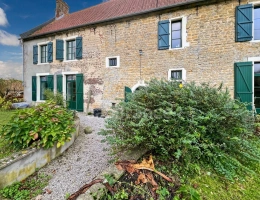
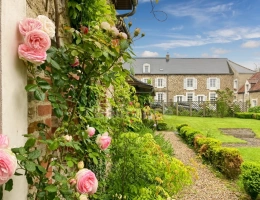
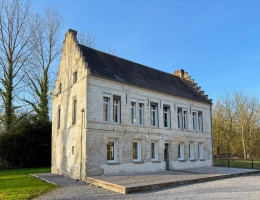
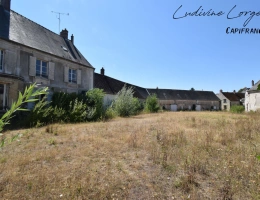
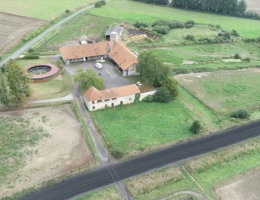
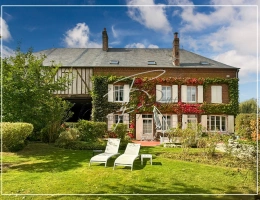
Farmsteads, often built in limestone or brick around a courtyard, come with upright bins, flat-storage sheds and sometimes refrigerated buildings. Buyers satisfy themselves about roof condition, the quality of the ventilation, the control systems, lorry access and electrical compliance. A cereal farm with substantial storage can spread its sales across the marketing year, which justifies part of the price. The dwelling, much sought after in a department close to Paris, is valued separately from the production tool itself.
The north of the department, around Saint-Just-en-Chaussée, Breteuil and Froissy, forms the cereal and beet heartland, with large holdings supplying the Chevrières sugar factory among others. The Estrées plain and the Noyonnais, from Compiègne to Noyon, combine industrial crops with field vegetables. The Valois, around Crépy-en-Valois and Nanteuil-le-Haudouin, pairs good agronomic potential with heavy peri-urban pressure. The Vexin français, south-west towards Chaumont-en-Vexin, offers quality arable land within a protected landscape. The pays de Bray, by contrast, follows a livestock logic.
The further south you go towards the Paris conurbation, the more varied demand becomes: investors, solar projects, residential buyers drawn to the buildings, and holdings that never reach an open market. The north and the Noyonnais remain more of a farmer-to-farmer market, where competition bears on the land itself and where an incoming buyer can still hope to secure a whole holding rather than scattered lots.
Every takeover falls under the structures control, a prior authorisation granted in line with the regional policy framework, and SAFER, the rural land agency, may pre-empt once the notary has notified the sale. Examine each rural lease: the end date of the lease, how the rent is revised, the environmental constraints written into it, and the tenant's first refusal. In a department shaped by urban growth and major infrastructure, also check the planning documents, reserved sites, rights of way and development schemes that could take part of the field pattern away in coming years.
On the technical side, confirm the transfer of basic payment entitlements, the obligations attached to nitrate zoning, the state of the drainage networks and the validity of irrigation permits. Ask about water catchment protection perimeters, numerous in the valleys, which can restrict practices on particular fields. The crop-protection store, the fuel tanks and the filling area deserve a survey before signature.
Retiring owners, agencies specialising in rural estates and notaries in Oise post new mandates on the site regularly. Combine the filters for area, budget and commune, switch on an alert to hear about each publication, and widen your horizon to the arable farms for sale in Hauts-de-France.


