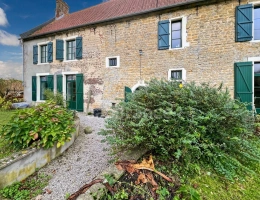
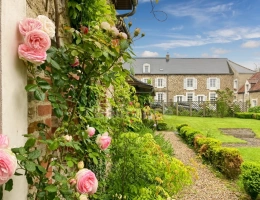
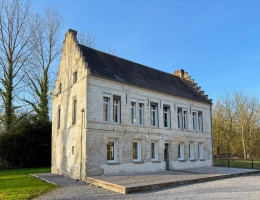
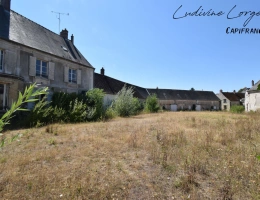
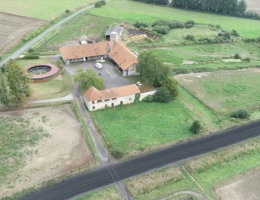
The search for an arable farm for sale in Aisne leads to one of the best endowed departments of the Paris Basin: deep silt soils in the Soissonnais, the plateaux of the Vermandois and the Laonnois, and irrigated valleys where wheat, barley, oilseed rape, sugar beet and potatoes follow one another in long rotations. The properties shown come from farmers organising their handover, specialist rural agencies and notaries in Saint-Quentin, Laon or Soissons; they state soil types, the share held under tenancy, delivery contracts and the storage available. They sit next to the arable farms for sale listed nationwide.
You will find more here than a property sheet: land-value levels recorded in Aisne, the districts where supply turns over, a method for sizing up a Picard farmyard, its bins and its washing area, and the control points specific to a crop farm committed to a sugar factory. Our white paper « Créer une exploitation agricole » (in French) supports the wider project alongside.
Pricing the land comes first in any plan to buy an arable farm. On the basis of 2025 DVF sales (vineyards excluded), the median in Aisne (02) works out at €7,769/ha and the average at €8,841/ha, across 251 transactions. The central range covering 80% of sales runs from €5,737 to €14,000/ha; nationally the median is €5,307/ha.
The SAFER benchmark, the market's second yardstick, gives €11,340/ha in 2025 for vacant land and pasture (+0.6% over twelve months, +27.0% over ten years), beside a national €6,460/ha; tenanted land is worth about 17% less.
In a department of industrial crops, value rests on commitments as much as on land: the beet contract and the shares held in the sugar cooperative, vegetable or potato processing contracts, the abstraction licence for irrigation, lifting and harvesting machinery, ventilated buildings suited to long storage, a loading dock, the basic payment entitlements. A grain farm that passes on its outlets along with its acres stands well above a block of bare fields. Test your own figure against our land price observatory and our financial calculators.
The silts of the Soissonnais and the southern Vermandois are among the deepest soils in France: a high water reserve, steady yields, and suitability for both sugar beet and potatoes. Further north and east the ground turns heavier and harder to work as winter ends, and drainage matters again. Study the field plan, the soil analyses, the yield maps where they exist, and the cropping history for root crops: a rotation loaded with lifting operations affects soil structure in ways a buyer should measure before committing.
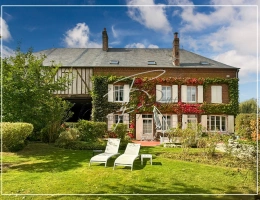
Buildings mix brick courtyard farms, upright bins and recent sheds. Buyers look at grain storage capacity, ventilation and any drier, but also at the potato buildings, their insulation, their temperature control and their intake area. A cereal farm able to hold several harvests in good condition widens its marketing options considerably. The manor house attached to the courtyard belongs to a separate valuation, driven by residential demand in the south of the department.
The Soissonnais and the Aisne valley, from Vic-sur-Aisne through Soissons to Braine, concentrate the most sought-after land, with irrigation and contract vegetable crops. The Vermandois and the country around Saint-Quentin, geared to sugar beet and the Origny-Sainte-Benoîte sugar factory, carry large holdings with reorganised field blocks. The Laonnois and the Chemin des Dames extend that plateau landscape. To the east, the Thiérache remains hedgerow and dairy country, where arable land mostly comes up inside mixed systems. In the south, the Omois and the Tardenois combine cropping with vine-planted slopes.
Competition for ground is intense wherever beet and potatoes anchor the rotation, because neighbours are looking to spread the cost of expensive machinery over more hectares, and holdings often change hands quickly, sometimes before they are widely advertised. An incoming buyer has more room in the Thiérache or along the heavier margins, where agronomic potential is lower but the entry ticket is easier to fund and the buildings are sometimes already sized for livestock.
The file goes through the structures control, the French authorisation regime governing farm takeovers and expansion, and SAFER, the rural land agency, may pre-empt once the notary notifies the sale. Rural leases deserve a field-by-field reading: expiry dates, the rent being charged, any agri-environmental undertakings annexed to them, and the buying priority the sitting tenant holds. Question the corporate form too, which is widespread here: buying shares does not have the same effect as buying land, particularly for beet contracts and cooperative commitments, which may stay attached to the company rather than following the incoming buyer.
Then check the transfer of basic payment entitlements, the validity of water abstraction permits, and nitrate zoning, which covers the whole department and brings obligations on soil cover and manure planning. Finally inspect the crop-protection store, the fuel tanks and the washing station: these installations are closely examined during inspections and bringing them up to standard can weigh on the takeover budget.
The mandates displayed here are entrusted to us by retiring farmers, rural property firms and notarial offices in the department. Pick the area, budget and district that suit you, create an alert to follow new arrivals, and then widen the search to the arable farms for sale in Hauts-de-France.