

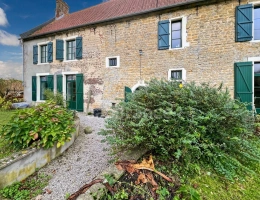
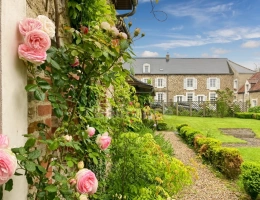
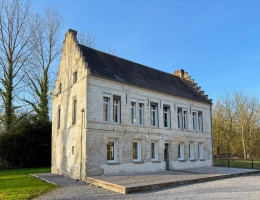
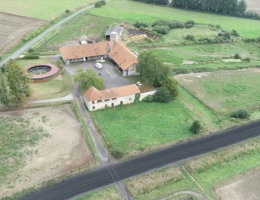
Buying an arable farm for sale in Hauts-de-France means buying into the deep loam soils of the northern Paris Basin. Wheat, winter barley, oilseed rape, sugar beet, potatoes and textile flax follow one another in long rotations, supported by a dense network of sugar factories, starch plants and vegetable processors. The holdings on this page reach us from farmers organising their handover, from land agents working the region and from notarial offices; each listing sets out the cropping plan, the field layout, the on-farm storage and the tenure of the land. They join the national picture of arable farms for sale.
Alongside the listings you will find what has to be settled before signature: what arable land is worth locally, where handovers come up most often, the condition of sheds and grain bins, and the administrative clearances a crop farm takeover depends on. Where the plan is a first setting-up, our white paper « Créer une exploitation agricole » (in French) maps the whole sequence, funding included.
Pricing the land comes first in any plan to buy an arable farm. On the basis of 2025 DVF sales (vineyards excluded), the median in Hauts-de-France works out at €7,976/ha and the average at €8,940/ha, across 1,365 transactions. The central range covering 80% of sales runs from €6,000 to €14,000/ha; nationally the median is €5,307/ha.
The SAFER benchmark, the market's second yardstick, gives €10,890/ha in 2025 for vacant land and pasture (-0.5% over twelve months, +9.4% over ten years), beside a national €6,460/ha; tenanted land is worth about 17% less.
Beyond the hectares, value here rests on agronomic potential: depth of loam, regular field shapes, a maintained tile drainage system and a licensed borehole wherever potatoes and processing vegetables are grown. Then comes the equipment, from ventilated bins and a dryer to a loading apron and a machinery shed, together with delivery contracts with the co-operative, the grain trade or the sugar factory, and the portfolio of basic payment entitlements. Place the asking price against our land price observatory, then test the repayment with our financial calculators.
A cereal farm in this region is judged first on its storage. Buyers measure bin capacity, the quality of ventilation and temperature monitoring, whether a dryer is present and what fuels it, the clear height of the flat store, the load-bearing of the floors and the width of the access for articulated lorries. Storing on farm gives control over when the crop is sold; without it, everything has to go to the co-operative silo straight off the combine. Add the workshop, the fuel tank and its bund, the locked crop-protection store and the filling and washing area, whose compliance is always checked.
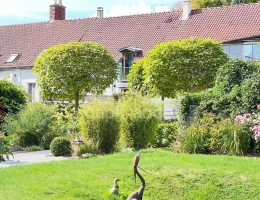
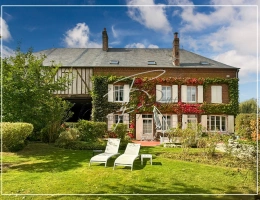
Machinery is valued separately from land. A full line-up, from drill and tested sprayer to tractors and combine, carries real weight in the asking price, but its true condition and age justify an independent appraisal. Many farms share equipment through a machinery co-operative, work with neighbours or rely on a contractor: those commitments pass to the buyer and should be read before an offer. Where a brick farmhouse or a courtyard steading comes with the land, ask for the dwelling to be priced apart from the production tool, since restoring it is rarely cheap.
Somme and Aisne carry most of the supply: the Santerre and the Vermandois offer regular, often irrigated fields geared to beet, potatoes and canning vegetables, while the Soissonnais and the Laonnois combine straw cereals and rape on large units. Oise, from the Plateau picard to the Valois, has extensive structures and land contested by the closeness of the Paris region. Pas-de-Calais splits between a strongly arable Artois and a hillier Ternois where livestock survives. Nord brings together the Cambrésis and inland Flanders, with fragmented field patterns and some of the most sought-after soils in the country.
Pressure on land is uneven. Around Lille, Valenciennes and Amiens, competition between farm expansion, housing and infrastructure pushes values up and makes complete steadings rare on the market. Towards the Thiérache, the Ternois or the Ponthieu, opportunities come up more often, on slightly shallower soils and with more old buildings to restore. Anyone hunting for a grain farm is better off thinking in terms of catchment than of department: a base near the boundary of two areas opens access to several delivery points and makes field swaps with neighbours easier to arrange.
Nothing should be signed before the tenure of each parcel is clear. On holdings of this size much of the area is farmed under a rural lease: the tenancy continues with the new farmer, but the landlord's agreement, the schedule of condition and any arrears must be checked item by item. The deal comes under what is known as the structures control, France's licensing regime for taking on farmland, which measures the area concerned against the regional land-use plan; SAFER, the rural land agency, may also pre-empt a sale. Where shares in a farming company change hands instead, different tax and tenancy rules apply.
Technically, ask for the cropping history of each block, recent soil analyses, nitrogen residue records and the drainage maps, which are often missing. The region is designated a nitrate vulnerable zone: fertiliser planning, soil cover and spreading periods are all regulated. Where irrigation exists, the abstraction licence and the state of the borehole are checked before purchase. Finally, land lying under a planned road or inside a water catchment protection perimeter carries easements worth identifying early.
What appears here comes from farmers selling privately, from rural estate agencies and from notarial offices across the region. Narrow the results by area, by budget or by cropping type, switch on an alert so fresh offers reach you as they appear, then look across the whole of our farm for sale in Hauts-de-France.


