

Acquiring an arable farm for sale in Nord means accepting a tight market on some of the most productive soils in the country. The silts of Flanders, the Pévèle and the Cambrésis carry wheat, winter barley, sugar beet, potatoes, textile flax and chicory, in short rotations farmed at a high level of intensity. These files are lodged by farmers reaching the end of their careers, rural agencies and notaries in Cambrai, Hazebrouck or Dunkerque, who spell out the contracted areas, the buildings and the rented share. They can be read alongside the arable farms for sale offered elsewhere in the country.
This page carries the listing further: land price markers for the department, areas where holdings still come free despite the scarcity, how to read a Flemish farmstead and its buildings, and the checks that matter on a crop farm tied closely to the region's food industry. The white paper « Créer une exploitation agricole » (in French) sets out the stages of setting up.
Pricing the land comes first in any plan to buy an arable farm. On the basis of 2025 DVF sales (vineyards excluded), the median in Nord (59) works out at €7,910/ha and the average at €9,021/ha, across 347 transactions. The central range covering 80% of sales runs from €5,570 to €15,000/ha; nationally the median is €5,307/ha.
The SAFER benchmark, the market's second yardstick, gives €13,560/ha in 2025 for vacant land and pasture (+1.1% over twelve months, +6.8% over ten years), beside a national €6,460/ha; tenanted land is worth about 17% less.
Where hectares rarely come free, the rest of the file counts double: temperature-controlled storage sheds, forcing buildings for chicory, grain bins, lifting and harvesting machinery often jointly owned or run by a contractor, beet contracts and cooperative shares, delivery commitments to potato processors, and basic payment entitlements. A grain farm handed over with its outlets sits on an altogether different financial plane. Cross-check your figures with our land price observatory and our financial calculators.
The silts of inland Flanders and the Cambrésis are arable land with a high water reserve and perform with great regularity, which allows rotations heavily loaded with cash crops. On the coastal plain, polder soils are heavier and more calcareous, valuable for vegetables but demanding on timing and on the upkeep of ditches and drainage channels. Ask for the analyses, the field plan and the rotation history: a tight succession of beet, potatoes and flax puts real pressure on soil structure, and its condition bears directly on the results to come.
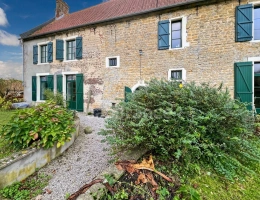
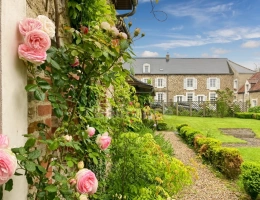
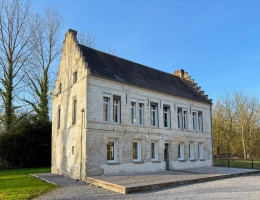
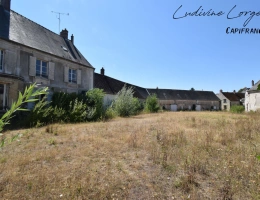
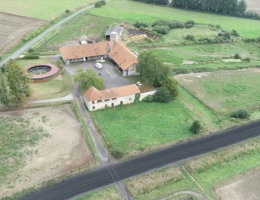
Buildings are plentiful: a brick farmstead set around a courtyard, old barns, recent steel sheds, sometimes chicory forcing rooms or flax drying space. Buyers check the insulation and temperature control of the store rooms, bin ventilation, the slab, articulated-lorry access and electrical compliance. A cereal farm with versatile buildings well placed in relation to the main roads holds its value, even if the farming project later shifts direction, and resale is easier when the yard can take modern equipment without rebuilding.
Inland Flanders, around Bailleul, Hazebrouck and Steenvoorde, combines cash crops, flax and livestock units on holdings of moderate size. Maritime Flanders, towards Bergues and Bourbourg, lines up large polder fields close to the processing plants of the Dunkerque coast. The Cambrésis, from Cambrai to Le Cateau-Cambrésis, is the department's great beet and cereal country. The Pévèle and the Mélantois, at the gates of Lille, face direct competition from the city. To the east, the Avesnois stays hedged and dairy-based, where cropping mostly supports forage systems.
Everywhere, the scarcity of available ground and the density of neighbouring farms pull prices upwards, all the more so in the Lille belt where urban pressure sits on top of farming demand and where non-farming buyers also compete. First-time entrants often look towards the Cambrésis or the Avesnois, where holdings sometimes come up whole, farmhouse included, rather than in lots fought over by expanding neighbours.
The structures control, the prior administrative authorisation required for any takeover, applies in a department whose regional policy favours new entrants over expansion; SAFER, the rural land agency, also steps in once the sale is notified. Rural leases must be examined one by one, since the rented share here is considerable: the expiry date, the rent being charged, the environmental undertakings annexed, and the priority the tenant holds should the land be sold. Check as well the status of buildings sitting in built-up zones or immediately next to housing, a frequent source of operating constraints and neighbourhood disputes.
Technically, confirm the transfer of basic payment entitlements, the obligations of the nitrate zoning that covers the department, the upkeep of drainage networks and, on the coastal plain, the contributions owed to the water boards responsible for drainage channels. A survey of the crop-protection store, the fuel tanks and the filling area completes the picture, since these installations are inspected as a matter of course.
Behind every property shown here stands a farmer handing over, an agency specialising in rural estates or a notarial office in the department. Adjust your criteria for area, price and location, save an alert so the rare listings do not pass you by, and then broaden out to the arable farms for sale in Hauts-de-France.


