

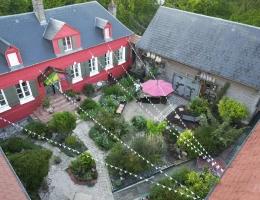
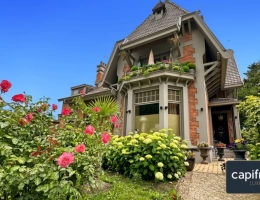
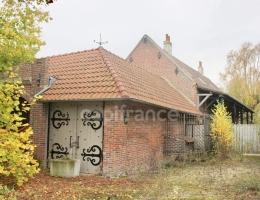
Here the difficulty is not choosing between properties but hearing about one the day it comes free. Farms for sale in the Nord remain an event: holdings are small, parcels tightly packed, and every retirement immediately draws the neighbours, plus buyers from just over the Belgian border. What passes hands often lies in the buildings, the customer base and the contracts as much as in the hectares. Those selling are farmers without a family successor, landlords rebalancing their assets, notaries handling an inheritance and agencies specialising in lowland farmland. Listings state the acreage, the occupation status, the condition of the farmstead and the production in place. Every one of them feeds the national selection of farms for sale in France.
The detail below reaches past the catalogue: what soil is worth in each district, which production holds which sector, the weight of tenancy, and the constraints of a densely populated region. A buyer from outside the department will also find the administrative bearings he needs. The white paper « Créer une exploitation agricole » (in French) completes them for anyone planning to set up.
Land forms the base of a farm's value. DVF, the property sales database published by the French tax administration (vineyards excluded), records a 2025 median of €7,910 per hectare in Nord (59), an average of €9,021 and 347 sales; four transactions in five fall between €5,570 and €15,000, against a national median of €5,307.
The SAFER land value benchmark sets €13,560 per hectare for vacant land and pasture offered for sale in the same year, +1.1% over one year and +6.8% over ten, against €6,460 nationally. Land sold with a tenancy in place is valued at €7,150, a discount of about 47%.
Against the Hauts-de-France region, whose median is €7,976 per hectare, this department sits 1% lower. For commune-level detail and comparisons with neighbouring areas, see our land price observatory, then cost your purchase with our financial calculators.
Arable holdings in the Cambrésis and the Pévèle combine wheat, sugar beet, potatoes and flax, with yields among the highest in the country. Specialist crops extend that intensity: field-grown then forced chicory, vegetables delivered to processors, seed crops and horticulture on the edge of the conurbations. In the Avesnois and the northern Thiérache, dairy farming occupies a dense bocage still marked by Maroilles cheese. A few market gardens survive in the low-lying drained land of the wateringues.
On areas this small, income comes from intensity rather than extent: storage sheds, washing lines, forcing rooms, glasshouses, specialised machinery. A buyer must therefore survey the equipment more closely than the field map, and cost what will need reinvesting in the very first season. Where a working farm rests on delivery contracts, those contracts carry a decisive share of the asking price and deserve a line-by-line reading.
Inland Flanders, around Hazebrouck and Bailleul, and maritime Flanders behind Dunkirk hold compact holdings on much-wanted soils, where the market is played out between long-established families. The Pévèle and the Mélantois, caught between Lille and Douai, face the strongest urban pressure in the department. The Cambrésis, to the south, lines up loam and large beet-growing structures. The Avesnois, around Avesnes-sur-Helpe and Maubeuge, remains grass and hedge country, with more affordable dairy farms.
A buyer from elsewhere therefore stands a better chance in the east and south-east of the department than on the Flemish plain, where handovers stay largely a matter of neighbourhood. The low-lying wateringues open another door, provided one accepts collective drainage management and imposed water levels. An agricultural property there calls for a careful look at the drainage works.
Renting is the rule and buying the exception: many parcels offered for sale are held by a tenant with a priority right to purchase who, if he does not exercise it, stays until his lease expires. Tenanted farmland accordingly makes up a sizeable share of the listings and is not valued like vacant ground. The rent, the expiry date and any long-term lease rank among the first documents to request.
Then come SAFER, notified of every sale and able to pre-empt, and the approval to farm granted under the Hauts-de-France regional structure plan. Two local constraints complete the picture: planning, in a region where infrastructure schemes and urban expansion bear on zoning, and water, between nitrate-vulnerable classification, catchment perimeters and the upkeep of ditches in the polder districts.
Register an e-mail alert first: it is the decisive tool in a department where properties are placed before they become visible. Then refine by district, by production and by how the land is held, that last criterion explaining most of the price gaps you will see. A farmer in the Nord posts a listing in a few minutes. To open the field: farms for sale in Hauts-de-France.


