
A goat farm for sale in Provence-Alpes-Côte d'Azur is nearly always a pastoral one: the herd makes use of garrigue, wooded hills and summer mountain grazing, and the milk is turned into cheese on the farm and sold at the gate, on markets or to cheesemongers and restaurants. The properties that reach us, from farmers ending their careers, rural agencies and notaries, describe the goat shed, the parlour, the processing room, the herd and the grazing area, owned or rented. They join every other goat farms for sale offered across France.
Here you will find what you need to prepare a purchase: land values in the region, the departments and hinterlands where goat farms change hands, the building points to examine in dry and mountain country, and the checks to run before committing. Our white paper « Créer une exploitation agricole » (in French) sets out the route into farming.
Land weighs heavily on the budget for a goat farm. Transfers published by the French tax authorities (DVF, excluding vineyards) put the median for farmland in Provence-Alpes-Côte d'Azur at €13,518/ha in 2025, with an average of €14,884/ha over 59 sales. Eight transactions in ten settle between €5,947 and €23,101/ha, where the national median is €5,307/ha.
A second reference, the SAFER land value benchmark, sets vacant land and pasture at €12,260/ha for 2025, +2.8% in a year and +12.5% over a decade; the French average is €6,460/ha, and a sitting tenant costs a plot roughly 17% of its value.
In this region the value of a goat farm rests less on acreage than on secured grazing, water supply, the shed and its processing room, the ripening cellar, a herd suited to the terrain and the goodwill built around direct selling: a market pitch, regular rounds, a seasonal clientele. Old Provençal stonework counts in the calculation too. Place the asking price using our land price observatory and test feasibility with the financial calculators.
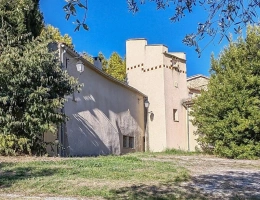
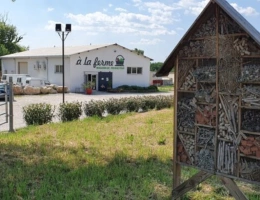
Buildings range from a converted stone sheepfold to a recent open-sided shed. Look at the roof, hot-weather ventilation, shade, straw bedding, handling facilities and the collecting yard, then the parlour, its units, washing system and bulk tank. The processing room weighs heavily: a tiled making room, a ventilated drying room, a ripening cellar, a cold room, whey disposal and a valid approval or derogation. A goat cheese farm with a farm shop, a secure water reserve and well-kept fencing sells far better than a site that needs rebuilding.
The herd counts as much as the walls. Hardy breeds suited to heat and steep ground, the Rove around the Bouches-du-Rhône and the Alpine elsewhere, a herd size matched to the grazing actually available, health status and age structure all decide real value. Farms sold with a house, an outbuilding or a holiday let call for a careful split of the price between production tool, livestock, direct-sales goodwill and residential property, especially where the house alone would attract non-farming buyers. On older stonework, have the roof and frame surveyed before making an offer: restoring a stone sheepfold can cost as much as the herd is worth, and that work rarely waits.
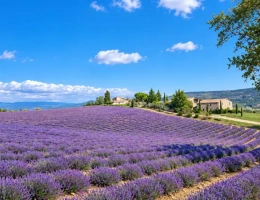
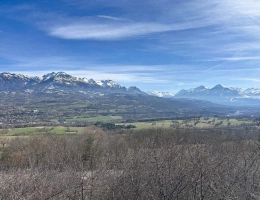
The Alpes-de-Haute-Provence hold the regional goat tradition, around the Montagne de Lure and the Albion plateau, within the Banon protected-origin area, which extends into part of the Vaucluse at the foot of Mont Ventoux. The Hautes-Alpes run mountain herds from the Champsaur to the Queyras, with summer pastures and buildings designed for winter. In the Var, goat farming sits in the Haut-Var, around the Verdon and the inland plateaux, where land remains farmed and direct selling finds plenty of customers for much of the year.
The Alpes-Maritimes offer hinterland farms in the Vésubie, Tinée and Roya valleys, with awkward access at times but steady local demand for cheese. The Bouches-du-Rhône, around the Estaque hills and the Calanques massif, keep the Rove goat and its well-known fresh cheeses, on hotly contested land. Everywhere the price gap between the built-up coast and the upland valleys is wide, and it is usually inland that a new entrant finds a holding within reach.
The first thing to examine is secured grazing: multi-year agreements, pastoral groupings, communal or forest land, and permits to move stock through protected natural areas, because a goat farm being handed over can lose part of its grazing when the operator changes. Fire risk also shapes management: compulsory clearance of vegetation around buildings, access for fire crews, closed periods. On classification, the French classified installations regime applies above a herd threshold, with a change of operator to be notified and sometimes old prefectural conditions worth rereading before any offer.
Next come water, often the limiting factor in summer, and the exact nature of the right to use it, whether a declared borehole, a captured spring or an irrigation channel, and predation, which imposes guard dogs, night enclosures and a reorganised working day. Finally, confirm that the processing room meets health rules, that direct-sales turnover is real, that market pitches can be transferred, and that the sale goes through the structures control and notification to SAFER before signature.
This selection brings together sales entrusted to us by farmers, by rural property agencies based in Provence and the southern Alps, and by notarial offices. Use the area, price or department filters, then set up an alert, since goat farms in this region are often passed on quietly. You can carry on browsing among farms for sale in Provence-Alpes-Côte d'Azur.